Russia Sent Nuclear Bombers Over the Baltic Five Times in Eight Days. The West Was Watching Iran.
What happened
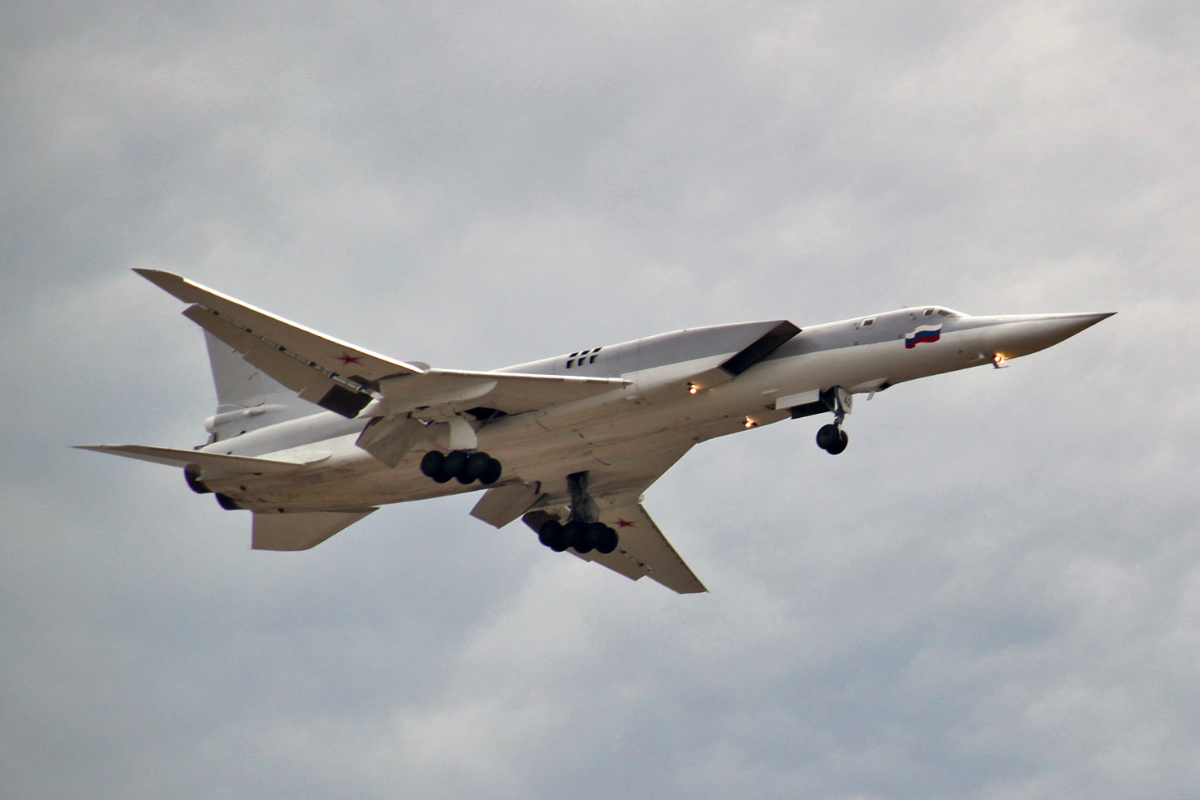
On April 20, six NATO nations scrambled fighter jets from France, Sweden, Finland, Poland, Denmark, and Romania to intercept a Russian formation of two nuclear-capable Tu-22M3 supersonic bombers and approximately ten Su-30 and Su-35 escort fighters over the Baltic Sea. At least one Tu-22M3 was photographed carrying a live Kh-32 anti-ship cruise missile. The aircraft flew without transponders or filed flight plans. According to Lithuania's defense ministry, NATO intercepted Russian aircraft four times between April 13 and April 19; the April 20 mission made it five in eight days. Russia described the flights as routine training exercises over neutral waters. The Dutch military intelligence service published its annual report on the same day, warning that Russia could be ready for a regional military challenge to NATO within one year of hostilities ending in Ukraine.
Russia is not conducting routine training. It is stress-testing NATO's eastern response while the alliance's political leadership is absorbed by Iran. The five intercepts in eight days is the signal, not the aircraft themselves.
The Hidden Bet
These flights are a show of force designed to deter NATO escalation
A deterrence strategy would use maximum visibility: transponders on, flight plans filed, diplomatic notification through standard channels. Transponder-off flights over the Baltic are not deterrence communication; they are operational probing. Russia is testing response times, handoff procedures between allied air forces, and gaps in coverage. This is reconnaissance disguised as provocation.
NATO's response was effective and sends the right message
NATO scrambled six nations in a choreographed response, which is exactly what Russia wanted to observe. NATO demonstrated its coordination; Russia catalogued it. The intercepts are not a deterrent outcome; they are data collection at NATO's expense.
The Dutch intelligence warning about one year to NATO readiness is the concerning timeline
The Dutch report assumes Russia ends hostilities in Ukraine before beginning the NATO buildup. Russia has no incentive to end hostilities in Ukraine on terms that would free NATO to rearm against it. The one-year timeline is more likely a misread: the real question is whether Russia's capabilities, already battlefield-hardened, are closer to ready now than the intelligence assessment assumes.
The Real Disagreement
The fork is between treating this as signaling that can be managed through demonstrated NATO resolve, or treating it as preparation that is already in progress regardless of signaling. The first view says more intercepts and more public NATO presence deters Russian escalation. The second view says Russia is calibrating its next move and NATO's visible responses provide useful targeting and coordination data. The Dutch intelligence report leans toward the second view without quite saying so. I lean toward the second view: Russia's track record since 2022 is of actions rather than postures. But the response implications differ sharply: if it is signaling, public intercepts work; if it is preparation, they are counterproductive.
What No One Is Saying
The six-nation intercept was a demonstration of post-Finland and Sweden NATO integration: Swedish Gripens, Finnish F-35 equivalents, and Polish aircraft all in the same formation. Russia is simultaneously probing the alliance and watching its newest members operate. Finland and Sweden joined NATO partly because Russia invaded Ukraine; Russia is now observing their integration in real time. This is not routine.
Who Pays
Baltic civilian aviation
Each exercise, ongoing
Russian aircraft flying without transponders are invisible to civilian collision-avoidance systems. The EU aviation safety agency flagged near-misses repeatedly. Baltic air space is one of Europe's busiest corridors; commercial flights reroute or accept risk with each Russian exercise.
Baltic NATO members: Estonia, Latvia, Lithuania
Continuous threat; material cost of military readiness is immediate and permanent
They sit between Kaliningrad, which hosts Iskander ballistic missiles capable of striking Warsaw and Berlin within minutes, and Russia's main force. Their defense budgets are being accelerated, but their populations are under threat that no Baltic Air Policing intercept resolves.
European NATO defense spending plans
Budget cycles 2026-2028
Germany committed to 3.5% GDP defense spending; France, Sweden, Finland all expanding. The Russian Baltic provocations create domestic political pressure to accelerate those commitments but also demonstrate that current NATO capacity is already stretched thin while managing Iran-adjacent crises.
Scenarios
Iran Deal Reached, Attention Shifts to Europe
A US-Iran agreement is reached within weeks. Trump administration shifts diplomatic and military attention back to NATO. Russia calibrates down its Baltic provocations to avoid triggering a focused NATO response. The one-year readiness clock continues but without active probing.
Signal Russia reduces Baltic flight frequency to pre-April baseline; no new transponder-off flights for two weeks after an Iran deal announcement
Probing Escalates
Russian flights continue or increase in frequency. One incident results in an unsafe intercept, collision, or confrontation. NATO's Allied Air Command is forced to issue a formal protest. The civilian aviation risk becomes publicly unmanageable and EASA restricts Baltic commercial routes.
Signal Seventh or eighth intercept in two weeks; Russian aircraft approach airspace boundaries of a NATO member state
Ukraine Ceasefire Changes the Calculus
Ukraine and Russia reach a ceasefire in which Russia retains occupied territories. Russian military resources currently committed to Ukraine become available. The Dutch one-year clock begins. NATO scrambles to accelerate its eastern buildup but faces budget constraints and political resistance from southern European members less exposed to the threat.
Signal Ukraine ceasefire announced; Russia begins rotation of combat-experienced units from Ukrainian theater toward western military districts
What Would Change This
If Russia's Baltic flights follow the same pattern and same aircraft as their pre-2022 Baltic Sea exercises, the case for routine training strengthens. If the frequency continues at five or more intercepts per week, or if aircraft with live ordnance approach NATO territorial waters rather than neutral airspace, the operational preparation interpretation becomes unavoidable.
Related
Trump Pulls 5,000 Troops from Germany. NATO's Eastern Flank Is Now Improvising.
conflictEurope Just Had Its Biggest Military Spending Surge Since 1953. It Is Not Enough and Everyone Knows It.
conflictBritain Shot Down a Russian Drone Over Ukraine. Or It Didn't.
powerFrance Is Offering Poland a Nuclear Umbrella the US Won't Confirm It Still Holds