France Is Offering Poland a Nuclear Umbrella the US Won't Confirm It Still Holds
What happened
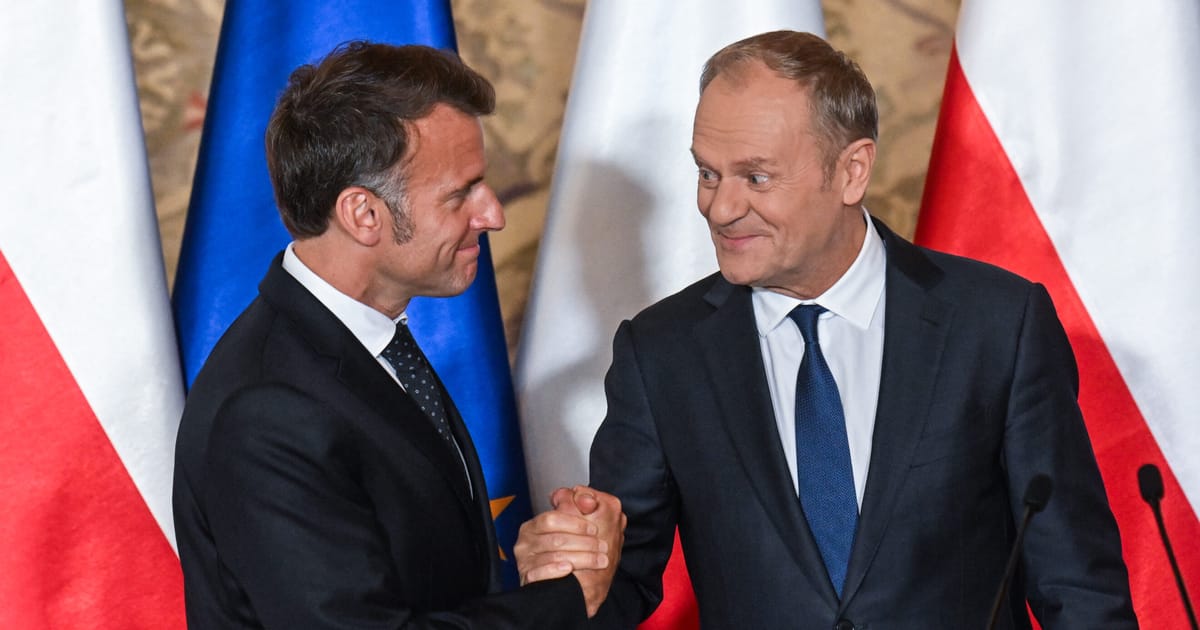
French President Emmanuel Macron and Polish Prime Minister Donald Tusk met in Gdansk on April 20 for the first French-Polish intergovernmental summit, agreeing to joint nuclear exercises and sensitive information-sharing as part of France's expanded deterrence offer to European allies. Macron said working groups would produce concrete deliverables by summer. The summit also produced agreements on satellite cooperation and joint defense industry investments. Tusk confirmed Poland is in discussions about joining a French-led nuclear deterrence framework, though he specified that French nuclear aircraft would not be based on Polish soil. Germany, separately, is studying European nuclear options through its newly established National Security Council.
Europe is not waiting for NATO to reform; it is building a parallel deterrence architecture, and the speed at which France can credibly extend its nuclear umbrella to Poland will determine whether this is strategic messaging or a genuine security realignment.
The Hidden Bet
The French nuclear umbrella can substitute for the American one
France has roughly 290 nuclear warheads. The US has approximately 1,700 deployed. France's doctrine is explicitly 'vital interests,' meaning Paris has historically refused to pre-commit to using nuclear weapons in defense of allies. Poland knows this. The Gdansk commitments are significant but they are about information-sharing and exercises, not about a formal extended deterrence guarantee. The gap between those things is enormous.
This arrangement is inside NATO and therefore stabilizing
France has been outside NATO's integrated military command structure for decades and returned only in 2009. A Franco-Polish nuclear arrangement that operates outside US nuclear planning could complicate NATO targeting doctrine, create ambiguity about who is covering what, and potentially give Russia space to argue that European nuclear proliferation justifies its own posture adjustments.
Trump's wavering is temporary and the US guarantee will be reaffirmed
Poland is not treating this as temporary. Warsaw is spending 5% of GDP on defense, is pursuing its own nuclear sharing discussions with France, and is simultaneously investing in US-built missile defense systems. The hedging is structural, not reactive. Countries that build parallel arrangements rarely dismantle them when the original guarantee is reaffirmed.
The Real Disagreement
The real fork is whether European strategic autonomy makes Europe safer or more exposed. The case for Macron's approach: a credible European deterrent that does not depend on American political cycles is more durable than a guarantee that can be withdrawn by a single election. The case against: deterrence depends on adversary belief, and Russia may not believe a French umbrella over Poland carries the same weight as an American one, which makes the transition period, before European deterrence is credibly established, more dangerous, not less. The honest position is that Macron is right about the direction and premature about the timeline. France cannot currently extend a credible guarantee to Poland. It can begin the process of building one. Those are very different things, and talking about them as if they are the same is how miscalculations happen.
What No One Is Saying
Poland is the most exposed country in Europe and its government knows that France's nuclear umbrella offer depends entirely on Macron remaining in power through 2027. Marine Le Pen leads the polls for the next French presidential election. A Le Pen presidency would likely terminate France's European deterrence ambitions. Warsaw is investing in the French relationship partly as a hedge against that outcome, trying to lock in institutional commitments before a government change can reverse them.
Who Pays
Baltic states and Romania
Structural risk now; acute if the Russian threat materializes within two years
A Franco-Polish bilateral deterrence framework that does not explicitly extend to all eastern NATO members creates a visible first-tier and second-tier division inside the alliance. Countries in the second tier face the same Russian threat with weaker coverage.
US weapons manufacturers and NATO logistics planners
Medium-term, 3-5 year horizon
If European nuclear arrangements become institutionalized, European countries will invest in French-compatible delivery systems and command infrastructure instead of American ones. That is not a security problem but it is a significant defense industrial consequence.
The nonproliferation regime
Ongoing; a legal challenge could emerge within 18 months
France extending nuclear information-sharing and joint exercises to non-nuclear states tests the edge of what the Nuclear Non-Proliferation Treaty permits. If this arrangement expands to include Germany, which has long had US nuclear weapons on its soil under NATO sharing, the legal and political precedents get more complicated.
Scenarios
Credible extension
By end of 2026, France, Poland, Germany, and two or three other European states formalize a nuclear planning group. Joint exercises occur. European defense spending remains at historic highs. Russia concludes the deterrent is real.
Signal Macron announces a formal European Nuclear Planning Group with named member states before December 2026.
Diplomatic theater
Working groups meet, reports are produced, but no joint exercises happen before the French 2027 election cycle begins. Poland quietly maintains its parallel investment in bilateral US security guarantees. The Gdansk commitments become a press-conference memory.
Signal No joint exercise announced by September 2026. Polish defense minister visits Washington within 60 days.
Escalation trap
Russia interprets the French-Polish nuclear framework as a formal expansion of European nuclear posture and responds with its own declaratory shift. The transition period, before European deterrence is established, sees increased Russian provocations against Poland's eastern border.
Signal Russian Defense Ministry statement explicitly references the Gdansk summit as a provocation. Russian military exercises within 100km of Polish border within 90 days.
What Would Change This
If France formally commits, in writing and with a specific trigger condition, to use nuclear weapons in defense of a Polish territorial attack, the bottom line changes entirely: that would be a real extension of deterrence, not an aspiration. Anything short of that is a process, not a guarantee.
Related
Macron Is Offering Poland a Nuclear Umbrella. France Still Controls the Button.
powerFrance Spends $53 Billion to Replace the American Guarantee
conflictTrump Pulls 5,000 Troops from Germany. NATO's Eastern Flank Is Now Improvising.
powerAfter the Ceasefire, Trump Told NATO to Stay Away. The UK and France Launched Their Own Mission.