After Islamabad: Iran Goes to Moscow Because Washington Stopped Showing Up
What happened
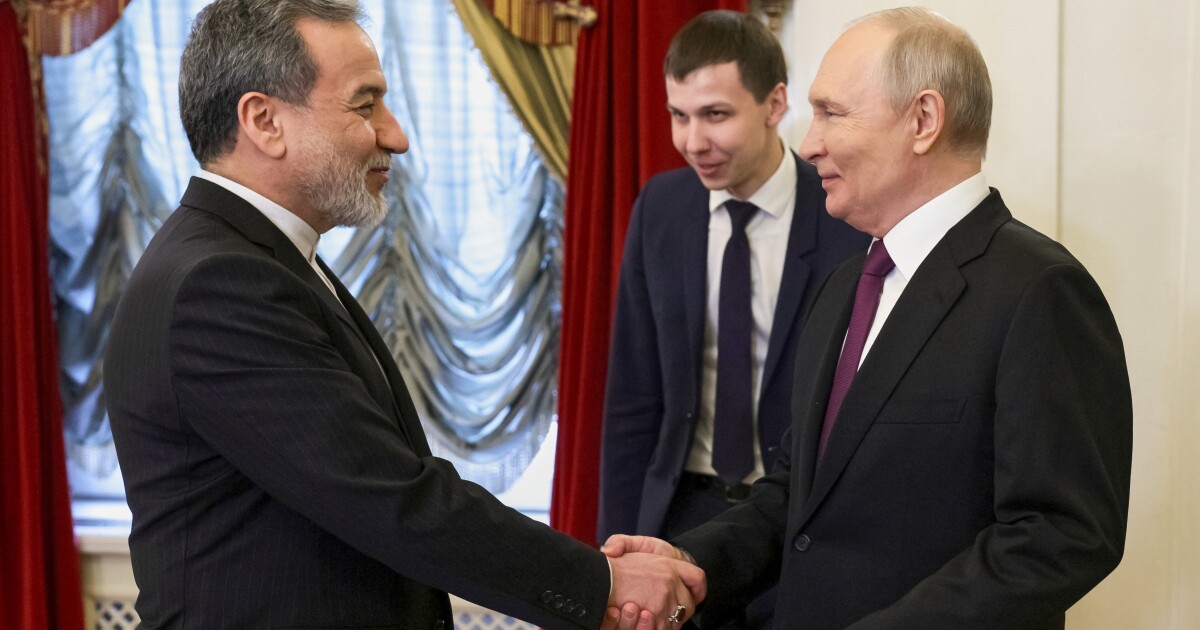
On Saturday, April 25, President Trump cancelled a planned trip to Islamabad by envoys Steve Witkoff and Jared Kushner, who were scheduled to continue indirect talks with Iran. Trump said on Truth Social that Iran 'offered a lot, but not enough' and that the US has 'all the cards.' Iran's Foreign Minister Abbas Araghchi, who had already arrived in Islamabad and separately visited Oman, flew to St. Petersburg on Monday, where he met with Russian President Vladimir Putin. Putin pledged to maintain Russia-Iran's strategic partnership and offered Russian mediation services. Iran had previously sent written messages to the US via Pakistan outlining red lines, including nuclear issues and the Strait of Hormuz. The ceasefire between the US-Israeli coalition and Iran technically holds, but Israeli strikes on Lebanon have continued and the Strait remains closed to international shipping.
Trump's cancellation handed Russia a seat at a table it was not invited to: every week the US-Iran diplomatic track stays frozen, Putin's positioning as indispensable intermediary becomes harder to undo.
Prediction Markets
Prices as of 2026-04-27 — the analysis was written against these odds
The Hidden Bet
Trump holds leverage because Iran's economy is being crushed by the Strait closure and US blockade
Iran has $100 billion in projected deficit pressure, but the Strait closure also damages the US-adjacent Gulf states and drives up global energy prices that hurt American consumers and the broader global economy. The pain is mutual. The question is whose political system can sustain it longer, and Iran's supreme leadership has a track record of surviving economic siege that exceeds most democracies.
Russia wants to be a mediator because it benefits from a resolution
Russia benefits from the Strait closure more than almost anyone: higher oil prices improve Russia's own budget position. Putin's mediation offer costs him nothing if it fails and gains him diplomatic capital if Iran credits him with helping. Russia has no incentive to push hard for a deal that reopens the Strait and collapses the oil price.
Decoupling Strait reopening from nuclear talks is Iran's realistic fallback
Iran proposed exactly this sequence in Islamabad: reopen the Strait first, defer the nuclear file. Washington rejected it. The rejecting logic is sound: if the Strait reopens before nuclear terms are set, the US loses its leverage to extract concessions on enrichment. But rejecting the proposal does not make it go away. Iran will keep offering it as long as closing the Strait costs Iran more than it costs the US.
The Real Disagreement
The real fork is whether the US can win a waiting game when the cost of waiting is borne globally but the political cost falls on Trump specifically. Trump's 'we have all the cards' framing assumes Iran cracks first. Iran's 'we will not engage in imposed negotiations' framing assumes the US needs a deal more than Iran does. Both cannot be right. The Polymarket gives only 28.5% odds on a permanent peace deal by May 31. That is the market saying the waiting game continues for at least another month. I'd lean toward Trump needing a resolution faster than he admits: high oil prices feed into US inflation, inflation is the number his Fed chair replacement will be judged on, and a prolonged stalemate over Iran becomes domestically expensive before it becomes strategically necessary for Iran to concede.
What No One Is Saying
Germany's Chancellor Merz publicly said the US is 'being humiliated' by Iran. European leaders are beginning to say out loud what no one in Washington will: that canceling the Islamabad talks was not a show of strength, it was an abandonment of the diplomatic track without a replacement. The longer US envoys stay home, the more Iran's Moscow outreach looks like a coherent strategy rather than a desperation move.
Who Pays
Developing countries dependent on Gulf shipping lanes
Already ongoing; compounding weekly
Strait closure reduces oil, gas, and fertilizer flows; food insecurity rising in countries that depend on Gulf-exported grain and agricultural inputs
American consumers and global markets
Price effects already visible; peak pressure builds over summer
Elevated oil and gas prices feed into transportation costs and inflation; the Iran shock compounds the tariff shock already working through the system
Ukraine's peace process
Ongoing; the pause is already documented and Kyiv is pressing for resumed attention
Kremlin spokesman Peskov explicitly said the US is 'occupied with Iran events,' creating a pause in Ukraine dialogue; every week Iran absorbs US diplomatic bandwidth is a week Ukraine's negotiating window shrinks
Scenarios
Russia Inserts Itself as Required Intermediary
US-Iran direct or indirect talks stall for 4-6 more weeks. Iran continues Moscow engagement. Any eventual deal requires Russian blessing or facilitation. Putin gains permanent status as a Middle East power broker at no military cost.
Signal Iran publicly credits Russia with facilitating a new proposal to Washington rather than using Pakistan or Oman.
Strait Economics Force an Offer
Iran's onshore storage fills (estimated 20-day window from earlier coverage) forcing well shutdowns. Tehran faces economic collapse faster than the supreme leadership can sustain. Iran accepts decoupled Strait talks on US terms, with nuclear negotiations deferred but framed as Iran's diplomatic victory.
Signal Iran's oil production data shows well shutdowns beginning. Market gives only 28.5% odds on a deal by May 31, suggesting this scenario is the minority case.
Ceasefire Collapses, Conflict Resumes
Israeli strikes on Lebanon escalate. Iran interprets continued strikes as US consent. Araghchi's Moscow visit produces a joint statement supporting Iranian sovereignty. The US faces a choice between restraining Israel or watching the ceasefire expire.
Signal Iran formally withdraws the Islamabad proposal and references the Moscow talks as the new diplomatic channel.
What Would Change This
If the US sends envoys back to Islamabad or Oman within 72 hours, this brief becomes premature. The diplomatic pause could be posturing rather than policy. The bottom line depends on the pause lasting long enough for Iran to embed Russia as a structural partner. That window is measured in days, not weeks.