The Ceasefire That Isn't
What happened
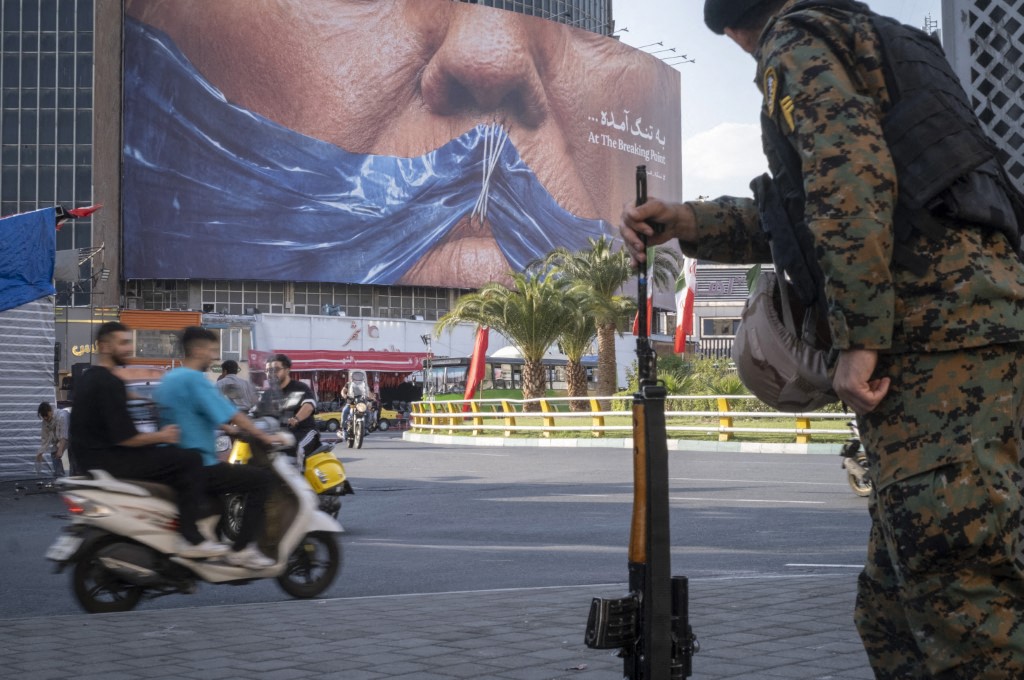
Eleven weeks into a US-Israel war against Iran, a temporary ceasefire that began April 8 is collapsing. Tehran submitted a 14-point counterproposal to a US peace offer, calling for sanctions relief, compensation for war damages, recognition of Iranian sovereignty over the Strait of Hormuz, and a regional end to fighting including in Lebanon. Trump dismissed it as 'totally unacceptable' in a Truth Social post Sunday evening. Iran's foreign ministry called the US terms a 'demand for surrender.' Brent crude spiked to $104 a barrel Monday as markets priced in continued Hormuz disruption, which has blocked roughly one-fifth of global oil exports since hostilities began.
Both sides have built their domestic political survival around demands the other cannot accept: Iran needs Hormuz sovereignty and sanction relief to show its population the war was worth enduring, and Trump needs uranium surrender and Hormuz reopening to declare victory before midterms. Neither can give the other what they need, which means the ceasefire is not on life support. It is already dead.
Prediction Markets
Prices as of 2026-05-12 — the analysis was written against these odds
US x Iran permanent peace deal by May 31, 2026?
Polymarket · as of 2026-05-12
18%
yes
Strait of Hormuz traffic returns to normal by end of May?
Polymarket · as of 2026-05-12
11%
yes
Iran agrees to end enrichment of uranium by June 30?
Polymarket · as of 2026-05-12
27%
yes
Iran agrees to surrender enriched uranium stockpile by June 30, 2026?
Polymarket · as of 2026-05-12
19%
yes
The Hidden Bet
The enriched uranium question is the main obstacle
Iran's demand for recognition of sovereignty over the Strait of Hormuz is constitutionally impossible for any US president to grant. Even if the uranium dispute resolved tonight, that single clause would block a deal. The uranium debate is the visible fight; Hormuz is the one with no exit.
Pakistan's mediation role is neutral
Pakistan transmitted Iran's counterproposal and has military and economic dependencies on both the Gulf states and China, which is watching the Hormuz blockade squeeze its own oil imports. Pakistan's incentives to produce a deal that satisfies everyone may make it the weakest possible mediator for the hardest possible negotiation.
Iran's leadership wants the war to end
Iran's parliamentary speaker publicly said there is 'no alternative' to its 14-point proposal. That is not a negotiating posture. It may reflect a faction inside the regime that calculates the war has actually consolidated domestic support by eliminating reformist opposition voices, and that a humiliating peace deal is more destabilizing than continued war.
The Real Disagreement
The genuine fork is between treating this as a war that needs a surrender document versus treating it as a crisis that needs a de-escalation ladder. If it's a war, one side has to capitulate on the nuclear and Hormuz questions, and neither can. If it's a crisis, both sides can announce partial wins and let the harder issues drift into diplomatic process, which is how Korean War-style indefinite standoffs work. Trump's public language, calling proposals garbage and the ceasefire 'on life support,' forecloses the crisis-management path and forces a war-termination logic neither side is positioned to deliver. The side to watch is not Trump or Iran's negotiators. It's whoever talks Trump into changing his framing, because the deal, if any deal exists, looks like the second option.
What No One Is Saying
The Strait of Hormuz blockade is doing more to hurt China than the United States. China is a far larger importer of Gulf oil than the US, which now exports oil. Trump heads to Beijing this week for a summit where Xi Jinping, whose economy is being strangled by $104 Brent, has the most concrete incentive to push Iran toward a deal. The US pressure on Iran may be most effective not through military threat but through whatever Xi says to the Iranians in private.
Who Pays
Asian manufacturing economies, particularly Japan, South Korea, and India
Already underway. Every additional week adds compounding inflation pressure
Gulf oil supplies roughly 60-70% of their crude imports. With Hormuz partially blockaded, the premium for rerouting tankers around the Cape of Good Hope has added 15-25 days of shipping time and significant cost per barrel, feeding directly into industrial input costs and inflation
US infrastructure trust fund
Immediately if Congress passes suspension; structural damage to infrastructure funding extends 5-10 years
Trump wants Congress to suspend the 18.4 cents per gallon gas tax. That tax funds the Highway Trust Fund, which finances road and bridge maintenance. Suspension costs approximately $500 million per week. The fund was already underfunded before the Iran war
Iranian civilian population
Ongoing, accelerating with each week of Hormuz blockade and oil revenue freeze
Sanctions and war damage have collapsed the rial. Iran's demand for sanctions relief and war compensation is not rhetorical: it reflects an economy under severe strain that leadership cannot sustain indefinitely. The population pays in purchasing power collapse and shortages of medicine and imported goods
Scenarios
Frozen conflict
No formal peace deal is reached, but full-scale war also does not resume. Both sides maintain the ceasefire in practice while publicly claiming it is the other's fault it has not become a peace deal. Hormuz remains partially disrupted. Oil stays above $90. The war drifts into an unacknowledged indefinite standoff similar to Korea 1953.
Signal Watch for whether tanker insurance rates stabilize or escalate in the next 10 days. Stabilization signals both sides are choosing the standoff. Escalation signals someone blinked toward escalation.
Phased deal via Xi mediation
Trump's Beijing summit produces a Chinese commitment to press Iran on a narrow interim agreement: Hormuz partially reopens in exchange for partial sanctions relief, with nuclear and sovereignty questions deferred into a longer diplomatic process. Xi gets to claim he ended the oil price crisis. Trump gets a partial win before midterms.
Signal Watch for Iran resuming contacts through Pakistani or Chinese diplomatic channels within 48 hours of the Beijing summit closing.
Renewed strikes
Trump, facing domestic pressure from gas prices above $4.50 and no diplomatic path visible, orders a second wave of strikes targeting Iranian oil infrastructure. Iran responds by fully closing Hormuz to all shipping. Brent crude breaks $130. A regional war involving Lebanon, Iraq, and potentially Gulf states begins.
Signal Watch for US carrier group repositioning toward the Gulf and any Trump post framing Iran as having 'used' the ceasefire to rearm.
What Would Change This
If Iran publicly and verifiably transferred its enriched uranium stockpile to a third country, Trump would have the domestic win needed to offer Iran a partial sanctions package. That single action breaks the impasse. The probability is low: Polymarket puts it at 18.5% by June 30.