The Ceasefire That Depends on the Blockade
What happened
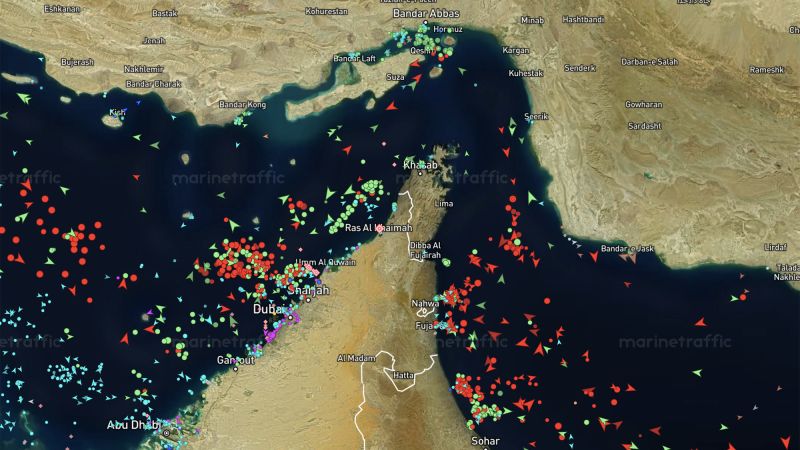
A fragile two-week ceasefire between the US and Iran, which took effect on April 7 after six weeks of fighting, expires on April 22. Pakistan's Army Chief Asim Munir flew to Tehran on April 15 carrying a US message aimed at restarting a second round of peace talks. The first round in Islamabad ended without agreement. Trump has said the war is 'very close to being over,' but the US has simultaneously imposed a full naval blockade on Iranian ports, which Iranian military officials say will halt any trade deal unless lifted. More than 4,000 people have been killed across the region, overwhelmingly in Iran and Lebanon.
The US is trying to negotiate an end to a war using leverage that makes ending the war structurally harder: a blockade that Iran cannot accept as a permanent feature of any peace deal, and that the US cannot lift without appearing to yield.
Prediction Markets
Prices as of 2026-04-17 — the analysis was written against these odds
The Hidden Bet
Pakistan is a neutral mediator whose only interest is regional stability
Pakistan's army chief has become Trump's favored interlocutor in the region, making Islamabad structurally dependent on US approval. Iran has no reason to trust a mediator whose principal is the other party.
The ceasefire extension is the key variable. If it holds, a deal is possible.
The Hormuz blockade is the actual variable. The IMF confirmed that even if the war stopped tonight, global oil shortfalls would persist for months. Iran's economy is being strangled regardless of whether fighting continues. There is no deal without Hormuz, and the US has not publicly committed to lifting it.
Trump wants a deal. His 'very close to being over' language signals genuine intent.
Trump used the same language about Ukraine and Gaza for months while talks stalled. The phrase may be pressure management rather than a factual assessment. If the deal collapses, Trump needs a posture that avoids blame.
The Real Disagreement
The actual fork is this: either the US lifts the Hormuz blockade as a precondition for talks, which Iran says is non-negotiable, or Iran agrees to negotiate while the blockade remains, which would mean accepting economic strangulation as the baseline for diplomacy. These cannot both be true. Iran is being asked to negotiate under duress. The US position is that lifting the blockade before a deal would remove its only remaining leverage. Both are correct descriptions of their own situation. The honest position is that no deal is structurally viable until the US decides whether it wants a negotiated outcome more than it wants to keep the blockade. Right now, it appears to want both.
What No One Is Saying
Pakistan's mediation role is being treated as a diplomatic gift to both parties, but it is a debt instrument. Islamabad is spending its credibility with Tehran while accumulating obligations to Washington. The moment Pakistan pushes back on a US demand, the entire mediation channel collapses and Pakistan is left exposed with an angry neighbor and a fractured relationship with its main economic patron.
Who Pays
Iranian civilian population
Already happening; humanitarian impact accumulates daily
Full naval blockade has 'completely halted economic trade' according to US military. Medicines, food imports, industrial inputs: all blocked. Sanctions were already squeezing; the blockade is a tourniquet.
Asian energy importers, especially India and China
Immediate; refiners are already paying $15-20 per barrel above pre-war prices
Iran supplies roughly 3.5 million barrels per day under normal conditions. The IEA confirmed global oil supply dropped 10.1 million barrels per day in March. India and China bear the replacement cost premium.
Lebanon
Medium-term; depends on whether Israel-Lebanon deal holds independently
Israel-Lebanon ceasefire negotiations are running in parallel but Lebanon has no leverage. Any terms Israel accepts for Iran will shape what Lebanon gets; Lebanon is a side negotiation being conducted by parties who don't represent it.
Scenarios
Thin extension
Ceasefire is extended by another week or two with vague commitments. No deal on Hormuz. Both sides claim progress. The blockade stays. The economic damage compounds.
Signal Watch for Trump announcing a ceasefire extension without mentioning Hormuz. If he doesn't address the blockade, nothing material has changed.
Hormuz deal
The US agrees to a partial or phased lifting of the blockade in exchange for Iranian nuclear concessions, creating enough economic relief for Tehran to justify political acceptance of a deal. Pakistan gets credit; Trump claims victory.
Signal Watch for the phrase 'phased sanctions relief' appearing in official communications from the State Department or Pakistani foreign ministry.
Collapse and escalation
The ceasefire expires on April 22 without extension. Iran resumes hostilities. The Hormuz blockade becomes a casus belli rather than a pressure tool. Oil prices spike past $150.
Signal Watch for Iran announcing withdrawal from the mediation process, or US military announcing additional naval assets moving to the Gulf.
What Would Change This
If the US publicly commits to lifting the Hormuz blockade within a defined timeline, contingent on nuclear concessions, that would make a deal structurally possible. Without that, everything else is theatrical. The bottom line changes if Trump produces a Hormuz off-ramp.