The Ceasefire That Isn't
What happened
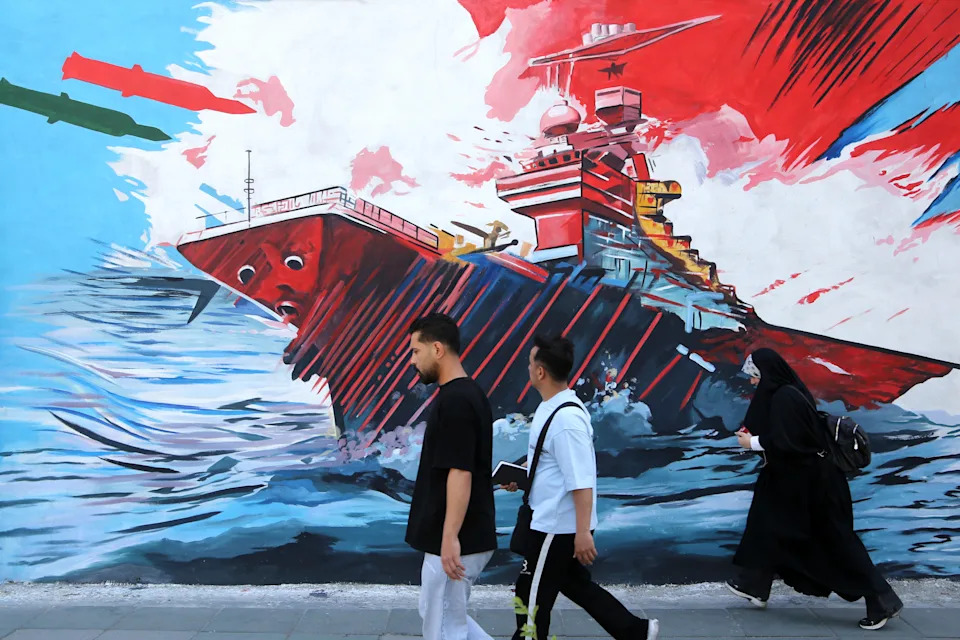
Iran's IRGC seized two foreign container ships (MSC Francesca and Epaminondas) and fired on a third in the Strait of Hormuz on April 23, even as Trump extended an indefinite ceasefire the same day. The US naval blockade of Iranian ports remained in place, with CENTCOM reporting it had turned back 31 vessels. Brent crude touched $105 before easing. Peace talks in Islamabad, brokered by Pakistan, have stalled. Iran's parliament speaker declared that no real ceasefire can exist alongside the blockade, while Trump told reporters he might not extend the truce and 'unfortunately we'll have to start dropping bombs again.'
Both sides are running the same gambit: hold the 'ceasefire' label while escalating below it, hoping the other side's internal pressures crack first. This is not diplomacy. It is a slow-motion standoff where each act of escalation is framed as a response to the other side's violation.
Prediction Markets
Prices as of 2026-04-24 — the analysis was written against these odds
The Hidden Bet
The ceasefire is a pause toward a deal
Neither side has defined what a deal looks like. Iran's parliament speaker and Trump are both publicly making demands the other side explicitly rejected in the last round. The 'ceasefire' functions as a pressure mechanism, not a negotiating framework. There is no shared definition of what getting to 'yes' even means.
Pakistan's mediation is the path to resolution
Pakistan depends heavily on Gulf Arab states for economic lifelines. Saudi Arabia and the UAE have strong interests in the outcome that do not align cleanly with Iran's terms. Pakistan cannot broker a deal that its own patrons would find damaging, which limits how far it can push Tehran toward US demands.
Iran's internal 'fracturing' weakens its position
Trump is reading the Mojtaba Khamenei succession as chaos. It may instead be a consolidation play: the new leadership using the standoff to cement domestic authority by being seen as defiant against US pressure. A leadership transition often rewards the hardest visible position, not the most pragmatic one.
The Real Disagreement
The actual fork is between two views of what 'leverage' means here. The US view: the blockade is the pressure point that will eventually force Iran to negotiate terms acceptable to Washington, because Iran's economy cannot survive indefinite Hormuz disruption. Iran's view: the blockade is itself the violation, and any settlement that leaves the US navy in a position to reimpose it at will is not a settlement at all. These are not positions that can be split. You either accept a world where the US can blockade Iranian ports as a baseline negotiating chip, or you don't. Iran has made clear it doesn't. The US has made clear it won't surrender that tool. Leaning toward the Iranian position: the legal and strategic logic of a permanent 'offshore gun to the head' is unstable. No sovereign state has ever accepted that as a peace term. The ceasefire cannot hold on those terms.
What No One Is Saying
Both governments are describing the Strait of Hormuz as a bilateral US-Iran problem, but it isn't. About 20% of global oil passes through it. Every major oil importer, including India, China, Japan and South Korea, is quietly absorbing the disruption without publicly pressing either party, because neither wants to pick a side. The geopolitical cost of that silence is being paid by ordinary consumers worldwide, not by Washington or Tehran.
Who Pays
Shipping companies and their insurers
Immediate and ongoing
War risk premiums have made the route commercially unviable for many carriers. Diversions via the Cape of Good Hope add weeks and cost.
Coastal communities in Oman and UAE
Near-term risk, medium-term disruption
Subsea communications cables in the region are at risk from naval operations. Disrupted cables affect internet and financial connectivity for millions.
Indian importers and fuel consumers
Already accumulating, materializes in 2-3 quarters
India's import bill has risen sharply; its government is absorbing losses at state fuel marketers rather than raising pump prices, which creates a slow-burning fiscal hole.
Scenarios
Slow collapse
A ship seizure or strike kills crew. Both sides blame the other. The 'ceasefire' label becomes untenable and Trump resumes air operations. Oil moves above $120.
Signal A US or Iranian fatality from a direct exchange is reported by CENTCOM or IRGC simultaneously, each blaming the other.
Managed freeze
Neither side escalates further. The blockade and Hormuz closure persist for months as a new economic baseline. No deal is reached; no war resumes. Global supply chains adapt expensively.
Signal Another ceasefire extension with no Islamabad talks scheduled and no exchange of concessions.
Iran blinks on Hormuz
Iran's new leadership, under severe economic pressure and isolation, allows commercial traffic to resume while talks continue, accepting a de facto blockade in exchange for a reduction in sanctions.
Signal Mojtaba Khamenei makes a direct public address citing civilian hardship and calling for 'practical diplomacy' — the first sign of internal pressure overriding defiance.
What Would Change This
If market odds on an Iran permanent peace deal by April 30 stay below 10% (currently 6.5%), the 'ceasefire' label is purely performative. The bottom line changes if Pakistan publicly presents a bridging proposal that both sides have not already publicly rejected, or if the US signals it will lift the blockade as a confidence-building measure before a deal.
Related
The Hormuz Blockade Is Not About Iran. It's About What China Will Agree to Before Trump Arrives in Beijing.
conflictIran's Hormuz Gambit: Trade the Blockade, Keep the Bomb
conflictOil Hits $119 After Trump Says the Blockade Is 'More Effective Than the Bombing'
conflictThe Siege That Talks Are Supposed to End