Trump's Fed Pick Swore He Wouldn't Be Trump's 'Sock Puppet.' That's Exactly What a Sock Puppet Would Say.
What happened
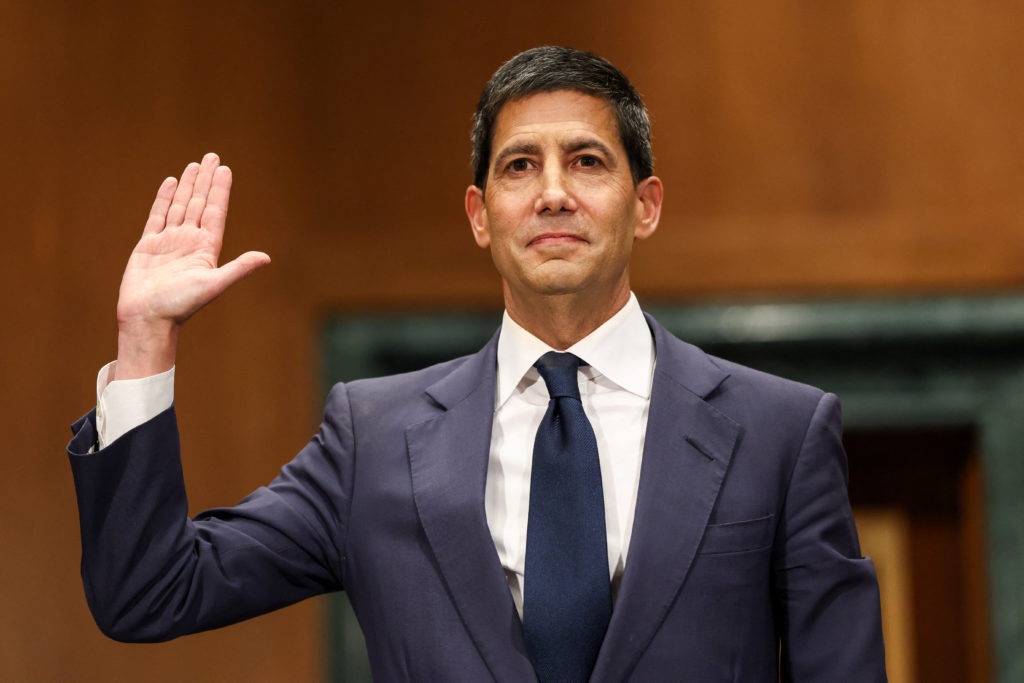
Kevin Warsh, President Trump's nominee to replace Jerome Powell as Federal Reserve chair, testified before the Senate Banking Committee on April 21. Warsh pledged that the Fed would remain 'strictly independent' and that he would 'never act at the direction of' the president. He also pivoted from his historically hawkish position on inflation, arguing that AI-driven productivity could support earlier rate cuts. Democratic senators, led by Elizabeth Warren, pressed him on whether he would follow Trump's demands for lower rates, and Republican Senator John Kennedy raised concerns about the Fed's balance sheet. Warren asked whether he would have certified the 2020 election results. Powell's term does not expire until May 2026, creating a potential period where both men hold conflicting authority. A Polymarket market puts Warsh's nomination withdrawal probability at 1.4%.
The Fed's independence has never survived a president who genuinely wanted to end it. The question is whether Trump genuinely wants to end it or just wants credit for low rates.
Prediction Markets
Prices as of 2026-04-22 — the analysis was written against these odds
The Hidden Bet
Warsh's independence pledges at the hearing bind his future behavior.
Confirmation hearings are not contracts. Every Fed chair nominee in modern history has testified to independence and then faced political pressure once confirmed. What binds future behavior is institutional culture, personal conviction, and the threat of credibility loss in bond markets. None of those mechanisms have been tested with a president as willing to publicly attack the Fed as Trump.
The Senate will confirm Warsh on the normal timeline.
Powell's term does not expire until May 2026. If confirmation is delayed, there is a window where the sitting chair and the confirmed-but-not-yet-seated chair both have claims on the institution. That procedural ambiguity is an invitation for Trump to pressure both men simultaneously.
Warsh's dovish pivot is credible.
Warsh spent his post-Fed career arguing that the institution had kept rates too low for too long after the 2008 crisis. His new argument that AI productivity justifies rate cuts is analytically interesting but conveniently aligned with what Trump wants. Either he changed his mind for honest reasons, or he changed it to get the job.
The Real Disagreement
The actual fork is this: Fed independence is either a structural fact or a personnel fact. If it is structural, then the institution's rules, precedents, and market credibility force any chair toward orthodox behavior regardless of how they got the job. If it is a personnel fact, then a president who appoints enough governors and a pliant chair can effectively direct monetary policy without changing any formal rules. The structural view is what every economics textbook teaches. The personnel view is what the bond market started pricing in when Trump first pressured Powell. The more honest position is that independence is partially structural and partially personnel, and Trump has already done significant damage to the personnel half. Warsh's hearing changed nothing about that.
What No One Is Saying
If Warsh cuts rates aggressively after confirmation and inflation re-accelerates, he will not be blamed by the president who appointed him. He will be blamed by the Fed's institutional credibility. That asymmetry means he has a personal incentive to prove independence by being more hawkish than the job requires, not less. A 'sock puppet' would cut rates. An ambitious ex-Fed governor trying to build a legacy would not.
Who Pays
Mortgage borrowers
Medium-term: 2027-2028 if the dovish scenario plays out.
If Warsh's dovish signals translate into actual rate cuts faster than inflation warrants, a second inflation cycle re-prices 30-year mortgages upward within 18-24 months of cuts starting.
Emerging market economies with dollar-denominated debt
Immediate and ongoing through confirmation.
The uncertainty about Fed trajectory is already more damaging than any specific rate level. Every week of ambiguity about whether Warsh will cut aggressively forces EM central banks to keep rates higher than their domestic economies require.
Powell
Immediate.
His remaining months as chair are now spent in the shadow of his replacement. Major banks and foreign central banks will run dual-track relationships, effectively treating Powell as a lame duck before his term expires.
Scenarios
Orthodox Warsh
Warsh is confirmed, keeps rates steady through 2026 citing war-related inflation risks, and publicly pushes back on White House pressure once. Bond markets stabilize. Fed credibility holds.
Signal A Warsh speech within 60 days of confirmation that does not mention AI productivity as a justification for cuts.
Trump's Rate
Warsh cuts rates twice in the first year, citing productivity arguments. Inflation at 4%+ by late 2027 forces a reversal. Historical Fed credibility takes a generation to rebuild.
Signal A cut announcement within 90 days of confirmation paired with a presidential tweet claiming credit.
Confirmation Stall
Senate delays confirmation past Powell's term expiration. Trump publicly attacks the Fed while two competing chairs have claims on the institution. Dollar weakens sharply.
Signal A confirmation vote not scheduled by late April 2026.
What Would Change This
If Warsh publicly disagreed with the White House on a specific rate decision before confirmation, the independence case would be substantially stronger. That has not happened. If a sitting Fed governor resigned in protest of Warsh's appointment, that would be a strong signal of institutional alarm. Neither event has occurred.
Related
Kevin Warsh Clears Senate Banking Committee. The Fed's Independence Window Is Closing.
powerThe Man Trump Picked to Run the Fed Says He Won't Do What Trump Wants
powerThe Fed Gets a New Chair Who Promised 'Regime Change'
powerTrump Is Getting the Fed He Wanted. The Question Is What He'll Do With It.