Zelensky Is Using the Iran Deal as a Mirror. Russia Doesn't Like What It Sees.
What happened
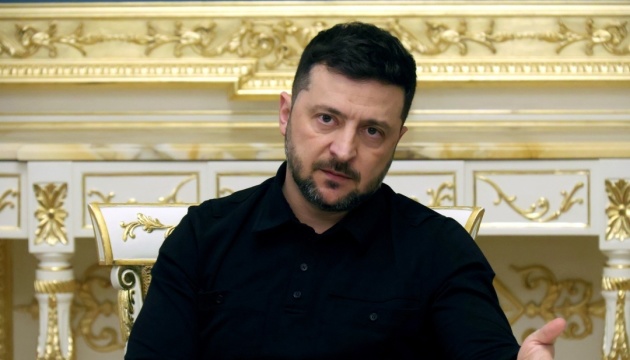
Hours after President Trump announced the two-week U.S.-Iran ceasefire on April 8, Ukrainian President Zelensky issued a public statement praising the move and framing it as a signal to Russia. He argued that the US transition to diplomacy in the Middle East created a direct precedent and opportunity for the same framework to be applied to the Ukraine-Russia war. Ukraine simultaneously issued a formal call for Russia to halt attacks. Prediction markets give a Russia-Ukraine ceasefire by April 30 only a 4.4% probability, and by June 30 only 11.5%. Russia has not responded to the parallel.
Zelensky is not asking Russia to make peace. He is forcing Trump to explain publicly why the same diplomatic framework that resolved the Iran conflict does not apply to Ukraine, which is a question Trump cannot answer without either committing to Ukraine or exposing his negotiating position.
Prediction Markets
Prices as of 2026-04-09 — the analysis was written against these odds
The Hidden Bet
Russia will reject the Iran parallel out of hand
Russia has domestic political reasons to accept a ceasefire framing if it can control the terms. The Iran deal involved Iran conceding significant points in exchange for a cessation of hostilities. If Putin can use a 'ceasefire' to freeze territorial gains and prevent Ukrainian NATO membership, the Iran comparison actually works in his favor. The question is not whether Russia wants a ceasefire, but whether the US will offer one on Russia's terms.
Zelensky's statement is purely rhetorical
The statement positions Ukraine to receive the Iran deal's mechanism regardless of outcome. If Trump applies the Iran framework to Ukraine, Zelensky gets a ceasefire with US diplomatic backing. If Trump explicitly refuses to apply it, Ukraine gains documented evidence of differential treatment that it can use in European and UN forums to press for continued military support. The statement wins both ways.
The Iran ceasefire is a stable model worth emulating
The Iran deal is two weeks old, has three conflicting draft texts, and Trump has already threatened to return to military action if talks collapse. Using it as a template for Ukraine implies that the underlying deal is durable enough to serve as a reference point. If the Iran ceasefire collapses within a month, Zelensky's argument becomes counterproductive.
The Real Disagreement
The core tension in Zelensky's move: it forces a direct comparison between two conflicts where US interests are fundamentally different. In Iran, the US was the attacking party trying to achieve a strategic objective. In Ukraine, the US is a third party choosing whether to fund a proxy. The leverage structure is inverted. In Iran, the US could stop the war by deciding to stop fighting. In Ukraine, the US can only facilitate a ceasefire by pressuring two parties, one of which (Russia) has no comparable dependence on US goodwill. The lean is toward Zelensky knowing this and using the move to crystallize European commitment rather than to genuinely move Trump. Ukraine's real audience for this statement is Berlin and Paris, not Washington.
What No One Is Saying
Trump credited China with pushing Iran to the negotiating table. China is also the country with the most leverage over Russia. If the logic is that economic superpower pressure on a rogue state produces diplomacy, the implicit conclusion is that the US needs China to also pressure Russia for a Ukraine deal. Zelensky's Iran comparison, if followed to its logical end, leads to a China-brokered Ukraine settlement. That is a geopolitical outcome that neither Zelensky nor the US wants, which is exactly why nobody is saying it.
Who Pays
Ukrainian civilians in active conflict zones
Ongoing
If the Iran comparison delays a genuine ceasefire by raising the rhetorical stakes without changing the underlying military position, the cost is borne in lives and infrastructure. The move buys diplomatic positioning but does not stop Russian strikes, which continued on April 9.
European NATO allies
If ceasefire negotiations open; 3-9 months
If the Iran framework is applied to Ukraine, European allies may be pressured to accept a ceasefire that freezes Russian territorial gains in exchange for peace. That outcome would validate Russian aggression as a successful strategy and create a direct precedent for future territorial claims against NATO-adjacent states.
Trump's Iran diplomacy
Over the next 30-60 days as Iran negotiations proceed
Zelensky's move reframes the Iran ceasefire as a model rather than a one-time event. If the Iran deal collapses and Zelensky has publicly built on it as a template, the reputational cost of the collapse extends beyond the Middle East. Trump's Iran legacy becomes partially defined by whether Zelensky's comparison holds.
Scenarios
Trump applies the framework
Trump, seeking another diplomatic win, publicly offers to broker a Ukraine ceasefire using the Iran model. Russia accepts a freeze-in-place arrangement. Zelensky faces domestic pressure to refuse but ultimately negotiates a deal that preserves Ukraine's claim to occupied territories without recovering them.
Signal Trump publicly states that he believes the Iran diplomacy approach can be applied to Ukraine within the next two weeks
The comparison is ignored
Trump does not respond to the parallel, the Ukraine war continues, and Zelensky's statement becomes one of dozens of rhetorical gestures that produced no policy change. European support for Ukraine continues but without new momentum generated by the Iran deal.
Signal No Trump statement specifically addressing the Ukraine-Iran comparison within 10 days
Iran deal collapse undermines the move
The Iran ceasefire breaks down within 30 days. Zelensky's statement, which was premised on the Iran framework being a model, becomes a diplomatic liability. Russia uses the comparison to argue that US-backed ceasefires are unreliable and that Ukraine should not expect durable US support.
Signal Trump announces renewed military action against Iran before May 15 while the Ukraine-Iran comparison remains on record
What Would Change This
If Russia signaled any interest in a ceasefire framework modeled on the Iran deal, even through back channels, the interpretation of Zelensky's statement would shift from a political maneuver to a genuine diplomatic opening. Polymarket gives a Russia-Ukraine ceasefire by April 30 only 4.4%, which suggests the market does not believe that signal is coming.