Zelensky Picks Baku. Russia Does Not Need to Accept.
What happened
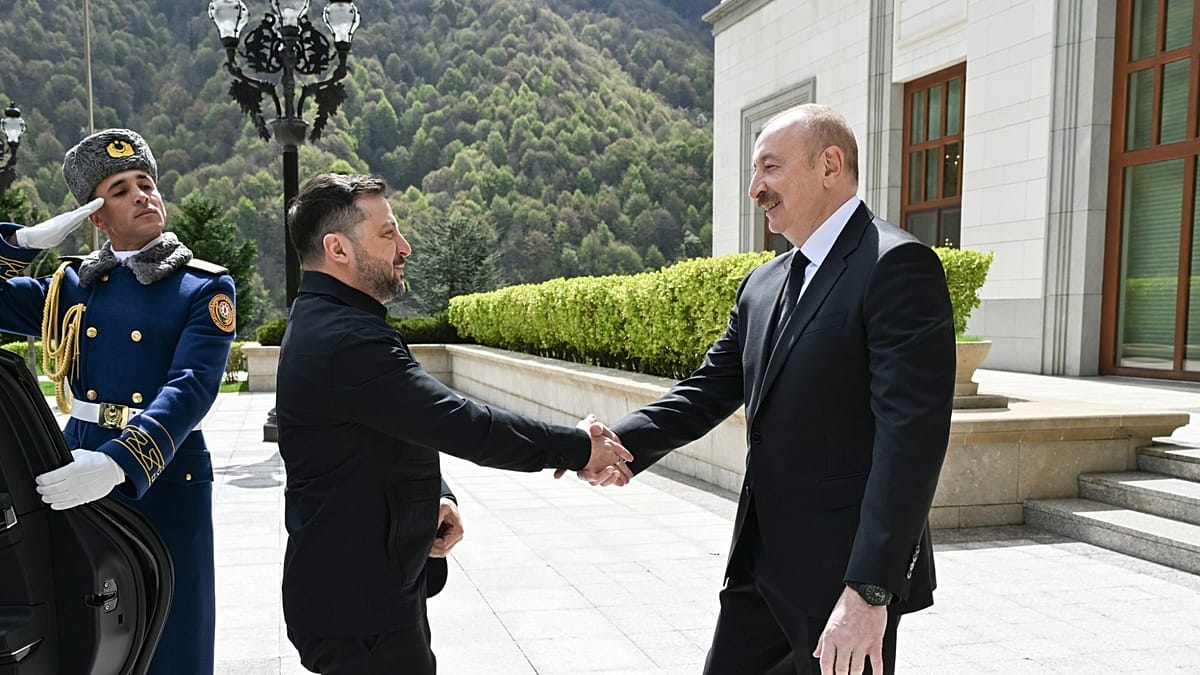
Ukrainian President Volodymyr Zelensky made his first wartime visit to Azerbaijan on Saturday, meeting President Ilham Aliyev and signing six bilateral agreements covering security, defense cooperation, air defense technology transfer, and energy. Zelensky subsequently announced he was ready to meet Putin directly in Baku, proposing Azerbaijan as the venue and Aliyev as mediator for trilateral Ukraine-Russia-US talks. Russia did not respond to the proposal. The visit is notable because Azerbaijan signed a declaration of 'allied cooperation' with Russia two days before the February 2022 invasion; its willingness to host Zelensky and sign defense agreements with Ukraine represents a deliberate reorientation. Polymarket puts a ceasefire by May 31 at 4.15% and by end of 2026 at 25.5%.
The Baku proposal is not a peace overture: it is a positioning move designed to make Ukraine appear the side willing to negotiate while ensuring Russia bears the public cost of refusal, and to anchor Azerbaijan more firmly in Ukraine's orbit before any eventual settlement.
Prediction Markets
Prices as of 2026-04-26 — the analysis was written against these odds
The Hidden Bet
Azerbaijan is a neutral mediator
Aliyev has been playing both sides of this war since 2022, and the drone technology transfers announced this weekend are not neutral acts. Azerbaijan wants Russian markets and Caspian pipeline routes. It is not offering impartial mediation; it is positioning itself as indispensable to whichever side produces the post-war settlement.
The air defense agreements are bilateral military aid
Ukraine has been deploying air defense training teams to the Gulf and now Azerbaijan as a commercial and geopolitical service. This is not charity: Zelensky is building a network of countries that owe Ukraine technical debt, which converts into diplomatic support and potentially post-war reconstruction investment.
Russia declining the Baku invitation damages its diplomatic position
Russia has been declining peace proposals for four years without significant cost to its international standing with the Global South. Polymarket at 4.15% ceasefire by May 31 suggests markets read Putin's calculus as unchanged. A refusal of the Baku offer is priced in and does not move the needle.
The Real Disagreement
The fork is between two readings of what Zelensky is actually doing. One view: he is genuinely probing for a diplomatic exit before Ukraine's battlefield position deteriorates further, and Baku is a real offer. The other view: he is performing willingness to negotiate in order to maintain Western financial support and lock in new military partners before any ceasefire forecloses them. Both are structurally plausible. The second is more consistent with the sequencing: sign defense agreements first, propose talks second. If the talks were the goal, you do not pre-load the host country with weapons deliveries before asking it to mediate. Lean toward the second reading: this is about consolidating relationships, not ending the war.
What No One Is Saying
The drone-warfare technology that Ukraine is exporting to Azerbaijan and Gulf states is the same technology Russia and Iran have been refining and deploying against Ukraine. Ukraine is effectively converting battlefield knowledge into diplomatic currency. No party in this exchange wants to say this explicitly because it would require acknowledging that the war's real legacy may be the proliferation of contested drone-warfare doctrine to every regional conflict on the planet.
Who Pays
Azerbaijani civilians near the Iranian border
Risk increases over the next 6 months as Iranian-Azerbaijani tensions remain unresolved.
Azerbaijan's pivot toward Ukraine deepens its confrontation with Iran, which claimed it did not launch March drone attacks but which has clear incentive to pressure Baku. The security agreements make Azerbaijan a target.
Ukrainian frontline soldiers
Ongoing.
Every diplomatic initiative that stalls without outcome extends the war. If Zelensky's Baku gambit is performative rather than substantive, it delays serious negotiation while the war continues to grind.
Countries that accepted Ukrainian drone-defense expertise
Becomes apparent if and when a peace process begins.
They are now implicitly aligned with Ukraine's diplomatic position in any future peace settlement, constraining their ability to trade with Russia without political cost.
Scenarios
Russia declines, Ukraine wins the optics
Moscow issues a statement rejecting Baku talks or simply does not respond. Ukraine uses the silence to argue it has shown good faith and Russia has not. Western financial support is renewed on this basis.
Signal Kremlin spokesperson statement within 10 days rejecting Azerbaijani mediation.
Backchannel opens, terms are impossible
Azerbaijan facilitates preliminary contact between delegations. Talks begin but collapse immediately on territorial questions. The process produces no ceasefire but costs Aliyev significant goodwill with Moscow.
Signal Reports of a preliminary meeting of lower-level delegations in Baku within 30 days.
US endorses Baku as venue
The Trump administration, looking for a diplomatic win before midterms, announces support for Baku talks. This creates genuine pressure on Russia to respond and changes the probability of a ceasefire materially. Markets at 25.5% for end-of-year ceasefire suggest this path is real but not dominant.
Signal A White House statement explicitly naming Baku as a preferred venue for Ukraine-Russia dialogue.
What Would Change This
If Russia signals genuine interest in Baku-mediated talks, through Kremlin channels rather than state media, the bottom line changes: Zelensky may have found a format Putin can accept. But the Polymarket signal at 4.15% by May 31 suggests no one with money on the line believes this.