China Did Not Fight in the Iran War. It May Have Won It Anyway.
What happened
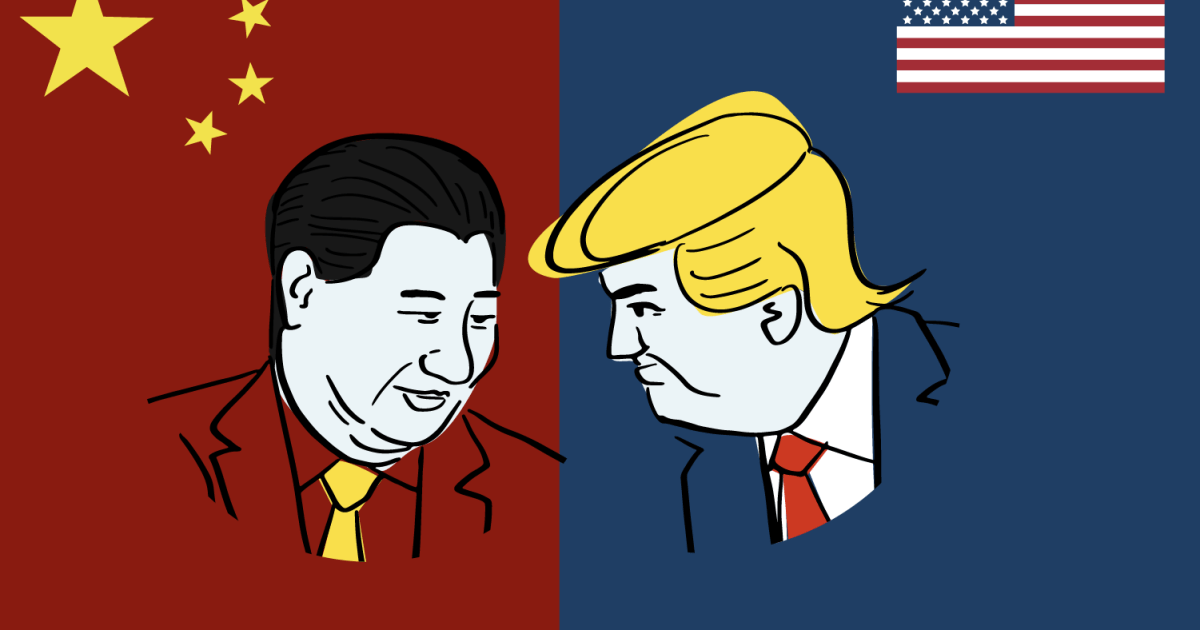
President Trump arrived in Beijing on May 13 for a state visit and summit with Xi Jinping, with Iran as the stated centerpiece of US objectives. Trump has publicly asked China to reduce its Iranian oil purchases and redirect tankers to US ports. China, meanwhile, has continued buying Iranian oil throughout the war, provided Tehran a critical economic lifeline, and had Foreign Minister Wang Yi meet publicly with his Iranian counterpart days before the summit to signal the depth of the relationship. The Council on Foreign Relations published an analysis arguing that China's most important gain from the Iran war was intelligence: a detailed live assessment of how the US fights, how fast it burns through stockpiles, and whether political will holds under domestic economic pressure. Polymarket prices Chinese participation in Iran negotiations at 15.5% by May 22.
Trump is flying to Beijing to ask Xi for help ending a war he cannot end. Xi is sitting in Beijing having just watched that war teach him everything he needed to know about whether the US can defend Taiwan.
Prediction Markets
Prices as of 2026-05-13 — the analysis was written against these odds
The Hidden Bet
China will help with Iran in exchange for trade concessions.
China's strategic interest in Iranian regime survival outweighs any trade deal Trump can offer. A US-aligned Iran would sit directly on China's primary oil supply route. Polymarket at 15.5% for Chinese participation in Iran negotiations reflects the market's skepticism that Beijing will genuinely deliver, not just announce participation.
US deterrence of Taiwan remains intact because the Iran war demonstrated US military capability.
The CFR's analysis argues the opposite: the Iran war demonstrated US missile stockpile depletion rates, resupply timelines, and the domestic political durability of sustaining a conflict. Chinese planners now have empirical data on those variables that they did not have before. Deterrence is less about raw capability and more about certainty -- and that certainty is now lower.
The Taiwan question is separate from the Iran negotiation.
Every concession the US makes to get Chinese help on Iran -- slowing arms sales to Taiwan, softening language on Taiwan's status, delaying military exercises -- is a Taiwan concession packaged as Iran diplomacy. The summit agenda items are not separate.
The Real Disagreement
Whether the Iran war strengthened or weakened the US deterrent posture in the Pacific is the most consequential open question in geopolitics right now. The optimist case: US demonstrated it can project sustained military power, strike with precision, and sustain operations under economic pressure. The pessimist case: US burned through scarce munition stockpiles, revealed political fractures in Congress, showed that domestic gas prices create policy constraints, and gave China a granular operational baseline for its own Taiwan planning. The CFR piece is from former national security officials who argue for the pessimist case. I find it more credible, because deterrence depends on adversary perception, and what matters is not what the US military can actually do, but what Xi calculates it can sustain politically and logistically the second time.
What No One Is Saying
The most important outcome of the Trump-Xi summit may not be announced at all. If Trump quietly agrees to delay Taiwan arms deliveries or soften the next Taiwan Relations Act certification in exchange for Chinese pressure on Iran, that concession will be laundered through bureaucratic processes that happen months later, invisible to the summit coverage.
Who Pays
Taiwan
Any formal concessions would play out over 6-18 months; the degraded deterrence from the war's lessons is already priced in.
Any US concession on Taiwan's status, arms pipeline, or military exercises that comes out of a US-China deal on Iran directly degrades Taiwan's defensive position. The island has no seat at the summit negotiating its own security.
US military planners
3-10 years of planning adjustment
The Pacific theater now faces a Chinese military that has had an operational intelligence assessment of US warfighting at scale. Updating deterrence posture -- more stockpiles, different supply chains, revised escalation thresholds -- requires budget and time that the Iran war consumed.
US allies in the Pacific: Japan, South Korea, Philippines
Ongoing realignment over the next 2-3 years
If US deterrence credibility in the Pacific declined because of the Iran war's resource and political costs, those allies face higher risk in their own territorial disputes with China. Japan's Senkaku posture and South Korea's defense spending decisions will reflect this reassessment.
Scenarios
Empty Summit
Xi announces a Boeing purchase and soybean deal, expresses willingness to 'discuss' Iran in unspecified multilateral formats, Trump declares victory, and nothing substantive on Taiwan or Iran changes. The summit produces a communique but no binding commitments.
Signal A joint statement that references 'productive dialogue' on Iran without naming specific Chinese commitments or timelines.
Taiwan Concession
The US quietly slows or conditions a pending Taiwan arms sale in exchange for China reducing Iranian oil purchases, structured so the arms sale delay is announced as a 'review' months later. Neither government acknowledges the link.
Signal A State Department notification to Congress of a Taiwan arms sale timeline extension appearing in late summer 2026.
Genuine Crisis Point
The Beijing summit fails to produce any China-Iran engagement, gas prices remain high into summer, and the domestic political cost of the Iran war triggers a Republican Senate collapse on war powers, forcing Trump toward a unilateral ceasefire declaration.
Signal Three or more additional Republican Senate defections on the war powers resolution in the next 30 days.
What Would Change This
If China actually reduces Iranian oil purchases in a measurable, verified way within 60 days of the summit, the bottom line changes from 'China won' to 'China negotiated.' That would require a verification mechanism and Chinese compliance that neither side has shown willingness to commit to publicly.
Related
Trump Flies to Beijing Saying He Does Not Need Xi's Help -- Which Is How You Ask for Help
powerThe Summit Without a Spine
powerUS and China Trade Barbs Two Weeks Before the Summit. Both Sides Are Building Leverage, Not Trust.
conflictTrump Flies to Beijing. China Says Taiwan Is the Price of Admission.