Trump Started a War That Is Preventing the Rate Cuts He Wants
What happened
The US-Iran war, now in its tenth week, has pushed oil prices above $100 per barrel and US gasoline prices up 60% year-to-date. The March PCE inflation reading came in at 3.5%, the highest in two years. Bond traders are now pricing a 50% probability that the Federal Reserve's next move is a rate hike rather than a cut. Kevin Warsh, Trump's nominee to replace Jerome Powell as Fed chair, cleared the Senate Banking Committee 13-11 on partisan lines and is expected to be confirmed before mid-May. Fed officials including Kashkari, Hammack, and Logan have publicly flagged the Iran war as the primary risk to the inflation outlook.
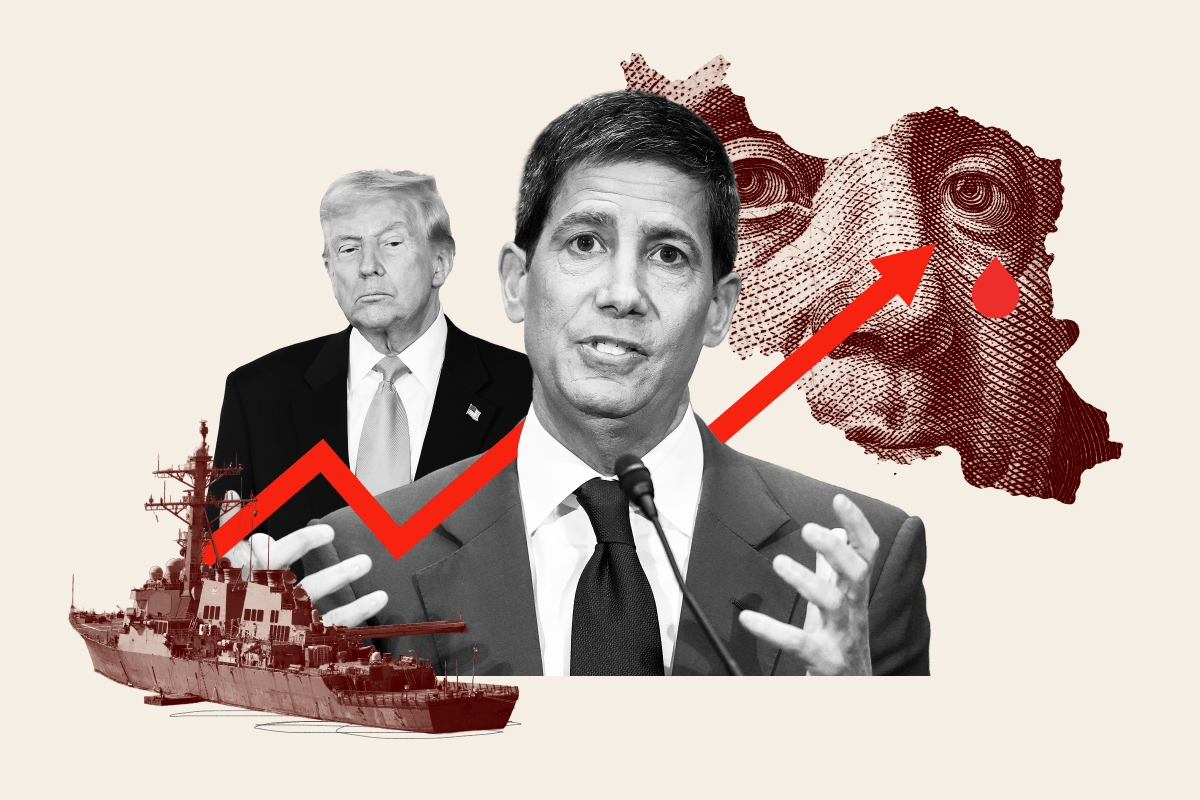
Trump launched a war that is generating exactly the inflation that prevents the Fed from doing what Trump has spent two years demanding. The person he is installing as Fed chair will inherit this trap with no clean exit.
The Hidden Bet
Kevin Warsh will cut rates because Trump wants him to.
Warsh is a known inflation hawk who dissented in favor of rate hikes during the 2010 recovery. His academic and public record is not accommodationist. Trump may have nominated a Fed chair who will resist cutting rates for the same reasons Powell did, but who also lacks Powell's institutional protection because he owes his appointment to Trump. That combination, hawk by conviction but politically dependent, is genuinely unstable.
The oil shock is temporary and will resolve once the Iran war ends.
Supply chains that re-routed around the Strait of Hormuz do not snap back instantly. Shipping contracts, insurance pricing, and refinery input sourcing all involve multi-month commitments. Even a peace deal that reopens the Strait tomorrow would take 60 to 90 days to fully pass through into energy prices. Meanwhile, wage growth has continued and is embedding into services inflation.
A rate hike is off the table because the economy is too fragile to absorb one.
The April jobs report, due Friday, is expected to show only 67,000 new jobs, a sharp slowdown. If inflation is at 3.5% and job creation is collapsing simultaneously, the Fed faces stagflation. In that scenario, the choice is not between hiking and cutting but between which kind of pain to inflict. The 2022-2023 playbook of hiking through a slowdown is the available precedent.
The Real Disagreement
The real fork is between treating the Iran oil shock as a supply-side problem that monetary policy should not fight, or treating elevated inflation expectations as a credibility problem that the Fed must address regardless of cause. Both positions are defensible. The first says: hiking rates does not produce more oil; it only produces a recession without fixing the underlying problem, so the Fed should hold and wait for the war to end. The second says: if the Fed allows inflation to run at 3.5% for long enough, inflation expectations un-anchor, workers demand wage increases, and you get second-round inflation that survives even after oil prices normalize. The second argument has the stronger historical support. The Fed that waited in the 1970s watched one oil shock become a decade of embedded inflation. The instinct to lean harder would be Warsh's, and it would be the right call under the current trajectory, even if Trump would publicly rage against it.
What No One Is Saying
Trump's public campaign against Powell was always about wanting lower rates. But Warsh's confirmation creates a situation where Trump gets his guy at the Fed precisely when the correct policy response to the conditions Trump created is not lower rates. If Warsh hikes to protect Fed credibility, Trump will attack him publicly within six months of confirmation. The Federal Reserve will have burned through two chairs in two years, both for doing the right thing.
Who Pays
Homebuyers and mortgage borrowers
Ongoing through 2026
If rates stay elevated or rise, 30-year mortgage rates remain near 7%. Existing homeowners with locked-in rates are insulated; new buyers and anyone who needs to refinance bear the full cost.
Small businesses with variable-rate debt
Immediate upon any rate hike
Commercial real estate loans, small business credit lines, and inventory financing are all priced off the federal funds rate. A hike directly increases operating costs for businesses already absorbing higher fuel and input prices.
US consumers with fixed incomes
Ongoing since the war began in February
Gasoline at 60% above January levels is a direct income transfer from consumers to oil producers. This is not an inflation that wage growth offsets quickly because energy is purchased with post-tax income and affects all consumption categories.
Scenarios
Warsh holds, inflation stays elevated
Warsh inherits Powell's hold posture, keeps rates at 3.5-3.75%, and signals patience tied to Hormuz reopening. Inflation stays at 3-3.5% through mid-2026. Markets accept this as reasonable given the supply-side cause.
Signal Watch the June FOMC statement for language removing the easing bias. Warsh threading this means language neutral on direction.
Stagflation forces a hike
April and May CPI come in above 3.5% even as job growth collapses. Warsh moves to hike 25 basis points at the July meeting to prevent expectations un-anchoring. Recession probability jumps.
Signal Watch for the April jobs report Friday. Below 50,000 jobs plus CPI above 3.5% next week would make a hike the expected path.
Iran deal, Hormuz opens, rate cuts resume
A peace deal at the Trump-Xi summit leads to Hormuz reopening by June. Oil falls to $80. Inflation recedes. Warsh cuts rates twice in Q4 as Trump had demanded. Trump claims credit for the rate cuts and for ending the war.
Signal Watch for oil futures pricing a Hormuz reopening before the summit. A drop below $90 in the prompt month would signal markets are pricing a deal.
What Would Change This
If the Iran war ends and oil falls below $80, the inflation picture changes quickly and rate cuts become the correct call. The entire analysis rests on the war continuing and the Strait remaining restricted. A verified Hormuz reopening would make the bottom line wrong within 60 days.