Russia's Africa Corps Just Lost Its First Battle
What happened
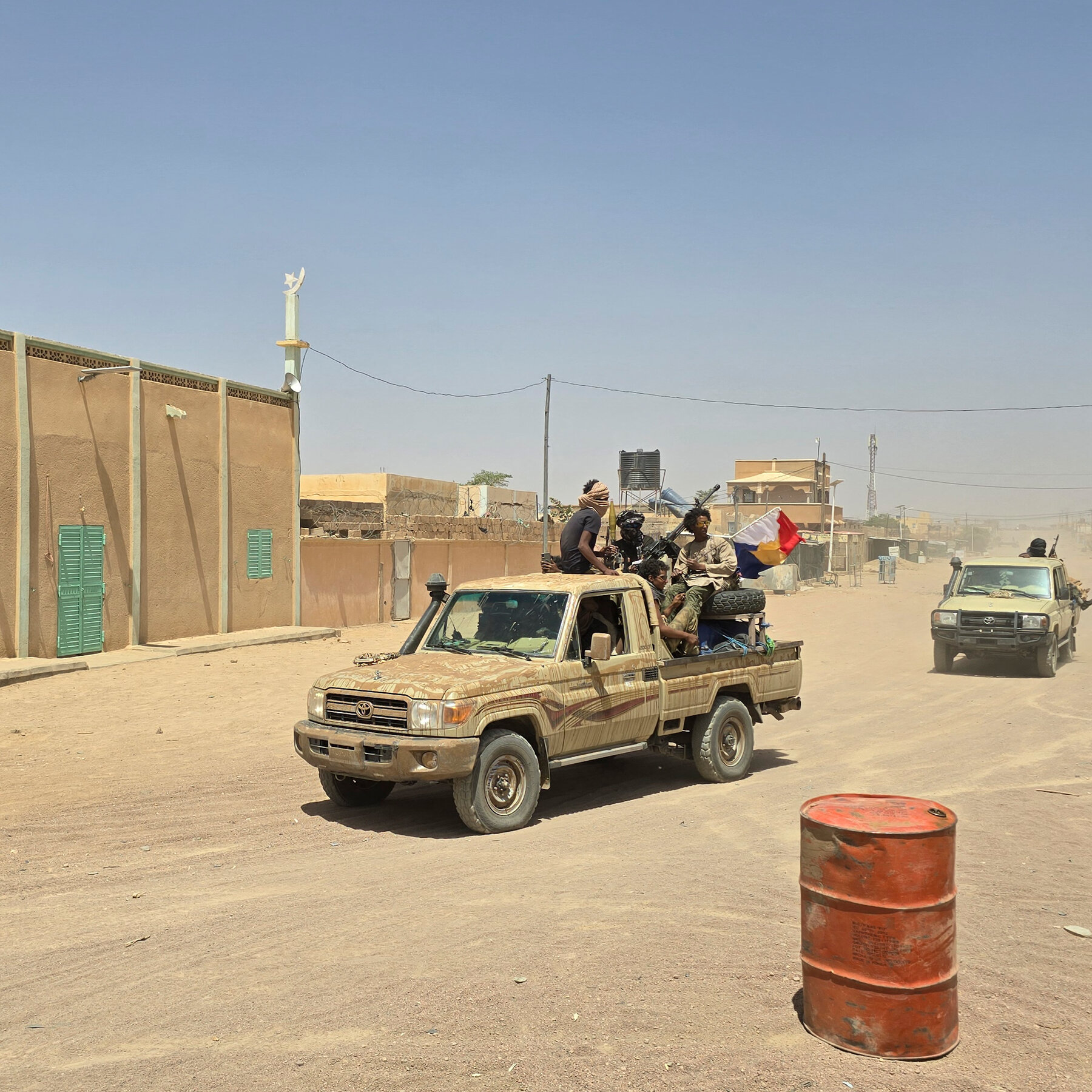
On Saturday April 26, coordinated attacks struck at least five Malian cities simultaneously: the capital Bamako, Sevare, Mopti, Gao, and Kidal. Malian Defense Minister Gen. Sadio Camara was killed in a suicide truck bombing at his residence near the capital. In Kidal, separatist Tuareg fighters of the Azawad Liberation Front overran positions defended by the Malian army and Russia's Africa Corps, which then negotiated a withdrawal and left the city. In Tessit, the jihadist group JNIM claimed the army had surrendered. Russia's Africa Corps, formerly the Wagner Group and now under Russian military command, confirmed the retreat from Kidal in social media posts while pledging operations would continue elsewhere.
Russia sold its Sahel clients a protection guarantee and delivered a negotiated retreat. The credibility of Russian private military force as a state-preservation service is now measurable, and the result is not good for Moscow's next pitch in Africa.
The Hidden Bet
The Africa Corps retreat from Kidal is a temporary tactical adjustment
Kidal was captured by Russian mercenaries and Malian forces in late 2023 and was considered a trophy of the Wagner/Africa Corps deployment. Losing it to the same insurgents who held it before undermines the entire narrative that the juntas sold to their populations: that Russia could succeed where France failed. If the narrative collapses, the political basis for the Russia-Mali alliance weakens.
The coordinated attacks represent a jihadist-separatist alignment that will persist
JNIM (al-Qaeda aligned) and the FLA (Tuareg separatists) are not natural allies and have fought each other in the past. The coordination may be opportunistic rather than strategic. Once the common enemy (the Russian-backed junta) is weakened, the two groups' incompatible end goals reassert.
The killing of the defense minister was the operation's primary goal
Camara was the coup's military architect and a central figure. But killing him may serve Russian interests as much as insurgent ones: a junta without its security minister becomes more dependent on Russia, not less. It is worth asking whether the Africa Corps' withdrawal from Kidal and the minister's killing serve anyone's interests besides the obvious parties.
The Real Disagreement
The fork here is between two interpretations of what Russia's Sahel project actually was. One view: a genuine state-stabilization effort in exchange for resource access, which has now failed because the task was always impossible. The other view: a deliberate dependency trap, where Russia provides just enough security to keep juntas in power and dependent on Moscow, with no intention of actually winning. If the second interpretation is correct, the retreat from Kidal is not a failure, it is the operation working as designed. The first interpretation is more charitable but requires ignoring that Russia has been in Mali since 2021 and the security situation is worse than when France left.
What No One Is Saying
France is watching this very carefully. Paris was forced out of Mali, Burkina Faso and Niger by juntas that blamed French failure for their countries' insecurity and turned to Russia as the alternative. If Russia now visibly fails at the same task, the political path back for France and for EU engagement in the Sahel reopens. The question is whether Paris will have the strategic patience to wait rather than immediately saying 'we told you so.'
Who Pays
Malian civilians in JNIM and FLA-controlled territory
Immediate and ongoing
Both JNIM and the Africa Corps have been documented committing atrocities. The power vacuum in Kidal and Tessit means civilian populations in those areas face a choice between jihadist governance and violent reconquest
The Mali junta and neighboring military governments in Burkina Faso and Niger
Near-term, over the next 3-6 months as insurgents test whether the weekend's gains hold
Their political legitimacy rests partly on the claim that Russia could provide security France could not. That claim is now empirically testable and the first test has gone poorly. They face a choice between doubling down on Russia or seeking new arrangements with no obvious alternative partner
Russia's Africa Corps contractor personnel
Immediate
The retreat from Kidal left wounded personnel and heavy equipment behind. The Africa Corps confirmed casualties. These are not soldiers under the protection of the Geneva Convention
Scenarios
Junta Survives, Regroups
The Mali junta replaces Camara, doubles its dependence on Russia, and launches a counteroffensive on Kidal within months. Africa Corps stays in country and the weekend's losses are treated as a setback, not a reversal.
Signal New defense minister appointment within two weeks; Africa Corps public statements about returning to Kidal specifically
Junta Fractures
Camara's killing destabilizes internal junta politics. A counter-coup attempt or internal power struggle follows. Mali enters a period of political instability on top of its security crisis.
Signal Unexplained absences or public contradictions among junta leadership; military checkpoints around the presidential palace
Ceasefire Diplomacy
The Alliance of Sahel States appeals to regional mediators. Negotiations begin with FLA on some form of autonomy for the north. JNIM, which does not negotiate, continues operating in the center.
Signal Mauritanian or Algerian diplomatic activity; FLA statements about willingness to negotiate that go beyond military demands
What Would Change This
If Russian forces publicly retake Kidal within 60 days and the junta survives intact, the narrative of Russian failure is reversed and the Africa model continues. If the junta falls or loses more territory, Russia's Sahel project becomes a documented failure with real consequences for its African diplomacy.
Related
Trump Pulls 5,000 Troops from Germany. NATO's Eastern Flank Is Now Improvising.
conflictThree Days of Quiet, Then Drones on Kyiv
conflictPutin Proposed His Friend Schroeder as Ukraine Mediator. Every Party That Matters Rejected Him Within 24 Hours.
conflictPutin Says the War Is Ending. He Means Something Different by That.