The $166 Billion Refund Nobody Can Actually Collect: The IEEPA Ruling's Unfinished Business
What happened
On February 20, 2026, the Supreme Court ruled 6-3 in Learning Resources, Inc. v. Trump that the president's 'Liberation Day' tariffs, imposed under the International Emergency Economic Powers Act, exceeded executive authority. Chief Justice Roberts wrote that IEEPA's language cannot bear the weight of tariff imposition, a power the Constitution reserves for Congress. US Customs and Border Protection halted collections and launched the CAPE refund portal on April 20. As of April 14, 56,497 importers had registered claims totaling $127 billion. Trump responded by calling the justices 'fools' and issuing a new 10-15% global surcharge under Section 122 of the Trade Act of 1974, a statute with a 150-day hard limit. The refund process is expected to take 2-3 months.
The SCOTUS ruling returned the tariff power to Congress, and Congress has not yet decided what to do with it: the $166 billion refund is simultaneously a legal mandate, a political weapon, and an administrative nightmare that the executive branch controls the pace of.
Prediction Markets
Prices as of 2026-04-27 — the analysis was written against these odds
The Hidden Bet
The refund process is straightforward: importers who paid will get money back
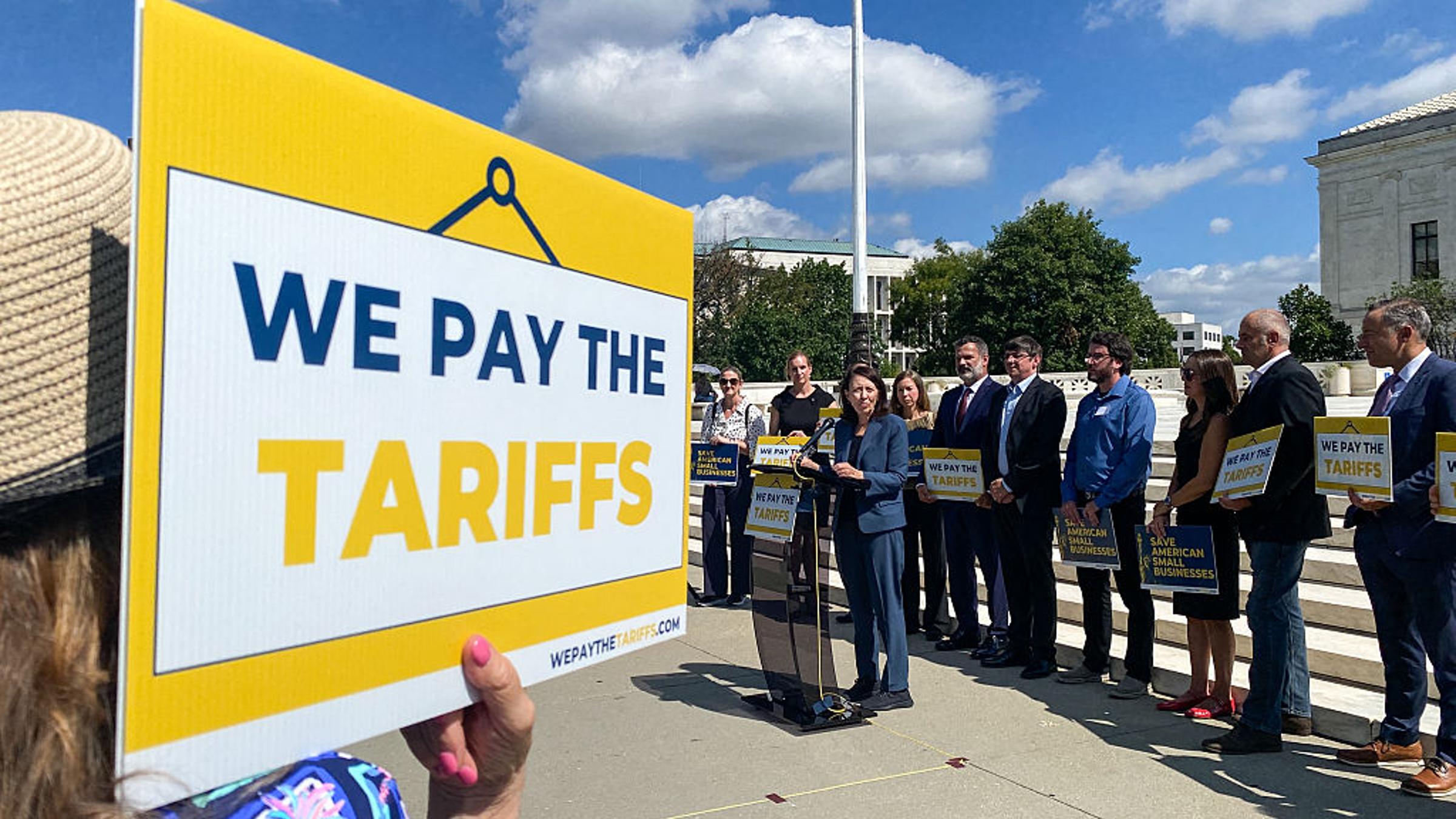
CBP runs the refund portal. The same agency that collected the tariffs now processes the refunds. Democrats are already warning that without sustained pressure, small businesses will wait months behind large importers who have compliance teams. The 2-3 month timeline is an estimate, not a deadline. There is no penalty if CBP is slow.
Section 122's 150-day limit means Trump loses his tariff leverage before summer
Trump can issue a new emergency declaration under Section 122 when the first 150 days expire, or pivot to Section 232 national security tariffs, which have no time limit. The SCOTUS ruling closed one door. It did not close all of them. Section 232 tariffs on steel and aluminum survive the ruling entirely.
The 6-3 ruling signals the Court will constrain executive trade power broadly
Four justices concurred separately with different reasoning. Kagan, Sotomayor, and Jackson agreed IEEPA doesn't authorize tariffs but explicitly declined to invoke the major-questions doctrine. Gorsuch and Barrett used the doctrine. Roberts' majority opinion was narrowly tailored to tariffs as taxes. Future challenges to Section 232 or new statutes may land differently.
The Real Disagreement
The real fork is whether tariff authority belongs structurally to Congress or whether executive agencies can reconstruct it through alternative statutes. Congress has a window to pass legislation explicitly authorizing presidential tariffs: if it does, the SCOTUS ruling becomes irrelevant. If it doesn't, the executive will keep improvising under statutes with weaker foundations. Both sides have a point. Congressional authorization would be more democratic and more durable. Executive flexibility responds faster to geopolitical events. You cannot have both at the same time. I'd lean toward the ruling being correct on the merits, but it will matter much less than it appears: Congress will almost certainly pass some form of tariff authorization because the Republican majority wants the policy to continue, and a statute is harder for courts to strike than an emergency declaration.
What No One Is Saying
The Trump administration is slow-walking refunds to importers it considers politically acceptable to punish. There is no evidence of this yet, but the incentive structure is perfect: CBP has discretion on processing order, and the administration that called the justices 'fools' is not enthusiastic about writing $166 billion in checks. Sen. Markey's warning about pressure is not paranoia. It is a description of how bureaucratic discretion works.
Who Pays
Small and mid-sized importers who paid IEEPA tariffs and cannot afford compliance teams
Over the next 2-6 months during the refund processing window
Large importers with legal departments registered first on CAPE and will process claims faster; small businesses face a queue behind sophisticated players even if they paid proportionally more
US consumers who absorbed tariff costs through higher retail prices
The price passthrough is permanent unless competition forces margins down
Refunds go to importers, not end consumers; the price increases already baked into retail goods will not automatically reverse even as importers recover duties paid
Congress as an institution
Decision point arrives when Section 122's 150-day clock expires around late July 2026
The ruling forces Congress to either legislate tariff authority (owning the political cost of trade war) or watch the executive improvise under weaker statutes indefinitely; either path requires a vote most members would rather avoid
Scenarios
Congress Legislates a Tariff Framework
Republicans pass a statute explicitly authorizing presidential tariff authority, effectively reversing the SCOTUS ruling through legislation. Trump gets his tariffs back with a legal foundation the Court cannot easily challenge. The $166 billion refund becomes the cost of establishing the new regime.
Signal Senate leadership schedules a tariff authorization vote before the Section 122 clock expires in July.
Executive Improvisation Continues
Congress fails to legislate, Trump extends tariffs under Section 232 and new Section 122 declarations, and each new measure faces its own legal challenges. The tariff regime becomes a patchwork of statutes with different vulnerabilities, creating permanent uncertainty for importers.
Signal Section 122 tariffs are renewed without a new statutory basis, triggering immediate legal challenges.
Refund Process Becomes a Political Crisis
Small business groups and Democrats document disparate refund processing speeds, the story goes national, and the administration is forced to publish processing data. Oversight hearings begin. Refunds for politically disfavored importers are publicly delayed.
Signal Senators request CBP processing data and CBP declines to provide it.
What Would Change This
If Congress passes a tariff authorization statute in the next 60 days, this entire analysis changes: the refunds become a transition cost, not a signal of executive overreach, and the ruling's significance is retrospective only. The bottom line that Congress is the operative variable holds until that vote happens.