The Government Is Mailing $166 Billion Back to Importers. Consumers Who Paid the Tariffs Get Nothing.
What happened
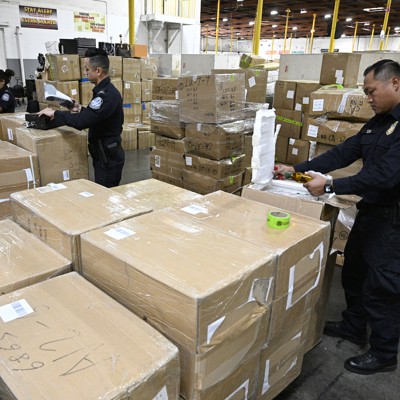
U.S. Customs and Border Protection launched a refund portal on April 21 allowing businesses to claim back tariffs paid under the IEEPA-based trade measures the Supreme Court struck down 6-3 in February. The ruling found that Trump exceeded his statutory authority by using the International Emergency Economic Powers Act to impose broad-based tariffs without congressional approval. CBP expects to process refunds within 30 to 60 days. Only the importers who directly paid duties to CBP are eligible; individual consumers who absorbed the cost through higher retail prices are not.
The $166 billion refund goes to corporations that can document their Customs filings. The households that paid it in the form of higher prices for electronics, appliances, and clothes get zero. That is not an accident.
Prediction Markets
Prices as of 2026-04-21 — the analysis was written against these odds
The Hidden Bet
The refund process will run smoothly and businesses will get their money in 30-60 days
Fortune's legal reporting flags that the administration has not appealed the Court of International Trade order, but retains the option to deploy procedural moves that would render refund applications a waste of time. The administration has every political incentive to do exactly that, and the legal window to act has not closed.
The SCOTUS ruling permanently constrains executive tariff power
The ruling was on IEEPA's scope, not on tariffs themselves. Congress could pass legislation retroactively authorizing the tariffs, converting the illegal exactions into valid ones. Several Republican members have already floated this. If that passes, refund applications filed under the current portal could be extinguished.
Corporations will pass refunds back to consumers who paid higher prices
There is no legal mechanism requiring it. A retailer that charged consumers a tariff surcharge and is now refunded by CBP keeps the spread. The consumer has no claim on the corporate windfall.
The Real Disagreement
The genuine fork is whether the refund is a victory for the rule of law or a gift to large importers at the expense of everyone else. Those who sued the tariffs argued constitutional principle: the executive cannot tax unilaterally. They were right, and won. But the practical outcome is that FedEx, Costco, and Toyota recover their costs while the waitress who paid more for her phone case in 2025 is simply out the money. You cannot fully celebrate the constitutional principle without acknowledging that the economic remedy is radically incomplete. The side worth leaning toward is the procedural win. IEEPA tariffs without congressional approval were a genuine abuse. But the celebration should be muted until someone explains why the remedy flows only to the direct payors and not to the people those payors were billing.
What No One Is Saying
The Trump administration opening a refund portal without appealing is structurally bizarre. They lost a major constitutional case and the instinct of every administration in the history of American law is to appeal, delay, and preserve executive power. The fact that they did not suggests either that they expect Congress to legislate their way out of the problem, or that they want the refund process to appear cooperative while engineering its collapse from within.
Who Pays
Consumers who paid tariff surcharges at retail
Already paid; no recovery path
No legal mechanism to claim refunds; the importer who received the refund keeps the spread between what they recovered from CBP and what they charged downstream
Small importers without trade attorneys
Documentation challenge plays out over the 30-60 day filing window
The refund portal requires specific customs entry documentation; businesses that relied on brokers or consolidated entries may lack the paperwork to file valid claims; large corporations with dedicated trade compliance teams have already filed
US federal budget
Refunds begin within 60 days; fiscal impact spreads across Q2 and Q3 2026
The Treasury collected $166 billion it now has to return; the deficit absorbs the hole; this lands at a moment when the administration is trying to use tariff revenue projections to fund the reconciliation bill
Scenarios
Clean Refund
Administration processes the portal claims without obstruction, refunds go out within 60 days, and the IEEPA ruling becomes a settled limit on executive tariff authority going forward.
Signal Administration files no challenge to the Court of International Trade order by May 15; refund batches confirmed by CBP on schedule
Congressional End-Run
Republican leadership inserts retroactive tariff authorization into the reconciliation bill, arguing it converts the IEEPA tariffs into congressionally approved ones, extinguishing pending refund claims.
Signal Senate Finance or Ways and Means produces draft legislative text on tariff authorization within the next three weeks
Procedural Freeze
Administration uses procedural moves at the Court of International Trade to stay the refund order pending further review, creating months of uncertainty; companies that filed are left in limbo.
Signal DOJ files a motion to stay or administratively close the CIT proceedings without a full appeal by end of April
What Would Change This
If the administration appeals to the Federal Circuit Court of Appeals and obtains a stay of the refund order, the bottom line becomes wrong: refunds would not be mailed, and the constitutional question would be relitigated at a higher level. The absence of an appeal by May 1 would substantially confirm the clean refund path.
Related
The $127 Billion Refund Nobody Will Receive
powerTrump's Tariff Playbook Has One Move Left and It Also Got Struck Down
powerThe Courts Have Now Killed Two Different Tariff Regimes. Trump Keeps Building New Ones.
powerThe Tariffs Are Gone. The $166 Billion Refund Has Arrived. The Trade War Has Not Ended.