One Year After India Struck Pakistan, Both Countries Are More Dangerous Than Before
What happened
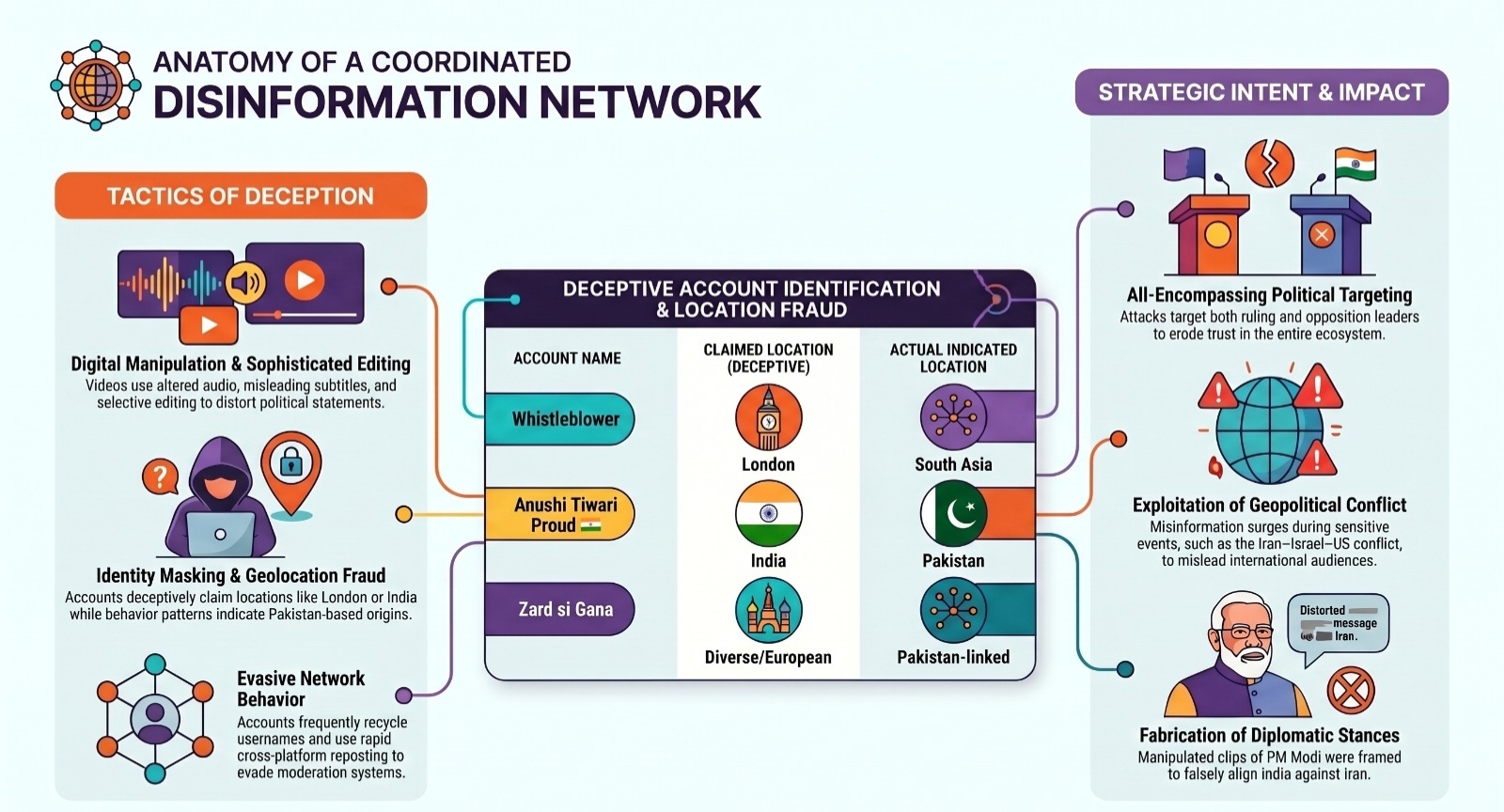
On April 22, 2025, Pakistani-linked militants killed 26 tourists at Pahalgam in Kashmir's Lidder Valley. India responded with Operation Sindoor: precision strikes on nine terror camps in Pakistan-administered Kashmir and Pakistan's Punjab province. Pakistan retaliated with drones and artillery. India suspended the 1960 Indus Waters Treaty, which gives Pakistan 80% of Indus River flow. One year later, India's military is holding its Joint Commanders Conference on the anniversary to plan next steps including dedicated missile forces. Pakistan has appealed to the UN Security Council over the water treaty suspension as summer heat intensifies, and coordinated disinformation networks have been pushing anti-India narratives across social media. India is conducting diplomatic delegations to major capitals to consolidate its position.
Operation Sindoor demonstrated that limited war between nuclear-armed states is survivable. Both governments now know this. India's military is planning to entrench that advantage with permanent new force structures. Pakistan is slowly losing the water, diplomatic, and information wars simultaneously. A second Pahalgam-scale attack would force India to escalate beyond Sindoor's calibrated template, and Pakistan knows it.
Prediction Markets
Prices as of 2026-04-26 — the analysis was written against these odds
The Hidden Bet
Mutual nuclear deterrence will continue to prevent full-scale war between India and Pakistan.
Sindoor crossed the threshold of striking inside Pakistan proper and nothing happened. Both sides have now demonstrated that strikes on the other's territory do not automatically trigger nuclear response. The deterrence threshold may have shifted downward, meaning more aggressive conventional actions are now conceivable without triggering escalation.
The Indus Waters Treaty suspension is a negotiating tactic India will reverse once Pakistan reduces terror support.
India is discussing large-scale water diversion infrastructure to redirect western river flow to water-stressed northern Indian states. If that infrastructure gets built, reversal becomes economically costly for India regardless of Pakistan's behavior. The suspension may be the beginning of a permanent restructuring, not a bargaining chip.
The US can manage both its India partnership and its historical relationship with Pakistan.
Washington used Pakistan as a channel in Iran nuclear talks. India watched this while receiving US approval of Operation Sindoor. The US cannot simultaneously depend on Pakistan as a diplomatic intermediary and position India as its primary South Asian partner. The two relationships are in structural tension that one Sindoor anniversary cannot resolve.
The Real Disagreement
The genuine disagreement is about what India proved. India's reading: Sindoor established a new deterrence equilibrium where cross-border terror attacks carry a proportionate military cost, and Pakistan will think twice before supporting future attacks. Pakistan's reading: India violated international law by striking inside Pakistan without UN authorization, created a precedent that legitimizes Pakistani strikes inside India, and proved that the only real deterrent is nuclear escalation, which Pakistan will ultimately be forced to make more credible. Both readings are internally coherent. India's is more stable in the short term. Pakistan's may prove accurate over five to ten years if Pakistani military planners conclude the conventional deterrent has collapsed.
What No One Is Saying
Pakistan is losing water, military credibility, and diplomatic standing simultaneously, and its main external lever is a nuclear arsenal it cannot use without self-destruction. A state in that position, with military actors who have institutional incentives to manufacture crises, is more likely to sponsor a spectacular attack than a stable state. India's success in Sindoor may have made the next attack more likely by demonstrating that conventional retaliation is survivable and by removing Pakistan's face-saving options.
Who Pays
Pakistani farmers and rural communities dependent on Indus river water
Acute pressure during April-June 2026 summer season; structural damage over 3-5 years if treaty remains suspended.
India's suspension of the treaty reduces water allocation to Pakistan's agricultural heartland during peak summer demand. Pakistan's water crisis, already severe from decades of mismanagement, worsens with no diplomatic mechanism for relief.
Kashmiri civilians
Ongoing through 2026; recovery timeline depends on security trajectory.
The militarization of both sides of the Line of Control following Sindoor increases surveillance, checkpoints, and restrictions. Tourism, which had revived before Pahalgam, is again suppressed.
US diplomatic strategy in South Asia
Immediate: visible in how the State Department has navigated the UNSC water treaty appeal.
Each India-Pakistan escalation forces Washington to choose between its strategic partnership with India and its operational relationship with Pakistan. The Sindoor anniversary and continued water treaty dispute make neutral positioning increasingly untenable.
Scenarios
India builds permanent deterrence infrastructure, standoff hardens
India establishes dedicated rocket forces and completes water diversion infrastructure. Pakistan's water crisis deepens. No major attack occurs but the low-level proxy conflict in Kashmir continues. Both sides accept this as the new normal.
Signal India's Joint Commanders Conference produces formal announcement of new missile force structure; Pakistan does not escalate water dispute beyond UNSC.
Second major attack, India escalates beyond Sindoor's limits
Pakistani-linked militants conduct a mass-casualty attack inside India. India's response extends beyond terror camps to Pakistani military infrastructure. Pakistan's nuclear threshold is tested in practice.
Signal Any mass-casualty attack on Indian civilians or military that produces domestic political pressure on Modi comparable to Pahalgam.
Water crisis destabilizes Pakistan, political collapse
Pakistan's summer water shortages combine with existing economic fragility to trigger domestic unrest. The military-civilian balance in Pakistan shifts. A less stable Pakistani government faces both internal pressure and Indian deterrence — the most dangerous combination.
Signal Pakistan's IMF program faces review; military-backed government faces mass protests over water and food prices by August 2026.
What Would Change This
If Pakistan takes genuine, verifiable steps to dismantle The Resistance Front and related terror infrastructure as a condition of reopening Indus Waters negotiations, India would face a choice between maintaining pressure and accepting a deal that might hold. A credible dismantlement offer would test whether India's position is about security or about permanent strategic dominance — those are different goals with different implications.
Related
One Year After Operation Sindoor: Both Sides Won, Neither Side Is Safer
conflictOne Year After Operation Sindoor, Pakistan's Army Chief Is Having Lunch at the White House
conflictOne Year After Operation Sindoor, Both India and Pakistan Are Preparing for the Next War
conflictChina Confirms What India Already Knew. The Problem Is Why They Said It Now.