The Strait That Won't Stay Open
What happened
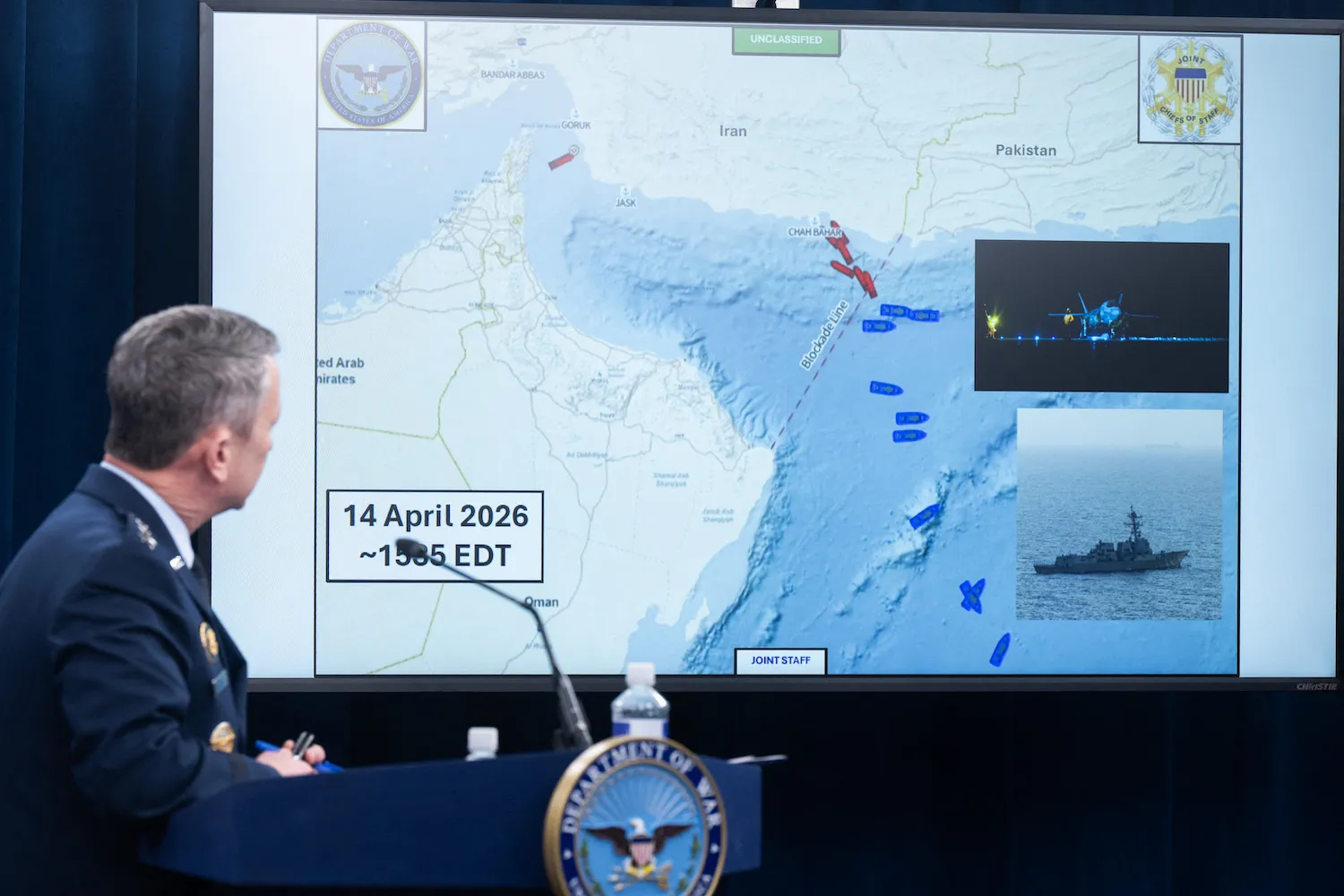
The United States is maintaining a naval blockade of Iranian ports following Operation Epic Fury, the joint US-Israel strikes that began in early March 2026. A two-week ceasefire is in place but expiring. Talks in Pakistan led by VP Vance ended without a deal: the US wants a 20-year freeze on uranium enrichment; Iran offered 5 years. Iran has declared the Strait of Hormuz 'completely open' for commercial shipping while the US maintains its blockade of Iranian military and government vessels. Pakistan's army chief traveled to Tehran to try to extend the ceasefire and resume negotiations. Separately, the US quietly extended its waiver allowing countries to buy Russian oil for one more month, reversing signals from days earlier, as Iran-driven oil price spikes squeeze allied economies.
The ceasefire is a countdown timer, not a peace process. Iran and the US are 15 years apart on their core demand, and the only thing keeping this from resuming is Pakistan's ability to buy time neither side has asked for.
Prediction Markets
Prices as of 2026-04-18 — the analysis was written against these odds
US x Iran permanent peace deal by April 30, 2026?
Polymarket · as of 2026-04-18
46%
yes
US x Iran permanent peace deal by May 31, 2026?
Polymarket · as of 2026-04-18
65%
yes
Will Trump agree to Iranian Oil sanction relief in April?
Polymarket · as of 2026-04-18
52%
yes
Will Trump agree to Iranian enrichment of uranium in April?
Polymarket · as of 2026-04-18
43%
yes
The Hidden Bet
Pakistan is a neutral mediator
Pakistan depends on Saudi and Gulf money, and its army runs its own foreign policy separate from the civilian government. Its mediation serves Pakistani interests first: stability in its west, distance from a US-Iran escalation that would force it to choose sides. That is not the same as wanting the deal both sides actually need.
The Hormuz 'reopening' reduces the economic pressure that might force a deal
Iran may be declaring Hormuz open precisely because keeping it shut costs Iran more than it costs the US. Gulf Arab producers need the waterway too, and Iran loses leverage the longer it appears to be the one closing the strait. The declaration is performative, not strategic.
The 20-year vs 5-year enrichment gap is the real sticking point
The enrichment timeline is a proxy. What Iran actually wants is sanctions relief and a guarantee the US will not resume strikes after a deal. What the US actually wants is to avoid leaving office having 'lost' Iran. Both positions require the other side to trust an agreement neither can enforce.
The Real Disagreement
The real fork is whether a partial deal, short-term enrichment freeze plus sanctions relief plus formal ceasefire, is better than no deal. The US argument for holding out for 20 years: any shorter deal just restores Iran's program on a delay and leaves the next administration to handle a nuclear-capable Iran. Iran's argument for 5 years: they have already survived the strikes and proven their missile capability intact. A 20-year deal asks them to give away their only deterrent for sanctions relief that can be reversed. Both positions are coherent. The US side is more likely correct about the long-term risk, but Iran is more likely correct about what they will actually accept. If I had to lean one way: take the 5-year deal with rigorous inspections and address the deterrence question separately, because 20 years of enrichment freeze enforced by military threat alone has a worse track record than 5 years of genuine compliance.
What No One Is Saying
Iran's missile and drone capabilities survived the strikes, per US intelligence. That means the strikes achieved regime disruption but not disarmament. The US is now negotiating with a state it attacked, from a position where the attacked state retains the ability to retaliate. The public framing is that Iran is the supplicant. The market for Iranian concessions on enrichment is actually thinner than anyone is admitting.
Who Pays
Gulf Arab oil exporters (Saudi Arabia, UAE)
Already underway; each week the blockade continues compounds logistics costs.
Hormuz closure or ambiguity raises insurance and shipping costs even when commercial transit is 'allowed.' Their oil exports are hostage to a conflict they did not start.
European NATO allies
Already delayed; timeline depends on how long the Iran campaign continues.
US arms deliveries to Europe have been delayed because military logistics are stretched by Operation Epic Fury. Baltic and Scandinavian countries are among those affected.
Iranian civilian population
Ongoing; will worsen if talks collapse and blockade extends.
Sanctions were already severe before the war; now combined with war damage and oil export disruption, the humanitarian cost is compounding regardless of ceasefire status.
Scenarios
Patchwork deal
A 10-year enrichment freeze is agreed through Pakistani mediation. Sanctions partially lifted. The blockade ends. Both sides claim victory. Iran retains enrichment capability below weapons-grade. The nuclear question is deferred.
Signal Pakistani army chief announces a third round of talks with a specific date. Trump tweets about 'the biggest deal in history.'
Ceasefire collapses
Talks fail on the enrichment gap. Iran resumes military operations in the strait, including drone and missile harassment of commercial shipping. US escalates to direct strikes on remaining missile infrastructure. Oil price spikes above $140/barrel.
Signal Iran publicly rejects the US enrichment timeline and declares ceasefire void. No new talks scheduled.
Frozen conflict
Ceasefire is extended repeatedly in two-week increments without a formal deal. Blockade continues but Hormuz commercial transit remains largely functional. Both sides reduce operations below the threshold of escalation. The war becomes a background condition.
Signal Third ceasefire extension announced with no change in negotiating positions.
What Would Change This
If Iran agreed to a 10-year enrichment pause with IAEA inspection access and the US offered binding sanctions relief that survived presidential changes, the bottom line would have to be revised. The current gap is 15 years. If that gap closes to 5, the deal becomes plausible.