Zelenskyy Says Washington Has No Time for Ukraine
What happened
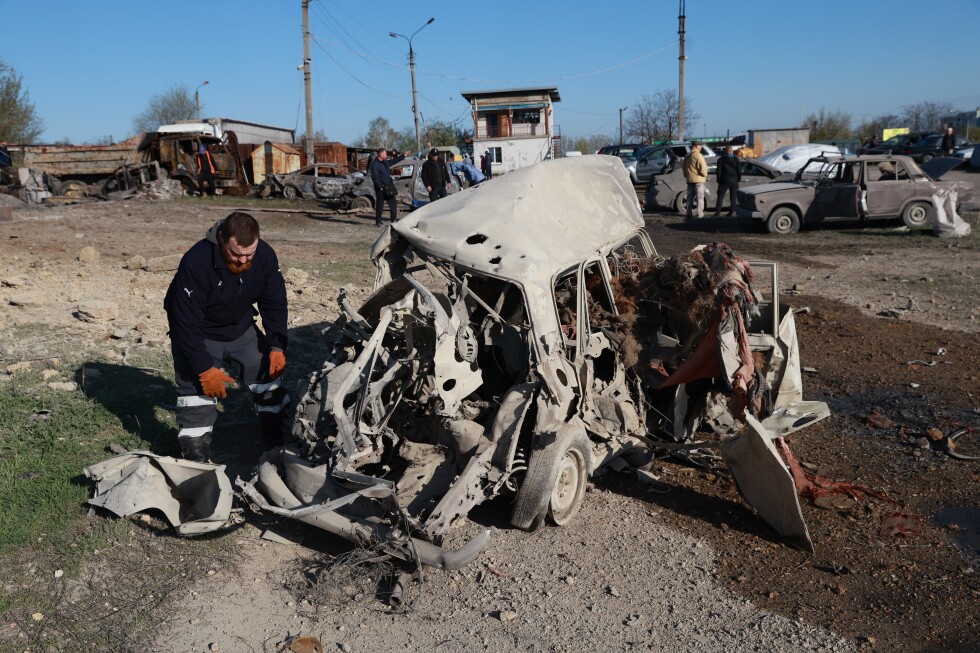
On April 16, Russia launched its largest single aerial barrage in weeks: 659 drones and missiles targeting Ukraine overnight. Ukraine's air defenses intercepted 31 of 44 missiles and 636 of 659 drones. Hours after the attack, Zelenskyy gave an interview to German broadcaster ZDF stating that US peace negotiators Steve Witkoff and Jared Kushner were 'constantly in talks with Iran' and had no bandwidth for Ukraine. He also said US arms deliveries, particularly air defense munitions, were being disrupted. The UK announced its largest-ever drone shipment to Ukraine, 120,000 units, while Russia warned European defense plants supplying Ukraine were now legitimate targets.
Ukraine is being asked to hold the line against the largest aerial war in Europe since 1945 while its primary patron's negotiators are in Muscat. The distraction is not incidental: it is the strategic environment Russia has been engineering for two years.
Prediction Markets
Prices as of 2026-04-16 — the analysis was written against these odds
The Hidden Bet
US attention is temporarily divided and will return to Ukraine once the Iran situation stabilizes
The Iran war has created a permanent reordering of US diplomatic priorities. Witkoff and Kushner's deal-making capital is finite, and a ceasefire framework with Iran would consume it entirely. Ukraine might not be getting 'less attention right now' but rather a permanent demotion in the queue.
European arms, including the UK drone package, can meaningfully substitute for US air defense munitions
Drones replace drones. Patriot interceptors are made in the US, in limited quantity, and require US export approval. Europe cannot manufacture Patriot-equivalent systems at the rate Ukraine is depleting them. The drone gap is fillable; the high-end air defense gap is not.
Russia's massive barrage is a military operation aimed at infrastructure
A 659-target barrage is also a negotiating signal. Russia fires when it wants to demonstrate that ceasefire terms are its to dictate, not Ukraine's. The timing, the same week Zelenskyy complained about US neglect, is almost certainly deliberate.
The Real Disagreement
The fork is whether Ukraine should publicly demand US attention now, at the cost of irritating Washington, or stay quiet and let the neglect continue. Zelenskyy chose the public rebuke in a German interview. That suggests he has calculated that embarrassing the US publicly is worth more than maintaining the diplomatic fiction that everything is fine. The problem is that Washington's current team rewards loyalty over complaint, and Zelenskyy may have just made his situation worse in exchange for a week of sympathetic press coverage.
What No One Is Saying
The Iran war is good for Russia. Every week that US diplomatic energy goes toward a ceasefire in Tehran is a week Ukraine's position at the negotiating table weakens. Russia has achieved in three months what it failed to achieve in three years: getting the US to want something from Moscow more than Moscow wants anything from the US.
Who Pays
Ukrainian civilians in Kharkiv, Kyiv, and Odesa
Already happening; worsens over the next 60-90 days if Patriot resupply stalls
Air defense intercept rates decline as US munitions slow; the 13 missiles that got through on April 16 hit residential infrastructure. As stockpiles deplete, more get through.
European NATO members
Medium-term, 6-18 months
If Ukraine's front collapses or freezes on Russian terms, the deterrence cost of defending the eastern flank rises sharply. Germany, Poland, and the Baltic states absorb that cost in defense spending and political instability.
Scenarios
Drift to Freeze
US attention stays on Iran through summer. Ukraine holds the current line but makes no gains. A de facto ceasefire emerges by autumn not because anyone agreed to it but because both sides are exhausted and the US stopped pushing.
Signal Witkoff and Kushner miss a second consecutive scheduled Ukraine call and no rescheduling is announced
European Escalation Bridge
UK, France, and Germany accelerate a combined air defense package that partially substitutes for US Patriot supply. Ukraine stabilizes its air defense coverage enough to resist Russian barrages. Negotiations resume in September.
Signal Germany announces it is releasing additional Patriot batteries from Bundeswehr inventory, not just ordering new ones
Russian Negotiating Push
Russia, reading the same signals about US distraction, launches a major offensive in late spring to lock in territorial gains before any peace framework can be imposed. The goal is to negotiate from a stronger map.
Signal Russian troop concentrations on the Zaporizhzhia axis exceed the 2024 pre-offensive levels visible in satellite imagery
What Would Change This
If Witkoff publicly states that Ukraine talks are his primary focus and a new round of bilateral Ukraine-Russia contacts is scheduled, the distraction thesis collapses. If the US fast-tracks a Patriot resupply authorization, the munitions gap thesis collapses. Until then, the structural analysis holds.
Related
Both Sides Declared a Ceasefire. Both Sides Violated It. Now They're Doing It Again.
conflictTwo Countries, Two Ceasefires, Zero Agreement
conflictPutin's Victory Day Ceasefire Does Not Require Ukraine's Agreement. That Is the Point.
conflictWitkoff Has Been to Moscow Eight Times. He Has Never Been to Kyiv.