Trump Sanctioned China's Oil Supply Chain to Gain Leverage Before the Summit. China Already Priced It In.
What happened
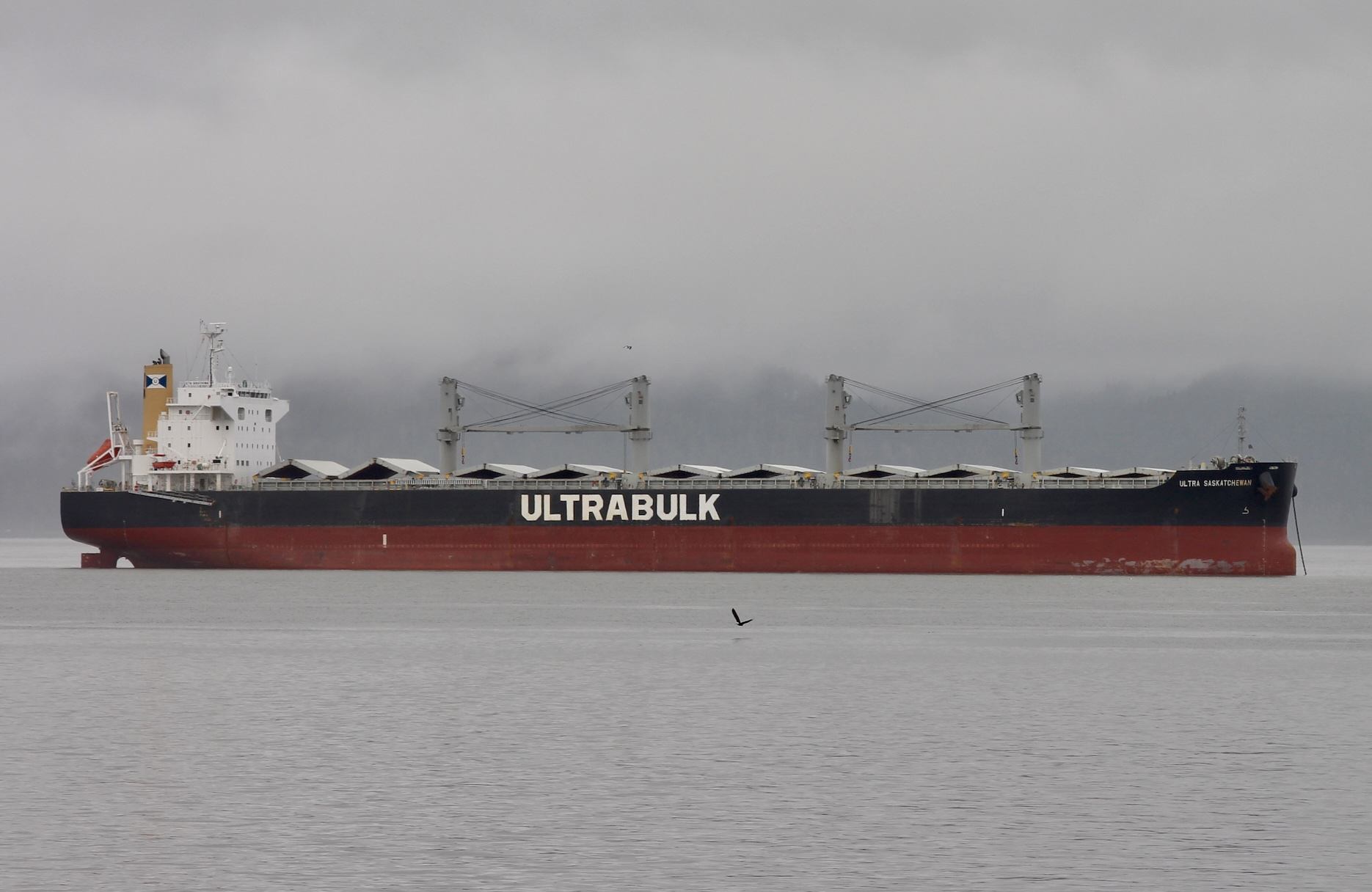
On April 24, the Trump administration sanctioned Hengli Petrochemical, a refinery processing 400,000 barrels per day in Dalian, along with 40 associated shipping entities. The action was framed as leverage before the May 14 Trump-Xi summit in Beijing. A precursor meeting between Treasury Secretary Bessent and Chinese Vice Premier He Lifeng is taking place in South Korea this week to lay groundwork. Meanwhile, China's State Council published Order No. 834 on April 7, establishing a national supply chain oversight framework that allows Beijing to investigate foreign entities that 'interrupt normal transactions.' China's shipbuilding now accounts for 55%+ of global output, and Chinese state-owned enterprises hold stakes in over 100 ports across 50 countries.
Washington sanctioned an entity China has already insulated from Western financial jurisdiction, treating the threat as a bargaining chip it had already handed the other side.
The Hidden Bet
Sanctioning Hengli gives the U.S. meaningful leverage at the summit.
The CounterPunch analysis, drawing on Chinese industrial data, argues that Hengli was already largely operating within China's shadow financial system. The sanction forces Hengli to deepen its integration into non-Western ecosystems that already exist. Executing a sanction removes the deterrent value. China now has an incentive structure that does not include reversing course.
The summit will produce a deal that reduces tension.
The summit agenda includes trade tariffs, AI governance, Taiwan, and the Strait of Hormuz. These issues do not have easy midpoints. Any deal on trade that satisfies Trump's domestic base (buy American goods, reduce deficit) will simultaneously signal weakness on Taiwan to hawks in both countries. A summit that produces a 'statement of principles' with no enforcement mechanism is not a deal; it is a photo opportunity that postpones the same problems.
European and Asian allies benefit from reduced U.S.-China tension.
A U.S.-China grand bargain could agree to reduce Chinese tariffs in exchange for U.S. goods, specifically oil and natural gas. That would drive up global commodity prices and eliminate the 'China plus one' manufacturing diversification strategy that Vietnam, Indonesia, and others have built. A deal that solves the U.S.-China bilateral problem exports costs to third parties who had no voice in the negotiation.
The Real Disagreement
The actual question at the summit is whether Trump trades Taiwan security commitments for trade concessions. Trump's approach to alliances has been explicitly transactional. Bonnie Glaser of the German Marshall Fund warned that any 'rhetorical softening' on Taiwan would be the most destabilizing outcome. Beijing's Wang Yi told Rubio in April that Taiwan is 'the biggest point of risk.' Both sides know the summit has a Taiwan dimension. The trade framing is not the real negotiation; it is the cover for the Taiwan negotiation. Whether Trump understands this is the question American allies in the Pacific cannot answer with confidence.
What No One Is Saying
Putin arrives in Beijing within days of Trump's departure. The timing is not coincidental. Moscow needs to know whether Beijing's support for Russian sanctions evasion is contingent on the U.S.-China relationship improving. A U.S.-China deal that reduces economic confrontation could reduce China's incentive to maintain its shadow financing of Russian energy exports. Russia is the unrepresented party at the summit, and its interests are potentially the most exposed by any outcome.
Who Pays
Southeast Asian manufacturers (Vietnam, Indonesia, Bangladesh)
Medium-term: visible in 2027 FDI flows if a tariff deal is announced.
The 'China plus one' strategy made them beneficiaries of supply chain diversification away from China. If U.S.-China tariffs are reduced as part of a summit deal, the cost advantage of manufacturing in Vietnam evaporates. Foreign direct investment that was heading to Vietnam reverts to China.
U.S. AI and semiconductor firms
Medium-term: 12-18 months after any deal is signed.
Any summit deal on AI governance will involve reciprocal constraints on U.S. technology exports to China. Washington currently restricts advanced chip sales; a deal might require codifying those restrictions into treaty language while giving China something it wants in return. U.S. AI firms lose Chinese revenue and Chinese firms gain time to develop domestic alternatives.
Taiwan
Potentially immediate as signals are read by military planners on both sides.
Not present at the summit. Any U.S. commitment to soften Taiwan policy in exchange for trade concessions happens over Taiwan's head. Even a private signal that U.S. security commitments are conditional changes the deterrence calculus for Beijing.
Scenarios
Symbolic summit, structural stalemate
Trump and Xi announce a joint statement on framework for further trade talks, commit to resume military communication channels, and say nothing specific on Taiwan. Markets rally briefly. The underlying tensions remain unresolved. Sanctions on Hengli stay in place but are not escalated.
Signal A joint statement with no specific tariff numbers or removal of any existing sanctions.
Trade deal, Taiwan implicit concession
Trump agrees to reduce tariffs on Chinese goods in exchange for Chinese purchases of U.S. oil and gas. A private understanding on Taiwan reduces U.S. arms sales to the island. European and Asian allies begin serious efforts at independent defense arrangements.
Signal Any language in the summit communique that describes Taiwan as a 'domestic affair' of China or that omits previous U.S. commitments to Taiwan's self-defense.
Summit collapse, escalation
The Bessent-He Lifeng precursor meeting in South Korea fails to agree on framework language. The Beijing summit is downgraded or canceled. Sanctions escalate; China activates Order 834 against U.S. companies operating in Chinese ports. The trade war enters its most confrontational phase.
Signal Watch whether the South Korea precursor meeting produces a joint statement. If Bessent returns to Washington without releasing any readout, the summit is in trouble.
What Would Change This
If China agrees to meaningful constraints on its rare earth export controls as part of a summit deal, that would indicate Beijing is genuinely willing to make concessions rather than simply managing the photo opportunity. Rare earth export controls are China's most credible remaining economic weapon; giving them up would be a real concession. If that happens, the analysis that China has already 'won' the leverage battle would need revision.