Nvidia Has Zero Percent of China's AI Market. Its CEO Says That Was Always the Point.
What happened
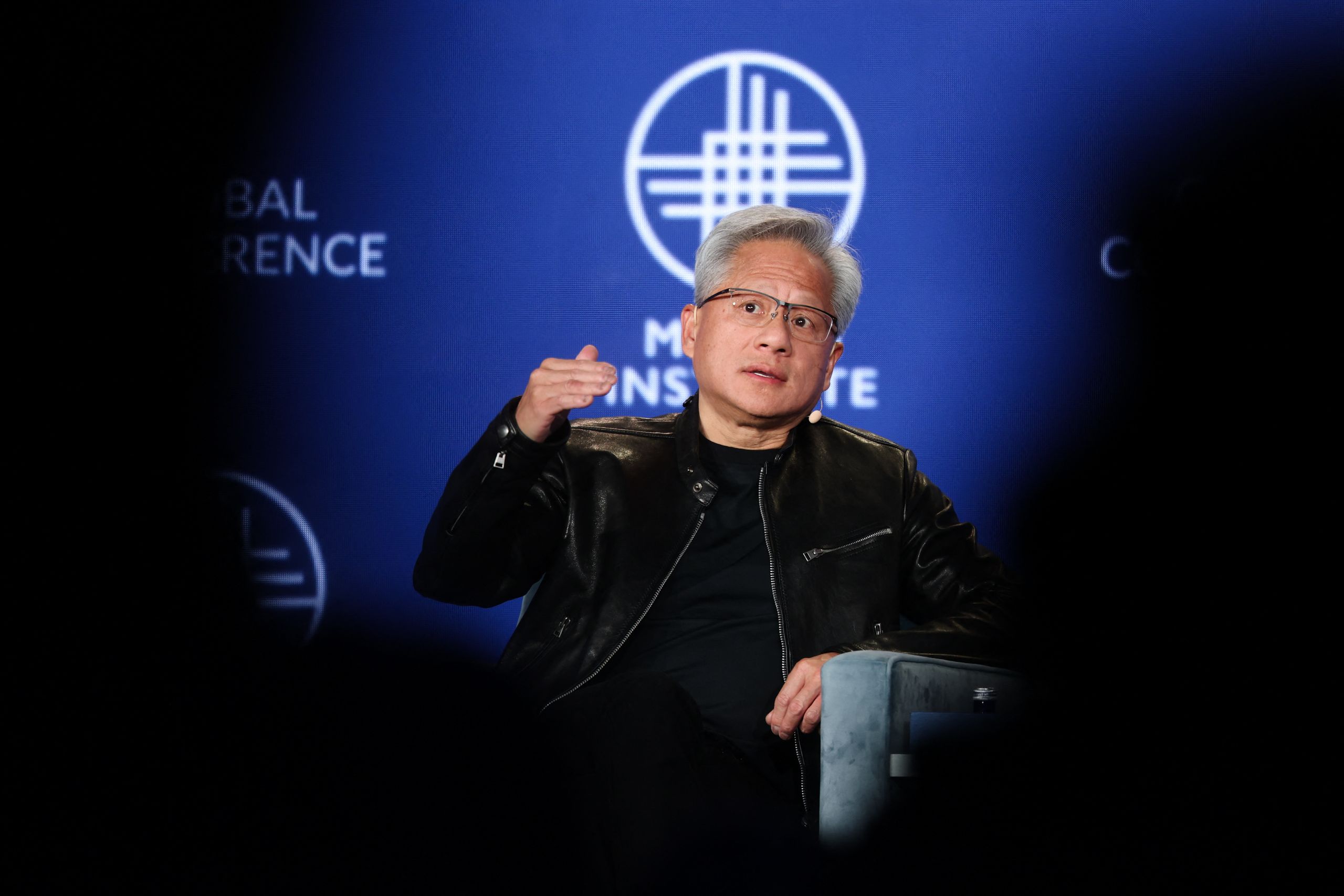
Nvidia CEO Jensen Huang told a Special Competitive Studies Project podcast that Nvidia's share of China's AI accelerator market has dropped to zero. Huang said US export policy has 'already largely backfired,' with Huawei moving to capture the market Nvidia vacated. Huawei is projecting $12 billion in AI chip revenue this year. Simultaneously, estimates suggest $1 billion per quarter in Nvidia chips are being smuggled into China despite the controls, and the Supermicro DOJ indictment involves alleged smuggling of $2.5 billion in Nvidia-equipped servers.
The export controls achieved exactly what they were supposed to prevent: they gave Huawei a protected home market to build scale, and they didn't stop China from getting the chips anyway.
The Hidden Bet
Export controls reduce China's access to advanced AI chips
Smuggling estimates of $1 billion per quarter in Nvidia chips suggest the controls are porous. Meanwhile, Huawei's Ascend architecture is maturing at exactly the pace the protected market allows. The controls may be training China's chip industry more than restricting it.
Jensen Huang is making a national security argument
Huang is making a revenue argument wrapped in national security language. Nvidia has lost its largest single international market. His claim that the US should 'export like crazy' benefits Nvidia shareholders directly. That doesn't make him wrong, but it does mean his testimony before Washington audiences is not disinterested.
Huawei's chips are not good enough to replace Nvidia at the frontier
Huawei's Ascend 910C is reportedly within striking distance of the H100 on training benchmarks. Chinese firms like ByteDance and Baidu have been quietly shifting workloads. The gap may be closing faster than US policymakers assumed when the controls were designed.
The Real Disagreement
The genuine fork is whether export controls are designed to win or to delay. If the goal is to prevent China from ever reaching frontier AI, the controls have failed: smuggling is rampant, domestic alternatives are scaling, and the gap is narrowing. If the goal is to buy 2-5 years of lead time for US firms to build structural advantages in software ecosystems, customer relationships, and downstream applications, the controls may be working on schedule. These are not the same goal and they require different policies. Huang is attacking the first goal as if it were the only one. His critics in the Commerce Department are defending the second goal as if it were the same as the first. Nobody is saying clearly which they're actually pursuing. The uncomfortable position: Huang is probably right that the narrow-gap goal is already lost, but the delay-and-diversify goal may still be achievable, and he has every incentive to conflate them.
What No One Is Saying
If $1 billion per quarter in Nvidia chips are being smuggled into China and the US knows this, the controls function less as a barrier and more as a customs duty on Chinese AI development, paid to US black-market intermediaries. That is not nothing, but it is very different from what Congress believes it passed.
Who Pays
US AI startups building on Nvidia infrastructure
Ongoing, with pricing effects within 6-12 months of any policy change
If export rules loosen, Nvidia's US allocation constraints ease and prices drop; if rules tighten further, their compute costs stay elevated relative to Chinese competitors who access chips through gray markets
Huawei's international customers outside China
2026-2028, as Ascend 910C production scales
Huawei uses its captive Chinese market to cross-subsidize chip R&D; as its Ascend line matures, it can undercut Nvidia pricing in markets like Southeast Asia, the Middle East, and Africa where US controls do not apply
Countries choosing between US and Chinese AI infrastructure
Already beginning; decisive by 2027
Once Huawei achieves cost parity, nations that previously defaulted to US vendors face a real choice with geopolitical strings on both sides; the export controls accelerated this bifurcation
Scenarios
Reverse course
Trump administration, citing Huang's testimony and economic pressure, loosens export controls on lower-tier chips (H20-class) while maintaining restrictions on cutting-edge Blackwell and Rubin architectures. Nvidia recovers partial China market share. Huawei's growth slows but does not reverse.
Signal Commerce Department announces a new tiered licensing framework distinguishing between 'training frontier' and 'inference legacy' chips in the next 60 days.
Double down
Congress passes the MATCH Act tightening controls further. Smuggling continues at $1 billion per quarter. Huawei hits $15 billion in AI chip revenue by year-end. US firms building in Southeast Asia find their local partners quietly switching to Ascend infrastructure.
Signal MATCH Act receives Senate floor vote; Huawei announces a major hyperscaler deployment outside China in Q3.
The policy becomes theater
Controls stay on paper, enforcement remains sporadic, smuggling stabilizes at its current level, and both US and Chinese AI development continue in parallel with no decisive gap. Policy exists to satisfy Congress while practitioners on both sides route around it.
Signal Another major DOJ indictment for chip smuggling with no deterrent effect on prices or availability.
What Would Change This
Evidence that Huawei's Ascend chips are hitting systematic failure rates at scale, or that Chinese model training is genuinely bottlenecked on compute rather than data and talent, would suggest the controls are working better than the surface metrics indicate. Right now, the surface metrics are all pointing the same direction.
Related
The Chip Lab on National Television
powerChina's AI Chips Achieved Day Zero Parity with Nvidia. Jensen Huang Says His China Share Is Now Zero.
powerNvidia Lost China. China Didn't Notice.
powerDeepSeek Is Abandoning Nvidia. Jensen Huang Says That's Catastrophic. He's Right for the Wrong Reasons.