Trump Broke the EU Car Deal He Made at His Own Golf Course. The Reason He Gave Does Not Hold.
What happened
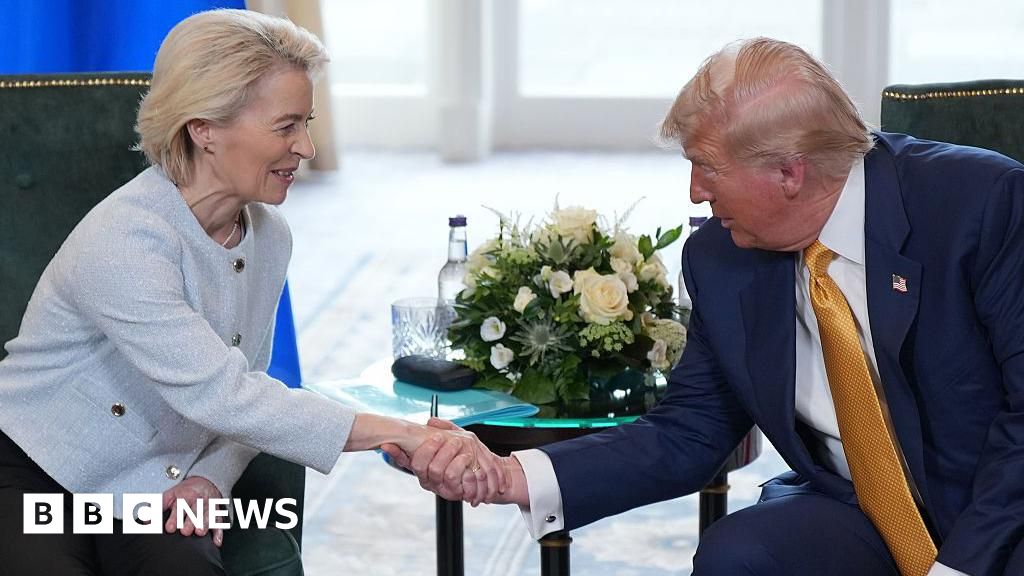
On May 1, President Trump announced via Truth Social that he would raise tariffs on EU cars and trucks from 15% to 25% effective the following week, accusing the bloc of not complying with the Turnberry trade deal struck last July. Trump did not specify which EU obligations had been violated. European Commission President von der Leyen had reached the Turnberry deal with Trump at his Scottish golf resort, which lowered tariffs on EU automobiles from the 25% rate back to 15%. EU officials responded that they were adhering to their commitments and sought clarity on what US commitments they were supposedly failing to meet. EU Trade Commissioner Sefcovic will meet US Trade Representative Greer in Paris on Tuesday, the day before G7 trade ministers convene. German automakers immediately lost 2-3% of market value. The tariff hike follows Trump's announcement of a partial US troop drawdown from Germany after publicly describing Chancellor Merz as having been 'humiliated' in Iran negotiations.
Trump is not renegotiating the Turnberry deal; he is breaking it to create leverage for something else, most likely the $750 billion EU energy purchase commitment that Europe has been slow to fulfill.
The Hidden Bet
The EU will retaliate symmetrically
The EU's preferred response is negotiation, not retaliation. Retaliating on US goods invites further tariff escalation and damages EU economies that are already fragile. The EU has historically chosen compliance negotiations over trade wars with the US, even when it has formal legal standing to retaliate under WTO rules.
The tariff hike is about cars
Trump's stated complaint is EU non-compliance with the Turnberry deal broadly, not specifically automotive provisions. The Turnberry deal includes EU commitments to purchase $750 billion in US liquefied natural gas and other energy. The auto tariff may be the instrument, but the actual dispute is about energy purchase fulfillment.
Merz's political weakness is irrelevant to the trade dispute
Trump publicly described Merz as humiliated in Iran negotiations and is withdrawing troops from Germany simultaneously with the tariff hike. The combination of military and economic pressure on Germany specifically suggests Trump is using the trade tool to weaken Germany's position in a broader European political rearrangement. The auto tariff hits Germany harder than any other EU member.
The Real Disagreement
The genuine fork is whether this is a negotiating tactic or a genuine shift in how Trump views the transatlantic relationship. If it is a tactic, the rational EU response is to offer something on energy purchases, absorb the short-term tariff pain, and get the rate back to 15% before summer. If it is a genuine shift, nothing the EU offers on energy will satisfy Trump because the goal is political subordination, not trade balance. Germany's auto sector can survive a temporary tariff hike; it cannot survive being permanently designated as leverage in a US geopolitical strategy. The Sefcovic-Greer meeting Tuesday will reveal which kind of conversation this is: if Greer raises energy purchase fulfillment, it is a negotiating tactic. If he raises broader structural complaints about EU trade policy, it is something bigger.
What No One Is Saying
German automakers build cars in the United States. Trump's announcement exempts vehicles manufactured in US plants from the tariff. The fastest way for BMW, Mercedes, and Volkswagen to neutralize this threat is to accelerate US manufacturing investment, which is exactly what Trump wants. The tariff is structured to reward compliance, not just punish non-compliance.
Who Pays
German autoworkers and domestic suppliers
Tariff takes effect next week; longer-term production decisions in 6-18 months
The immediate market hit to Porsche, BMW, Mercedes, and VW translates into reduced investment, delayed hiring, and potential production cuts. Germany's auto sector was already in structural decline from the EV transition; a sustained 25% tariff on US exports accelerates the timeline.
EU consumers
Retaliation measures would take weeks to implement
If the EU retaliates with tariffs on US goods, American products from bourbon to aircraft become more expensive in European markets. EU consumers pay the cost of a trade war they did not start and cannot exit unilaterally.
Merz
Compounding now; German political pressure is immediate
Germany's chancellor is simultaneously facing a troop drawdown, an auto tariff targeting his largest domestic industry, a coalition disagreement on AI policy, and public humiliation over Iran diplomacy. Each additional pressure point weakens his domestic political position ahead of German elections.
Scenarios
Energy concession, tariffs withdrawn
The Sefcovic-Greer meeting produces an EU commitment to accelerate LNG purchase contracts from US exporters. Trump withdraws or reduces the tariff hike before it fully takes effect. The Turnberry deal is nominally restored with an explicit energy addendum.
Signal Any statement from Sefcovic or Greer after Tuesday's meeting referencing energy purchase timelines or LNG contract acceleration.
Tariffs hold, EU retaliates selectively
No energy deal is reached. The EU imposes targeted counter-tariffs on politically sensitive US goods: agricultural products in swing states, American manufactured goods. The trade war escalates in calibrated steps but does not reach full retaliation.
Signal European Commission announcement of a list of US goods subject to proposed counter-measures within 30 days.
Tariffs hold, EU does not retaliate
The EU absorbs the tariff increase without formal retaliation, using legal WTO complaints and diplomatic pressure instead of counter-tariffs. European automakers accelerate US manufacturing investment. Merz is further weakened domestically.
Signal EU Commission statement explicitly ruling out counter-tariffs in favor of 'dialogue and legal remedies.'
What Would Change This
If Trump specifies the EU's compliance failures in detail, the analysis changes: there would be a concrete negotiation rather than a leverage play, and the probability of resolution before significant economic damage increases substantially. An unexplained tariff hike is harder to negotiate away than a tariff tied to a specific, addressable grievance.
Related
Trump Is Coming for European Cars Again
powerTrump Rips Up the EU Car Deal and Announces 25% Auto Tariffs. Europe Has No Good Response.
conflictThe EU Made a Deal with Trump. Trump Is Now Threatening to Break It Over Greenland.
conflictMerz's Trade: Give Russia the Land, Get Ukraine into the EU