Trump Rips Up the EU Car Deal and Announces 25% Auto Tariffs. Europe Has No Good Response.
What happened
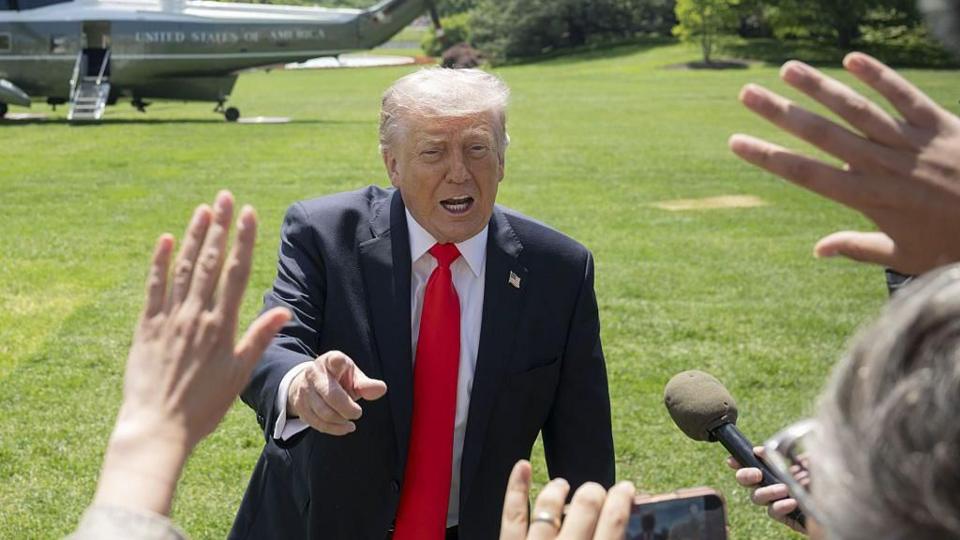
Trump announced a 25% tariff on cars and lorries imported from the EU on May 1, tearing up the tariff deal agreed under the April framework that had set a 10% baseline rate. Trump accused the EU of non-compliance with the agreement's terms. The move follows a week in which Trump also pulled 5,000 troops from Germany and publicly berated German Chancellor Merz after Merz said the US had been 'humiliated' in Iran negotiations. Germany's auto sector, including BMW, Mercedes-Benz, and Volkswagen, has significant US manufacturing and export exposure. The EU has not formally announced retaliatory measures, though it had prepared counter-tariff lists during the earlier Liberation Day standoff.
Trump has found a way to use trade policy as military-adjacent coercion: the tariff escalation against the EU follows within 24 hours of Germany's defense chief objecting to Iran war strategy, making it functionally impossible to separate the two and making every EU response to trade policy also a statement about security alignment.
Prediction Markets
Prices as of 2026-05-02 — the analysis was written against these odds
The Hidden Bet
The EU will use its counter-tariff leverage to force Trump back to the 10% baseline
The EU paused its counter-tariff list during the April negotiations precisely because it calculated that a trade war with the US during an active US-Iran conflict that has already spiked global oil prices would cost European consumers more than the tariff concessions. That calculation has not changed. Trump knows it. The EU's leverage is real on paper; in practice, using it right now means European voters pay higher energy bills and face a fractured transatlantic alliance during a security crisis. That is a trade no EU government can easily make.
German automakers' US manufacturing operations protect them from the tariff impact
BMW and Mercedes have major US plants in South Carolina and Alabama. But a 25% tariff on EU-manufactured vehicles also disrupts supply chains where components cross the Atlantic multiple times before final assembly. And the reputational signal of a US president treating German companies as acceptable collateral damage in a punitive trade policy is not priced by looking at plant locations alone.
This is negotiating pressure that will be reversed in exchange for EU concessions on Iran or security
The April deal that set 10% was itself supposed to be the resolution of Liberation Day pressure. Trump has now torn up that resolution. The pattern is: reach agreement, then escalate past agreement, then use the new higher ground as the baseline. If the EU accepts 25% and then negotiates back to 15%, it has normalized Trump's ratchet. The question is whether any EU trade deal with this administration is worth making.
The Real Disagreement
The fork is between two responses Europe can actually make. One: accept the tariffs, absorb the cost, and preserve the security relationship, on the grounds that a fractured NATO and a distracted US during the Iran war is worse than a car tariff. Two: retaliate with counter-tariffs on US agricultural exports and digital services, accepting a real trade war, on the grounds that capitulating sets a precedent that makes all future agreements worthless. The first option destroys EU credibility as a trade partner. The second option is economically painful during an oil price spike. Neither option is good. The EU has been trying to find a third option, which is strategic ambiguity, and Trump has responded by making that position untenable by merging trade and security pressure into a single move.
What No One Is Saying
The German auto industry's political influence inside Germany is why Merz cannot afford to appear soft on tariffs and also cannot afford to appear soft on the US security relationship simultaneously. Trump has put Merz in a position where defending German automakers from a punitive US tariff requires publicly confronting Trump, which is what got Merz's troops pulled in the first place. The auto tariff and the troop withdrawal are the same message delivered through two different bureaucracies.
Who Pays
European autoworkers and auto sector supply chains
Tariff takes effect on announcement; economic impact compounds over 6-18 months
A 25% tariff effectively prices many European-manufactured vehicles out of competitive range in the US market. Export volumes decline, production schedules tighten, and layoff pressure builds. Germany's auto sector employs roughly 800,000 people directly.
US car buyers
3-6 months for retail prices to adjust
Reduced European competition in the US market gives domestic manufacturers less price pressure, particularly in the luxury and premium segment where German brands compete most directly. US consumers pay more.
The EU's internal political cohesion
Ongoing through any negotiation period
Germany (cars), France (agricultural exports to US), and smaller member states (technology exposure) face different tariff impacts, which makes a unified EU retaliatory response politically difficult. Member states with different exposure levels will advocate for different negotiating strategies, as they did during Liberation Day.
Scenarios
EU folds
The EU accepts 25% as the new baseline, begins negotiating for a partial reduction in exchange for concessions on digital services regulation and data protection rules the US tech sector wants. The auto tariff becomes the new floor.
Signal EU trade commissioner announces 'constructive talks' with US Trade Representative within 30 days; no counter-tariff announcement
Managed retaliation
The EU announces targeted counter-tariffs on politically sensitive US exports (bourbon, Harley-Davidson, agricultural products from swing states) while keeping the overall rate below full escalation. Both sides enter a prolonged slow-burn trade dispute.
Signal EU issues a formal 30-day notice of counter-tariffs targeting specific US product categories within two weeks
Full trade war
The EU retaliates at scale, Trump escalates further, and global trade in goods between the US and EU drops sharply. WTO dispute filing follows but takes years. European recession risk rises.
Signal EU counter-tariff rate exceeds 20% on US goods; Trump announces further sectoral tariffs on European financial services or pharmaceuticals
What Would Change This
The analysis here assumes the EU will not accept full trade war because of energy and security costs. That is wrong if EU leadership calculates that permanent capitulation to tariff ratcheting is more damaging long-term than a short-term recession. The ECB rate environment (Polymarket: 93.5% chance of an ECB rate hike in 2026, presumably cutting rates further to stimulate growth) suggests European central bankers are already planning for economic stress, which marginally changes the calculation toward absorbing a trade fight rather than avoiding it.
Related
Trump Is Coming for European Cars Again
conflictTrump Broke the EU Car Deal He Made at His Own Golf Course. The Reason He Gave Does Not Hold.
powerThe Trump-Xi Summit Is About Iran. China Wants It That Way.
powerEurope Is Taking Over NATO. Washington Hasn't Noticed It's Losing the Alliance.