The SNP Is Almost Certainly Going to Win Scotland. The Question Is What Scotland Wins.
What happened
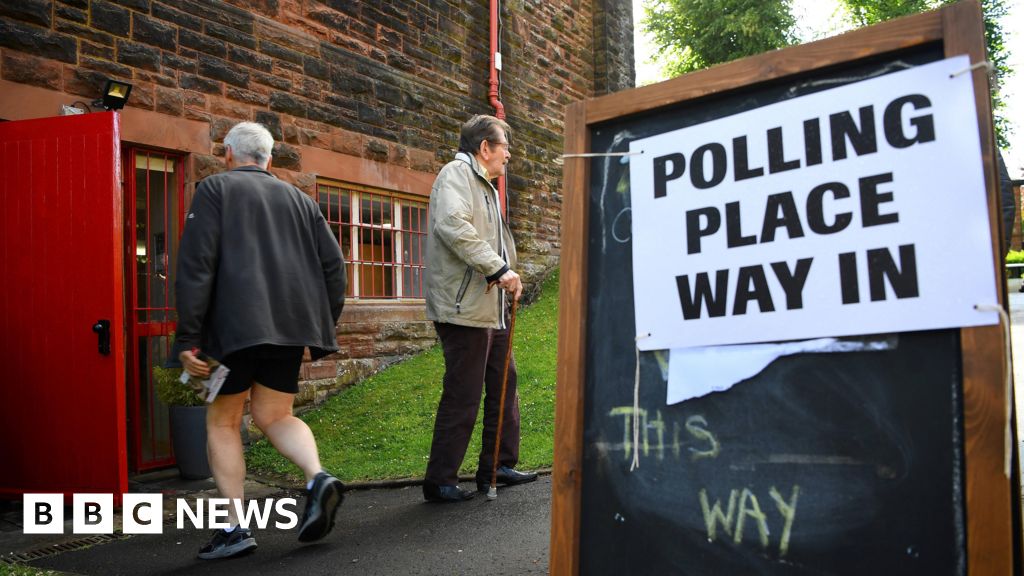
Scotland's Holyrood election takes place on May 7, 2026. The SNP, led by John Swinney, is polling to win the most seats for a fourth consecutive term, with Polymarket pricing them at 99.45% to take the most seats. The election occurs against a backdrop of a projected £5 billion deficit in the Scottish devolved budget by 2029/30, NHS waiting list backlogs, overdue ferry contracts, and a prison overcrowding crisis. The SNP's pitch centers on independence and competent management rather than major policy differentiation. Labour's Anas Sarwar is the lead challenger, promising 'give me five years' of new management in devolved services. Reform UK has fielded candidates in Scotland but has minimal expected impact; the Scottish political landscape has not replicated England's Reform surge.
The SNP is going to win an election it barely deserves by being the only party that offers Scotland a distinctive political identity. The opposition's failure is not a policy failure; it is a failure of political imagination. No challenger has made a compelling case for why Scotland's problems require a different governing philosophy, only different management.
The Hidden Bet
An SNP win signals continued support for Scottish independence
The SNP won the 2021 election and the 2026 campaign is not primarily fought on independence. Polling on independence has not moved meaningfully despite the UK government under Starmer also having no interest in granting a referendum. People can vote SNP for public service reasons while opposing a second referendum. The win tells you who voters prefer to manage Scotland, not whether they want to leave Britain.
The £5 billion budget gap will force the incoming government to make hard choices
Every Scottish government since devolution has announced structural budget problems that were then managed through a combination of accounting flexibility, UK Treasury adjustments, and deferred cuts that never materialized. The gap is real, but Scottish governments have repeatedly found ways to avoid the consequences. This could be the time the bill comes due, or it could be another cycle of managed deferral.
Scotland's divergence from England's Reform surge reflects different values
Scotland's political geography means right-wing populism expresses itself through pro-independence rather than anti-immigration channels. The grievance energy that powers Reform in England is channeled into SNP support in Scotland. The underlying anxieties about economic decline, institutional failure, and disconnection from decision-making are similar. Scotland just has a different vehicle for them.
The Real Disagreement
The fork is between treating the SNP's expected win as evidence that Scotland wants independence-adjacent governance with higher public spending, versus treating it as evidence that Scotland has no credible alternative, so voters default to the incumbent regardless of its record. The first reading gives the SNP a genuine mandate; the second makes the win hollow. Labour's Sarwar has implicitly accepted the second reading: 'give me five years' is an appeal to frustration with management, not a pitch for a different direction. If Labour cannot articulate a compelling reason to change governments beyond 'we'll be competent at the same things,' the SNP wins by default, and the win does not tell you much about what Scotland actually wants.
What No One Is Saying
The Scottish Labour Party's revival, if it happens, will not save Keir Starmer's UK government. Scotland has separate elections, separate policy, and separate political dynamics. English voters looking at Scotland on May 8 will read only the Reform surge in English councils, not the SNP win north of the border. Starmer is fighting two elections simultaneously and can lose both: England to Reform, Scotland to the SNP.
Who Pays
Scottish public service workers
Budget-year cycle: spending decisions will crystallize within 12 months of the election
The £5 billion budget gap means real cuts are coming regardless of which party wins; the incoming government will have to choose between public sector pay restraint, NHS waiting time targets, and infrastructure investment
Scottish patients on NHS waiting lists
Ongoing; no scenario produces rapid improvement given the resource constraints
NHS Scotland diagnostic and treatment queues have grown substantially under the SNP; the budget gap constrains capacity expansion, meaning waiting times remain elevated regardless of the election outcome
UK Labour government
Immediate political damage; structural challenge to Starmer's position heading into 2027 general election planning
A strong SNP win combined with Reform gains in English councils creates a narrative of governing collapse in both nations; Starmer's national government looks weaker when Scotland is not moving toward Labour even slightly
Scenarios
SNP Majority
SNP wins outright majority on constituency seats plus regional top-ups. Swinney governs alone, implements a budget with moderate cuts framed as 'difficult but necessary,' defers independence referendum call to the next parliament citing financial stability requirements. The independence movement enters another frustrated holding pattern.
Signal SNP seat count above 65; Swinney's victory speech leads on public services, not independence
SNP Minority Needs Greens
SNP falls short of majority and requires Green support, which the Greens extract in exchange for expanded climate commitments and a clearer independence timeline. The governing arrangement is unstable from day one given SNP-Green tensions from the previous term.
Signal SNP seat count between 58 and 64; Green co-leaders Ross Greer and Gillian Mackay announcing 'confidence and supply' negotiations
Labour Breakthrough
Labour's Sarwar outperforms expectations, winning 35-plus seats and making the SNP's position precarious. The narrative shifts to Scottish Labour revival. The independence question gets significantly weaker as a near-term prospect. Polymarket currently prices this at under 2%.
Signal Exit poll showing Labour within 15 seats of SNP; Sarwar's BBC Scotland interview tone shifting from 'credible challenger' to 'potential first minister'
What Would Change This
If Scottish independence polling broke above 55% sustained for three consecutive months, the SNP win would carry a genuine mandate weight it currently lacks. That has not happened. What would also change the analysis: a UK constitutional crisis over the Hormuz or Iran war powers situation that makes the case for Scottish separation from UK foreign policy dramatically more compelling to swing voters.