Starmer Considers Banning Protests Three Days Before an Election He Is About to Lose
What happened
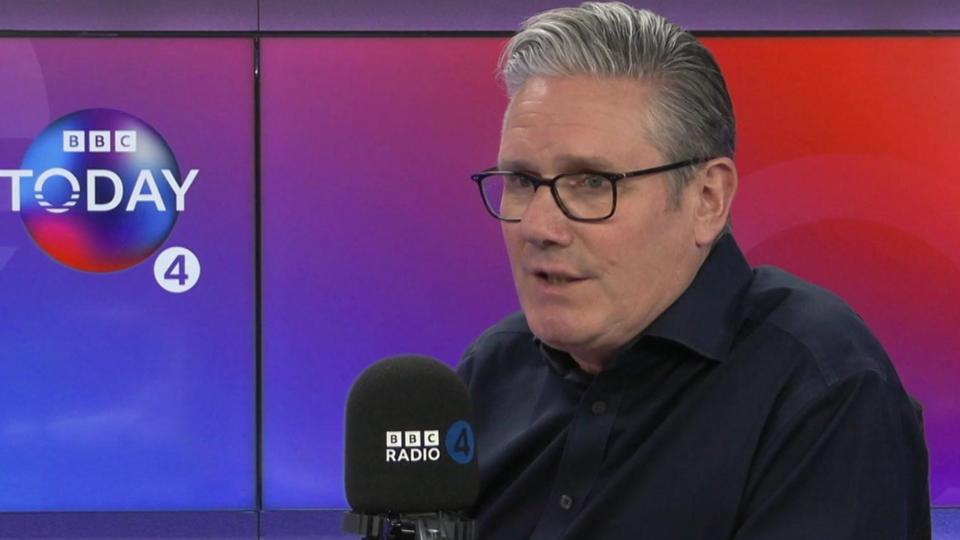
Two Jewish men were stabbed in Golders Green, north London, on Wednesday in an attack declared a terrorist incident by police. Essa Suleiman, 45, appeared in court Friday charged with attempted murder. On Saturday, Starmer told BBC Radio 4 that he supported not only tougher policing of language at protests but potentially stopping some protests altogether, citing the 'cumulative effect' of pro-Palestinian marches on the Jewish community. The UK's independent terrorism legislation reviewer and the Chief Rabbi had both called for a moratorium on pro-Palestinian marches before Starmer's comments. Police can currently apply to ban marches with home secretary approval, a power used for the first time since 2012 in March against London's Al Quds Day march.
Starmer is proposing to restrict the right to protest in response to a terrorist attack by a single individual, three days before an election where his party faces collapse. The policy might be right. The timing makes it impossible to evaluate without accounting for the politics.
The Hidden Bet
Banning or restricting pro-Palestinian marches would reduce antisemitic violence
The Golders Green attack was carried out by one person whose specific radicalization pathway has not been publicly established. The Manchester synagogue attack that killed two Jews last year similarly preceded the current wave of march-ban calls. There is a plausible argument that marches create social conditions in which antisemitism is normalized. There is an equally plausible argument that banning them drives the same networks underground while adding a grievance about civil liberties suppression.
Starmer's framing of this as a civil liberties-versus-safety tension is the right frame
The Stop the War Coalition condemned both antisemitism and the proposed ban. The Green Party is running to Labour's left on this. The Conservatives are running to Labour's right, calling for an outright ban. Starmer is trying to occupy the middle of a question that has no stable middle. The real tension is not civil liberties versus safety; it is which communities' safety the state treats as the default, and the answer to that question has always been contested in Britain.
A protest ban would survive legal challenge
UK public order law allows march bans only where police powers are 'insufficient to prevent serious public disorder.' The existing framework already allows bans on specific marches. A broader moratorium or blanket restriction would face immediate human rights law challenges under Article 11 of the ECHR. Starmer, a former human rights barrister and Director of Public Prosecutions, knows this precisely. His vague language about 'looking at further powers' may be political positioning rather than a genuine policy commitment.
The Real Disagreement
The actual fork is between two premises that cannot both be true. First: that repeated mass protests create an environment that enables antisemitic violence, meaning the state has a legitimate interest in restricting them to protect a minority community. Second: that the state restricting political protest in response to the acts of individuals sets a precedent that is more dangerous than the specific harm it is supposed to prevent. Both of these are serious positions. The first demands concrete evidence that march frequency causes violence, not just correlation with a climate of hostility. The second demands an account of what the state can do when legitimate speech environments are systematically exploited. Starmer's instinct to restrict is less defensible than the specific enforcement of existing laws against incitement to violence, which the government has repeatedly been accused of underapplying. That is where the honest answer lives.
What No One Is Saying
Starmer was heckled with 'Jew harmer' chants when he visited Golders Green on Thursday. That is the political reality his party is living. His government has a terrorism review on hate crime that was due in February and has not been published. The review exists. The conclusions are presumably already written. Publishing them before Thursday's elections would have required the government to own specific recommendations. Sitting on them is a choice.
Who Pays
British Jewish communities
Immediate and ongoing
Regardless of what Starmer decides, the political instrumentalization of their safety in an election week makes their situation harder to discuss honestly. Leaders across parties are competing to defend Jews in ways calibrated to electoral benefit, which is not the same as implementing sustained policy.
British Muslim and pro-Palestinian communities
Immediate if enacted
A march ban does not target individuals who committed violence. It restricts an entire political community's right to assemble in response to the acts of individual perpetrators. The concrete mechanism: a moratorium would prevent legal, peaceful protest about Gaza during an ongoing conflict in which roughly 2,586 people have died in Lebanon alone this year.
The Green Party
Thursday May 7
Polanski's criticism of Starmer plays well in London, where the Greens hope to take council seats. But Polanski also faced a backlash this week for sharing a post criticizing police. The Greens are simultaneously trying to absorb Labour's civil liberties vote and avoid being tarred as soft on antisemitism. That is a genuinely difficult position five days before London borough elections.
Scenarios
Words, not policy
Starmer's comments are pre-election positioning. The government publishes its terrorism review after May 7, recommends tighter enforcement of existing incitement laws, and does not propose broader march bans. The political pressure dissipates.
Signal The terrorism review is published by May 14; it does not propose a march moratorium or new powers
New legislation
The government introduces a Public Order amendment bill with expanded powers to restrict 'cumulative' protests. It passes with Conservative and some Labour support. The courts receive the first challenge within 60 days.
Signal A King's Speech amendment or emergency legislation announcement within 30 days of the election
Leadership change absorbs the issue
Starmer loses the leadership contest triggered by May 7 results. A new Labour leader deprioritizes march restrictions in favor of economic messaging. The pressure on this specific issue recedes.
Signal Starmer resignation by June; new leader's first major speech does not address protest law
What Would Change This
The bottom line here, that the timing is compromised, would be wrong if the suppressed terrorism review contains clear evidence of a causal link between march frequency and specific violent incidents. Without that evidence, banning protests in response to individual acts of terrorism sets a standard that will not be consistently applied and will be remembered by everyone who is not Jewish when the next ethnic or religious community asks for the same protection.