Trump to Britain: Protect Apple or Pay Tariffs
What happened
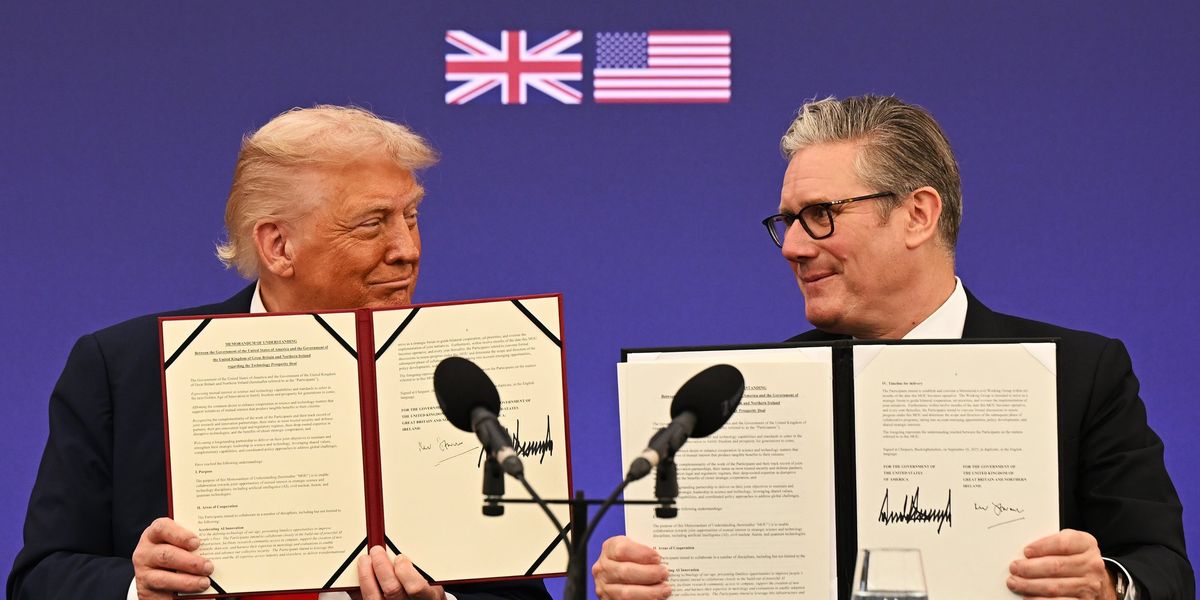
Trump threatened to impose new tariffs on the UK unless it drops its 2% digital services tax on large tech platforms, which raises approximately 800 million GBP annually. The tax applies to companies with UK revenues above 25 million GBP or global revenues above 500 million GBP. The DST survived the UK-US trade deal struck in May 2025; both sides agreed to negotiate a separate digital trade deal instead, but no such deal exists. Trump made the threat from the Oval Office on April 23, days before King Charles is scheduled to make a state visit to the US. UK Prime Minister Starmer has also separately refused to involve Britain in the Iran war, which Trump framed as betrayal. Two-thirds of British voters oppose dropping the DST.
Trump is using the DST dispute to run two simultaneous pressure campaigns against Starmer: on tax policy (drop the DST or pay tariffs) and on the Iran war (join us or lose trade access). The threat lands just as Starmer needs the King's visit to signal diplomatic warmth. The timing is not accidental.
The Hidden Bet
The DST is specifically targeting US companies
HMRC data shows 37% of companies liable for the DST are not US-headquartered. The tax is platform-and-revenue-based, not country-of-origin-based. Some of the largest non-US tech companies in the world pay it too. The 'discriminatory' framing requires ignoring that fact.
Starmer can separate the DST from the Iran war pressure
Both disputes stem from the same dynamic: the US under Trump is treating allied relationships as bilateral transactions where the weaker party is expected to absorb US preferences. Dropping the DST on its own would not reduce Iran-related pressure; it would demonstrate that trade threats work, inviting more.
King Charles's state visit creates goodwill that softens the threat
The threat was issued days before the visit, not after it. If goodwill were the goal, Trump would have waited. The timing suggests the visit is leverage for the UK, not for Trump: Starmer needs the visit to go well more than Trump does, which is exactly when you issue an ultimatum.
The Real Disagreement
The fork is between the UK treating the DST as domestic tax policy versus the US treating it as a trade barrier. The UK view: sovereign nations can tax revenues generated within their territory by any company, including foreign ones. That's standard territorial tax logic. The US view: a tax that happens to land disproportionately on US companies, in a sector where US companies dominate, is a trade instrument regardless of its stated design. Both positions are internally coherent. The UK would win this argument in any neutral venue. It is not a neutral venue. Leaning toward the UK position on the merits, but toward the US position on the outcome: structural leverage matters more than legal merit in bilateral negotiations when one party can impose unilateral costs.
What No One Is Saying
The EU is watching this closely. If the UK drops the DST under US pressure, France, Spain, and Italy will face similar ultimatums about their own digital taxes. Brussels has been trying to negotiate a multilateral digital tax framework for years; a UK capitulation would severely weaken that case. The EU has a strong interest in the UK holding, but it cannot say so publicly without making this a US-EU confrontation rather than a US-UK one.
Who Pays
UK Treasury
Immediately upon repeal
Dropping the DST eliminates 800 million GBP annually, rising to 1.4 billion by 2030. This is real fiscal loss from a tax that passed legal challenge and was explicitly preserved in the 2025 trade deal.
UK voters
Political cost materializes at the next election cycle
Two-thirds oppose concessions to Big Tech. If Starmer drops the DST under US pressure, it becomes a domestic political liability that reinforces the narrative of a weak leader surrendering sovereignty.
Other US allies with digital taxes
Follows UK decision; pressure campaigns likely within 6-12 months
France, Australia, Canada, and others face the same template if the UK concedes. The precedent that bilateral trade threats override digital tax sovereignty is the real prize for the US.
Scenarios
UK holds
Starmer publicly refuses to drop the DST, citing parliamentary democracy and the 2025 trade agreement. Trump imposes a targeted tariff. The UK absorbs the cost and frames it as a point of sovereignty.
Signal Starmer or Treasury Secretary Reeves issues a formal written response to Trump's threat defending the DST on legal and fiscal grounds, without offering any concession.
Quiet renegotiation
Behind the scenes, Starmer agrees to a phased wind-down of the DST in exchange for assurances on tariff relief and a formal digital trade deal, announced after the King's visit as a joint achievement.
Signal A UK Treasury official gives a background briefing describing the DST as 'under review' within two weeks of the King's visit.
UK-EU digital tax coalition
The UK quietly coordinates with France and Germany on a joint response to US digital tax pressure, reframing this as a multilateral sovereignty issue rather than a bilateral capitulation.
Signal A UK official attends an EU Finance Ministers meeting on digital taxation for the first time since Brexit.
What Would Change This
The bottom line changes if the US trade representative formally files a complaint with the WTO or a bilateral dispute mechanism, which would move the fight to a neutral forum where the UK's legal position is strong. Trump's explicit 'reciprocal tariff' framing suggests he won't use that route: the WTO process is slow and the outcome uncertain, and the tariff threat is immediate and unilateral.