The Lebanon Ceasefire Is Holding on Paper and Collapsing on the Ground
What happened
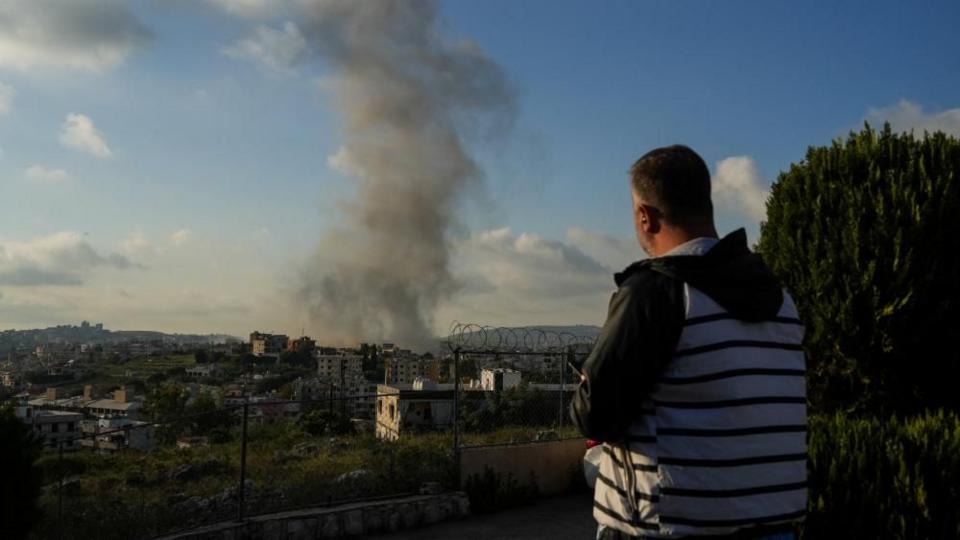
Israeli forces conducted approximately 50 airstrikes in southern Lebanon on Friday, killing at least 13 people including four women and a child, according to Lebanon's health ministry. Hezbollah said it had responded by targeting Israeli soldiers and military vehicles. This happened while a US-brokered three-week ceasefire extension, announced by Trump on April 23, remains formally in effect. Since early March, 2,586 people have been killed in Lebanon. Israel still occupies a 10km strip of Lebanese territory and has not completed withdrawal. A proposed diplomatic meeting between Lebanon's President Aoun and Israeli PM Netanyahu has not yet occurred.
The Lebanon ceasefire is a legal fiction that both sides are exploiting: Israel to prosecute a ground campaign and conduct strikes it calls defensive, Hezbollah to rearm and claim victim status, and the US to avoid acknowledging that its brokered agreement has no enforcement mechanism.
Prediction Markets
Prices as of 2026-05-02 — the analysis was written against these odds
The Hidden Bet
A formal Israeli-Lebanese diplomatic meeting would substantially reduce violence by establishing state-to-state accountability
The US embassy in Beirut floated the Aoun-Netanyahu meeting as something that would give Lebanon 'concrete guarantees.' But Lebanon and Israel have no diplomatic relations and the Lebanese state does not control Hezbollah. Any agreement Aoun signs does not bind Hezbollah, and any guarantee Israel makes does not limit IDF operations that the IDF designates as targeting non-state actors.
The death toll in Lebanon reflects a rough equivalence in accountability between Hezbollah and Israel
Lebanon's health ministry reports 2,586 dead since early March, including 103 healthcare workers. Israel reports 17 soldiers killed in Lebanon, plus 2 civilians killed by Hezbollah attacks in Israel. The Lebanese ministry does not distinguish combatants from civilians, and neither does the IDF's casualty framing. The numbers say the fighting is not symmetric.
The ceasefire extension will be extended again if no diplomatic breakthrough occurs
Polymarket puts the probability of Israel withdrawing from Lebanon by May 31 at just 2.7%. The market says Israel is not leaving. If the ceasefire cannot produce Israeli withdrawal and Hezbollah keeps firing rockets, the ceasefire terms are not being met by either side, and the fiction becomes harder to sustain as political cover.
The Real Disagreement
The actual fork: Israel argues it is conducting targeted operations against active Hezbollah military infrastructure in a ceasefire zone, and that the ceasefire requires Hezbollah disarmament which has not happened. Lebanon and Hezbollah argue that Israel is conducting collective punishment and occupation under ceasefire cover. Both framings contain true elements. The crux is whether a ceasefire can survive one side's definition of 'defensive operation' encompassing 50 airstrikes per day. If the answer is yes, ceasefires have been emptied of meaning. The position that cannot be avoided: Israel's stated goal of 'eliminating Hezbollah military infrastructure' is incompatible with any ceasefire that Hezbollah also participates in, because Hezbollah will not disarm voluntarily and every Israeli strike reinforces that.
What No One Is Saying
The Hezbollah ceasefire compliance is being treated as the variable that explains ongoing fighting. But Israeli forces 're-entered' southern Lebanon in early March, destroyed villages, and remain occupying 10km of Lebanese territory. The ceasefire did not include Israeli withdrawal. What is called a ceasefire is actually an Israeli occupation with a temporary reduction in large-scale strikes on Beirut. That is not a semantic point: it determines who can legitimately claim the other side broke the agreement.
Who Pays
Civilians in southern Lebanon, particularly those in Nabatieh and Sidon districts
Ongoing, with each new round of strikes
Repeated evacuation orders, airstrikes on villages, and destruction of civilian infrastructure while technically living under a ceasefire. Nowhere to go safely: IDF issues orders, then strikes.
Lebanon's reconstruction prospects
Immediate through long-term
The November 2024 ceasefire was supposed to allow reconstruction to begin. That process has not started in any meaningful way while Israel continues operations. Every month of continued fighting extends the reconstruction timeline by longer than the month itself.
US diplomatic credibility on ceasefire brokering
Cumulative, as each new violation goes unaddressed
Trump announced the ceasefire extension on April 23. It is visibly not holding. The US cannot simultaneously claim it brokered a ceasefire and conduct 50 unchallenged Israeli strikes per day under that ceasefire's cover without the word 'ceasefire' losing all operational meaning for future negotiations.
Scenarios
Frozen conflict
The ceasefire name persists, fighting at current levels continues for weeks to months, no diplomatic meeting occurs, and the status quo of low-level occupation and regular strikes becomes the normalized baseline. No one formally declares the ceasefire broken.
Signal No Aoun-Netanyahu meeting within 30 days; IDF strike rate remains above 30 per day; no new ceasefire announcement
Escalation
Hezbollah significantly escalates rocket attacks into Israel following a strike that kills a senior figure or produces mass civilian casualties. Israel responds with a major offensive and the ceasefire is formally abandoned.
Signal Hezbollah rocket attacks exceed 100 per day into northern Israel; Israel declares full military operations resumed
Real agreement
The Aoun-Netanyahu meeting happens with US guarantees, producing Israeli withdrawal from the 10km territory in exchange for enforceable Hezbollah disarmament in a defined buffer zone. Polymarket gives this 5.1% probability by May 31.
Signal A date for the Aoun-Netanyahu meeting is publicly confirmed by both sides; Hezbollah does not publicly reject the outcome
What Would Change This
The bottom line here is that this is a managed occupation disguised as a ceasefire. That assessment would be wrong if the upcoming Lebanon-Israel diplomatic meeting produces an enforceable agreement with real withdrawal timelines. Polymarket's numbers (9.5% chance of Israeli withdrawal by June 30) suggest the market agrees it is wrong to expect that.
Related
Trump Extended a Ceasefire That Lebanon Cannot Keep
conflictIsrael and Lebanon Met in Washington. One Side Wanted a Ceasefire. The Other Wanted Disarmament.
conflictIsrael and Lebanon Have a Ceasefire. Hezbollah Is Not Part of It.
conflictThe Ceasefire Has Three Versions. None of Them Cover Lebanon.