Israel and Lebanon Met in Washington. One Side Wanted a Ceasefire. The Other Wanted Disarmament.
What happened
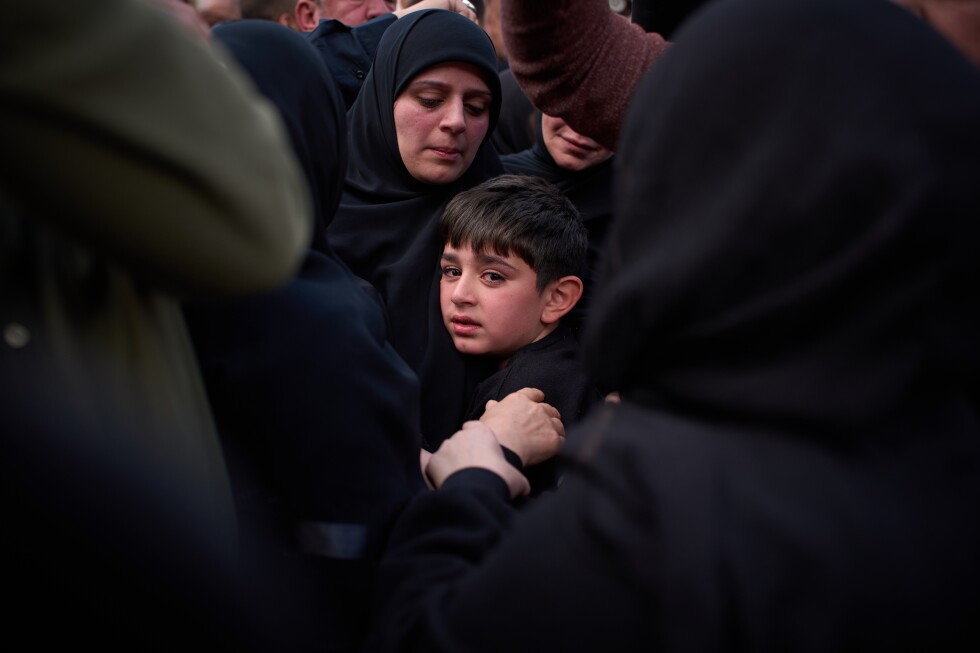
On April 14, Israeli Ambassador Yechiel Leiter and Lebanese Ambassador Nada Hamadeh Moawad met with US Secretary of State Marco Rubio in Washington for the first direct diplomatic contact between the two countries in more than 30 years. The talks were triggered by the ongoing Israel-Hezbollah war that has killed over 2,000 Lebanese, displaced 1.2 million, and shown no sign of stopping. Lebanon's government entered the meeting with authority only to discuss a ceasefire. Israel entered ruling out any ceasefire discussion, demanding instead that Lebanon commit to disarming Hezbollah. The meeting ended without a communique.
Both sides came to different meetings. Lebanon needs a ceasefire to survive. Israel wants disarmament as a precondition for any ceasefire. Those positions have not moved in 30 years of non-communication, and one meeting in Washington did not close that gap.
Prediction Markets
Prices as of 2026-04-14 — the analysis was written against these odds
The Hidden Bet
Lebanon's new government can deliver Hezbollah disarmament
President Aoun and Prime Minister Salam represent a different political coalition than Hezbollah, but Hezbollah controls territory, arms, and a large constituency. Beirut cannot disarm a group it does not command. Asking Lebanon to deliver Hezbollah's weapons is asking the government to do something its own army cannot do.
The talks signal a genuine diplomatic opening between Israel and Lebanon
The talks were made possible by war, not diplomacy. Lebanon came because it was losing. Israel came because the US asked. Rubio called it 'a process' precisely because both sides know the conditions for a real deal do not yet exist.
Hezbollah's position is irrelevant to these talks
Hezbollah opened fire in March in support of Iran, started this phase of the war, and continues to fire rockets and drones daily. Any ceasefire Beirut signs without Hezbollah's agreement is a piece of paper. The group has already made clear it is skeptical of Beirut's authority to negotiate on its behalf.
The Real Disagreement
The real fork is whether Lebanon can be separated from Hezbollah for diplomatic purposes. The Lebanese government argues it can: they represent the state, not the armed group. Israel and the US argue they cannot: no ceasefire holds unless Hezbollah stops fighting, and Hezbollah only stops when it chooses to. Both arguments are right as far as they go. The Lebanese government is not Hezbollah. But any agreement that ignores Hezbollah is not an agreement, it is a performance. Leaning toward the Israeli-US position: a ceasefire that Hezbollah has not agreed to will not last 72 hours.
What No One Is Saying
Lebanon's government was pressured into these talks partly by the destruction of the war, but also by a strategic calculation that the US-Iran ceasefire creates a window where Hezbollah's patron is temporarily constrained. If that window closes and the Iran war resumes, Hezbollah regains full operational freedom and these talks become worthless.
Who Pays
Lebanese civilians in the south
Ongoing
While diplomats talk, Israel is pressing ahead with its invasion to create a depopulated security zone to the Litani River; displacement and casualties continue during negotiations
Lebanon's new reform government
Medium-term
Aoun and Salam are in an impossible position: accept Israel's disarmament demand and lose domestic legitimacy; refuse it and watch the war continue; either path weakens the government's standing
Hezbollah
Slow-burn; depends on military outcome
A ceasefire that requires disarmament would end Hezbollah as a military force; they have no reason to accept it while they can still fight
Scenarios
Parallel ceasefire
The US-Iran ceasefire is extended, reducing Hezbollah's operational mandate. Israel agrees to a temporary halt in exchange for a UN or US monitoring mechanism on the border. Hezbollah quietly reduces fire without formally agreeing to anything.
Signal A second Pakistan-brokered Iran ceasefire extension announced before April 22, paired with a State Department statement on 'progress' in Lebanon talks
Talks collapse, war expands
The April 22 Iran ceasefire expires without a deal, Iran signals Hezbollah to escalate, and the Lebanon war intensifies. Washington pulls back from the Lebanon track as the Iran nuclear question consumes all bandwidth.
Signal No extension of the Iran ceasefire by April 22, and an uptick in Hezbollah rocket fire in northern Israel within 48 hours
Slow process
Talks continue in a working-group format for months, with no ceasefire but also no resolution. Israel continues its Litani security zone push. Lebanon waits. Both sides say talks are 'ongoing.'
Signal A Rubio statement describing 'continued working-level discussions' without a summit date, while Israeli forces advance toward the Litani
What Would Change This
If Hezbollah's secretary-general publicly agreed to participate in Lebanon-mediated disarmament talks, the entire dynamic changes. Alternatively, if Iran's nuclear deal produces a comprehensive agreement that explicitly includes Hezbollah's withdrawal from the border, the military pressure dissolves. Neither looks likely within 90 days.