Russia's Victory Day Parade Will Have No Tanks. That Hasn't Happened Since the Ukraine Invasion Started.
What happened
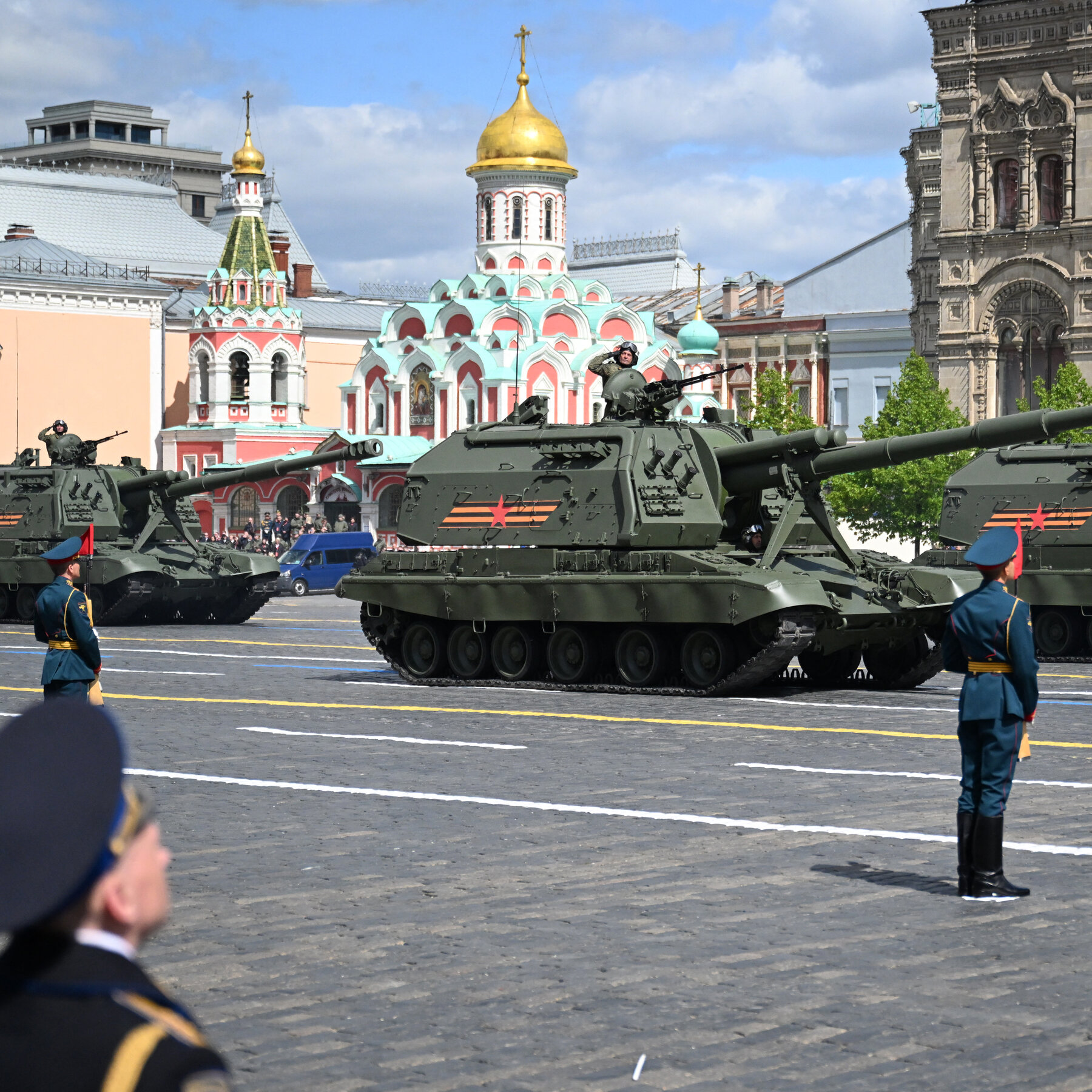
Russia announced on April 29 that the May 9 Victory Day parade in Moscow will proceed without armored vehicles or military cadets for the first time since Putin revived the practice in 2008. The Kremlin cited a 'terrorist threat' from Ukraine as the reason, following Ukrainian drone strikes on Moscow and increased attacks on Russian energy infrastructure, including a refinery in Tuapse hit three times in one month. Pro-Kremlin military bloggers had already reported the change weeks earlier, noting the absence of normal rehearsal road closures in central Moscow.
Russia cannot fill Red Square with tanks on May 9 because the tanks are either destroyed in Ukraine, committed to the front, or both. The 'terrorist threat' is the explanation Putin can give publicly without admitting what the parade's emptiness actually means.
The Hidden Bet
The scaled-back parade is primarily a security decision
Ukraine's senior official explicitly ruled out attacking civilians at the Victory Day parade. The real constraint is not the threat of a strike, it is equipment availability. Russia has lost an estimated 3,000 tanks since 2022 according to open-source trackers. The parade hardware is not there because it cannot be spared from the front or does not exist anymore.
Victory Day retains its domestic unifying function for Putin
The parade is Russia's most important political ceremony: it connects the current government to the greatest victory in Russian history. An empty Red Square is a visible admission that something has gone wrong. Pro-Kremlin bloggers -- the regime's most reliable amplifiers -- were the ones who first reported the downgrade, suggesting even loyalists see this as embarrassing.
Putin's announcement of a Victory Day ceasefire in Ukraine is a goodwill gesture
A ceasefire on May 9 solves a parade optics problem: Russian TV can show peace being made on the same day the military ceremony would normally demonstrate strength. It is more plausibly a media strategy than a diplomatic concession.
The Real Disagreement
The harder question underneath this story is whether the Russian military is actually exhausted or just reorganizing. Open-source analysts document massive Russian equipment losses. The Kremlin's own pro-war bloggers write about the front with a realism that contradicts official messaging. But Russia is still advancing in parts of Donbas, still producing artillery shells at scale, and still absorbing casualties without the political collapse that Western analysts predicted. Both things can be true at once: Russia's military is genuinely depleted and Russia is still capable of fighting indefinitely at reduced intensity. The parade's emptiness tells you the first is true. It does not tell you how much the second matters.
What No One Is Saying
Russia is planning to show footage at the parade of military personnel 'carrying out tasks in the special military operation zone.' That footage will be heavily curated state television. The contrast between the empty Red Square and the combat video is itself a tell: the war is the parade now, and Putin needs you to believe the war is going well.
Who Pays
Russian families of soldiers who died for 'victory'
May 9 and the weeks following
The narrative that their sons died in a winning war becomes harder to sustain when the victory ceremony is visibly stripped down; grief becomes politically inconvenient
Russian military-industrial complex suppliers
Ongoing
The failure to display new hardware is also a failure of procurement; defense contractors who have not delivered promised vehicles cannot use the parade as advertising
Countries that bought Russian military hardware
Medium-term, affects future procurement decisions
The parade serves as a global advertisement for Russian arms exports; an empty parade is bad marketing for Algeria, India, and other major buyers of Russian military equipment
Scenarios
Optics Absorbed
Russian state television broadcasts a parade that looks ceremonially dignified despite no hardware; combat footage substitutes for tanks. Most Russians accept the framing that the war itself is the demonstration of strength. Domestic support remains stable.
Signal Russian social media polling and Levada Center surveys showing public support for the 'special military operation' unchanged in May
Legitimacy Fracture
The empty parade, combined with visible evidence of high casualties and equipment losses, accelerates quiet discontent among the military officer class and regional elites who have borne the disproportionate burden of conscription. No open rebellion, but the social contract frays further.
Signal Increased military blogger criticism, regional governors speaking out of turn, or unusual security measures at the parade itself
Victory Day Becomes the Peace Day
A ceasefire announcement timed to coincide with May 9 reframes the ceremony as a triumph of Russian diplomacy rather than military hardware. Putin claims he ended the war on his terms. The stripped-down parade is retroactively justified.
Signal Any formal ceasefire announcement between now and May 9
What Would Change This
If open-source military analysts revised their estimates of Russian tank losses significantly downward, the equipment availability argument weakens. If Russia produces documented evidence of a credible Ukrainian attack plan targeting the parade, the security argument strengthens. Neither has happened.