Trump Tells Companies to Waive Their Court-Ordered Refunds
What happened
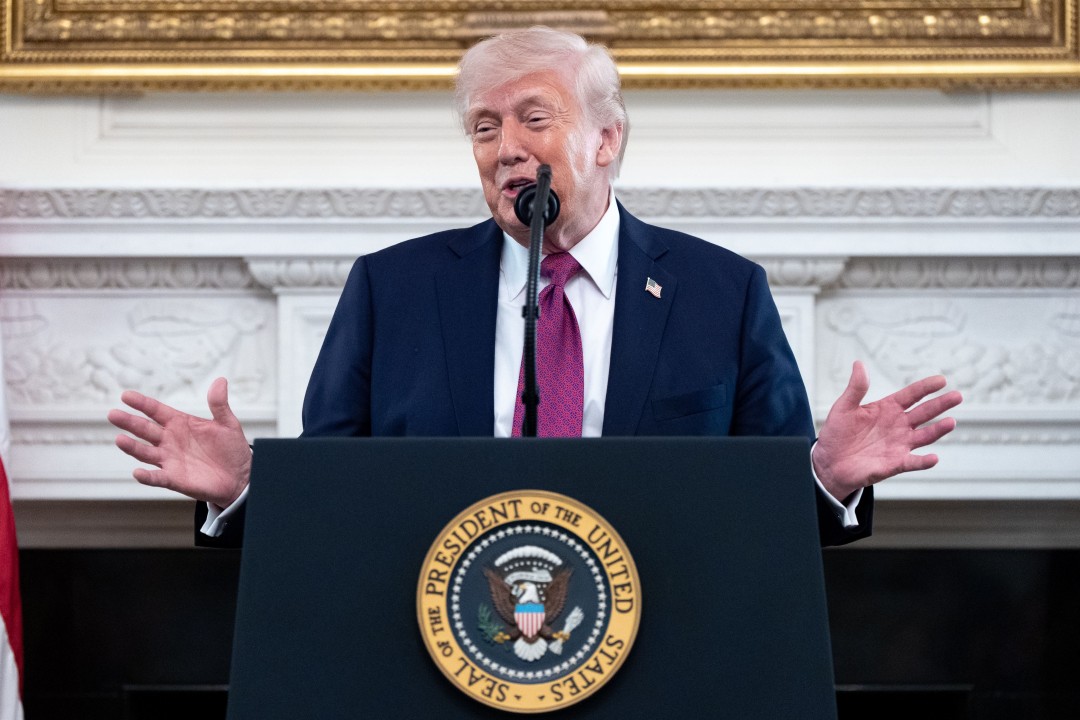
The Supreme Court struck down Trump's Liberation Day tariffs in February as an unconstitutional overreach of IEEPA, the 1977 emergency powers law. A federal judge then ordered the administration to begin refunds. The CBP tariff refund portal launched April 21 with $127 billion in eligible claims across 56,000 importers. One day later, Trump told CNBC that companies like Apple and Amazon which had not yet filed should stay out, saying it would be 'brilliant' if they didn't claim their refunds, and that he would 'remember' them if they complied. He called recipients of the refunds 'the enemy.'
The president is asking corporations to voluntarily surrender $127 billion in court-ordered refunds as a loyalty test, which is not a favor: it is a coercion mechanism, and the difference matters because one is voluntary and the other is not.
The Hidden Bet
Large corporations will comply with Trump's pressure to waive refunds
Apple and Amazon have fiduciary duties to shareholders. Waiving a legal entitlement worth hundreds of millions or billions of dollars to please a president creates enormous exposure to shareholder derivative suits. The legal departments of these companies are almost certainly advising against compliance regardless of the political pressure.
Consumers already received their portion of the cost relief when tariffs were collected
Studies confirm companies passed tariff costs through to consumers as higher prices. The refund system only pays back the importer of record, not the consumer. Class action suits are trying to change this, but they face a long road. The importer pockets $127 billion while the 330,000 importers' customers remain overcharged.
The refund portal is functionally operational
Multiple importers reported crashes and failures on launch day. The CAPE system was built in 45 days. Small businesses without trade compliance staff are being told to be 'patient' with a portal that handles $127 billion. The window for Phase 1 eligibility is closing as the 80-day lookback period rolls forward.
The Real Disagreement
The actual fork is between rule of law and executive loyalty. Companies that waive their refunds are conceding that presidential preference overrides court orders, which normalizes presidential circumvention of judicial authority. Companies that claim their refunds face retaliation through regulatory action, contract awards, or simple blacklisting from future administration favor. Both choices have real costs. I lean toward companies filing for refunds in the long run, because the precedent of voluntarily surrendering a legal right under presidential pressure is more dangerous to their long-term operating environment than any short-term retaliation. But the 6-to-12-month window before filings are due gives executives time to wait and see whether the pressure fades, and many will take that bet.
What No One Is Saying
The administration is openly admitting it cannot get Congress to legislatively ratify tariffs the Supreme Court struck down, so it is trying to achieve the same fiscal result through extralegal corporate pressure. The refund is the acknowledgment that the tariff revenue was collected without constitutional authority. The pressure to waive it is an attempt to keep that revenue through social coercion rather than law.
Who Pays
Small importers without leverage
Immediate cash flow problem through July 2026
They have no relationship with Trump and no regulatory exposure to protect, so they will file for refunds. But the portal glitches and 60-90 day processing times hit them harder because they have the least working capital buffer.
American consumers
Slow-burn; consumer restitution, if any, is years away
The refunds go to importers, not the consumers who paid higher prices. Class actions are in flight but face years of litigation and uncertain recovery.
Large corporations who waive refunds
Within 6-18 months of any public waiver announcement
Shareholder derivative suits for breach of fiduciary duty. Securities disclosure obligations around material financial decisions made for non-business reasons.
Scenarios
Quiet compliance
Large corporations delay filing, watch each other, and gradually most file after a few months when press attention has shifted. Trump notes who filed and who didn't but takes no concrete action because he lacks a legal mechanism.
Signal Apple and Amazon file refund claims without a public announcement, buried in quarterly financial disclosures
Open confrontation
One major corporation publicly files a refund claim and frames it as compliance with a court order. Trump responds with a public attack and directs a regulatory agency to open an investigation into the company. Other companies immediately file.
Signal A named company (Apple, Amazon, Walmart) issues a press release confirming it has submitted tariff refund claims
Chilling effect holds
Companies with significant government contracts or regulatory exposure in telecom, defense, or pharmaceuticals hold off indefinitely. Smaller importers file. The result is a two-tier refund system where leverage determines who gets their money back.
Signal Boeing, Lockheed, or a major defense contractor does not file within 120 days of portal launch
What Would Change This
A shareholder derivative suit successfully filed against an executive who publicly waived refunds at Trump's request would change the calculus entirely, demonstrating that corporate loyalty to presidential preference creates worse legal exposure than the regulatory retaliation the waiver was meant to avoid.