The Government That Made Apple Delete Its Own Critics
What happened
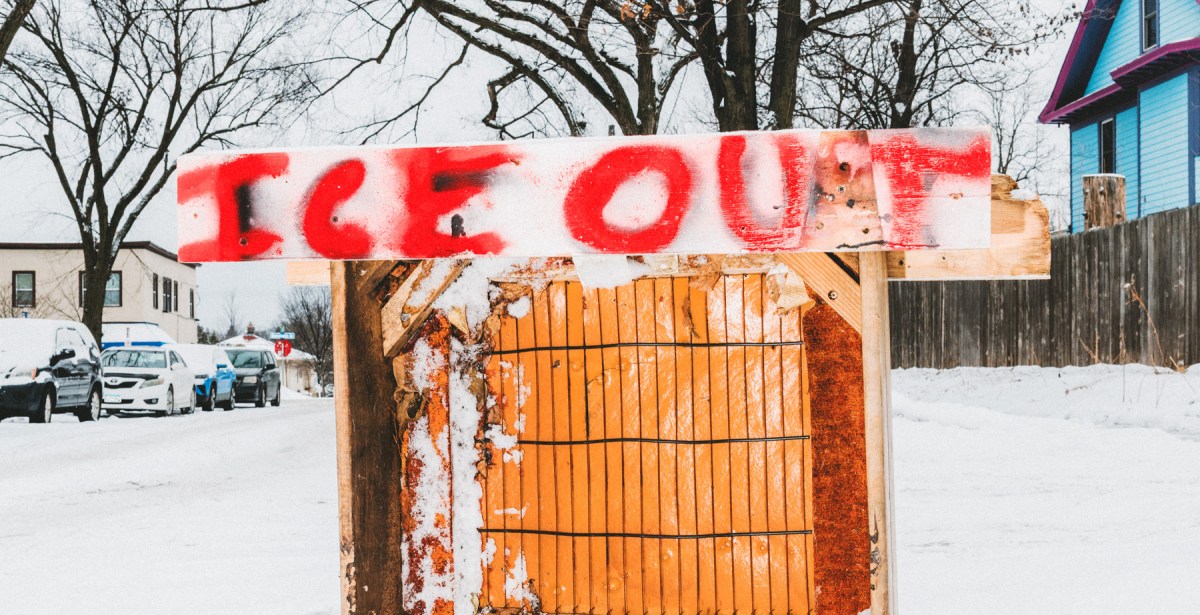
A federal judge in Illinois, Jorge L. Alonso, ruled that the Trump administration violated the First Amendment when it pressured Facebook and Apple to remove the ICE Sightings Chicago Facebook group and the Eyes Up mobile app. Both tools helped residents track and share real-time ICE enforcement activity in the Chicago area. The judge granted a preliminary injunction, finding that the administration's contact with the platforms constituted government coercion of private actors to suppress speech, a legal doctrine called 'jawboning.' The ruling comes amid a broader pattern of documented Trump administration pressure on tech platforms to remove content related to immigration enforcement resistance.
The administration found a way to enforce speech restrictions without passing a law: it pressured private platforms to do the removing, then argued it never censored anyone because it doesn't own the platforms.
The Hidden Bet
The jawboning doctrine clearly covers this type of government contact
Jawboning cases are highly fact-specific. The Supreme Court's 2024 ruling in Murthy v. Missouri set a high bar for standing in government-platform pressure cases. If the 7th Circuit applies Murthy strictly, Alonso's preliminary injunction may not survive appeal, even if the underlying conduct was problematic.
Facebook and Apple were passive intermediaries being pressured
Both companies have independent reasons to remove content that creates legal or regulatory friction. The administration's contact may have been the trigger, but neither platform was resistant before the contact. Characterizing this as coercion requires finding that the platforms would have kept the tools up absent government pressure, which is contestable.
This ruling constrains future government-platform pressure
A preliminary injunction is not a final ruling. Even if the injunction holds, the administration can continue the same practice in other cases until a final judgment and potentially a Supreme Court ruling clarify the doctrine. Coercion is hard to prove and easy to deniably practice.
The Real Disagreement
The core fork is between two views of platforms as instruments of government power. One view: the First Amendment protects citizens from government, not from private companies, and as long as the government doesn't directly censor, it can legitimately express concerns to platforms. The other view: when a platform removes content because of government pressure, the distinction between government and private censorship dissolves in practice. The court took the second view, which is correct on the facts here. But the implications are uncomfortable: it means any government contact with platforms about content is potentially unconstitutional coercion, which is a rule even civil libertarians apply inconsistently depending on whose speech is being removed.
What No One Is Saying
The same 'jawboning' doctrine that protects ICE-trackers from the Trump administration is the doctrine that would protect conservative speech from a future Democratic administration contacting Meta about 'misinformation.' The precedent cuts both ways. The ACLU will argue this case loudly until a future progressive government finds it inconvenient.
Who Pays
Undocumented immigrants and mixed-status families in Chicago
Ongoing, every day the tools are unavailable pending court proceedings
Without ICE tracking tools, residents have less warning time when enforcement operations enter their neighborhoods. The harm is immediate and concrete: people are arrested who would have had time to seek shelter or legal help.
Platform trust and safety teams
Immediate, as soon as this ruling is published
Every government-platform contact is now potential litigation. Compliance with government requests becomes legally costly whether you comply or refuse. Platforms face liability either way.
Future administrations
Long-term, as the doctrine develops over years
If jawboning doctrine expands, the executive branch loses a significant informal governance tool it has used across both parties to manage platform content. This is not obviously bad, but it constrains executive flexibility in ways that affect national security communication as much as immigration enforcement.
Scenarios
Injunction holds, tools restored
The preliminary injunction is upheld on appeal. ICE Sightings and Eyes Up are restored to Facebook and the App Store. The administration is enjoined from further contact with platforms about these tools. The case proceeds to a full merits ruling.
Signal 7th Circuit denies the government's emergency stay request within 30 days
Appeal succeeds under Murthy standard
The 7th Circuit reverses Alonso's injunction, finding that the plaintiffs failed to establish the government contact was the but-for cause of removal. Tools stay down. The broader jawboning doctrine remains unresolved.
Signal Government immediately files for an emergency stay in the 7th Circuit citing Murthy's standing requirements
Supreme Court takes the case
The case creates a circuit split or the 7th Circuit's ruling is provocative enough for SCOTUS to grant cert. A final Supreme Court ruling on government-platform coercion fundamentally reshapes the informal governance mechanisms both parties have relied on.
Signal A second circuit court rules differently on a similar jawboning case within the next 18 months
What Would Change This
If discovery reveals specific written communications where administration officials explicitly tied compliance with content removal to regulatory or enforcement forbearance, the coercion finding becomes nearly bulletproof. If the record shows only informal conversations without explicit conditions, the appeal has real traction.