Apple's Hardware Engineer Will Now Run the World's Most Valuable Company
What happened
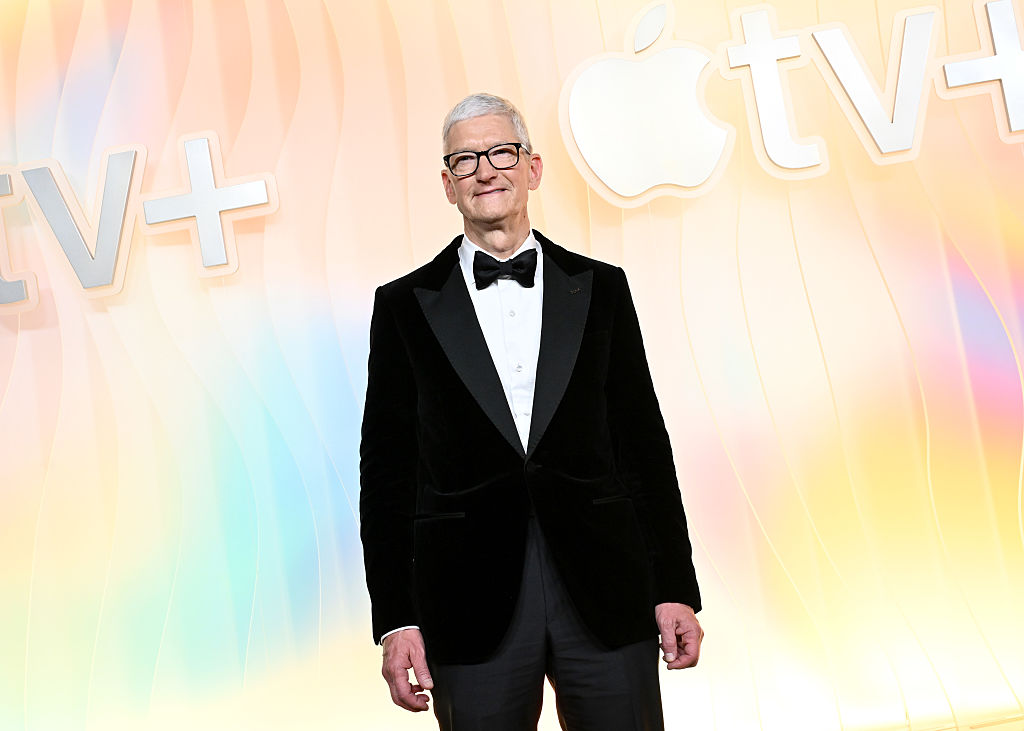
Apple announced Monday afternoon that Tim Cook will step down as CEO on September 1, 2026, after 15 years. John Ternus, currently Senior Vice President of Hardware Engineering, will become Apple's third CEO. Cook transitions to Executive Chairman of the Board, retaining a formal governance role. The announcement came without prior media leaks and sent Apple shares up roughly 3% before settling. Ternus, 52, is a mechanical engineer who joined Apple in 2001 and led the company's M-chip transition and iPhone supply-chain overhaul. He has never run a public company, holds no significant public profile outside Apple circles, and has given fewer than ten media interviews in his career.
Apple is betting that the person who built its hardware advantage can protect it in a world where the software and AI story is now equally critical, and that bet could be right or catastrophically wrong depending on what Tim Cook's real role as Executive Chairman turns out to be.
Prediction Markets
Prices as of 2026-04-20 — the analysis was written against these odds
The Hidden Bet
Executive Chairman is a ceremonial title
At Apple, organizational power follows product authority. Cook built his entire influence base around supply chain and operations, not software. If he retains informal veto power over strategy from the Chairman seat, Ternus will be CEO in name but not in fact, which is an unstable configuration that tends to resolve badly within two years.
Ternus's hardware expertise translates to AI leadership
The M-chip transition was an execution problem: take known technology, design it in-house, integrate it tightly. Building Apple Intelligence into a competitive AI product is a research and talent problem. Ternus has no track record in either. The skills that made him exceptional at hardware do not obviously transfer.
The transition is well-timed because Apple is strong
Apple's AI strategy is visibly behind. Siri's iOS 27 overhaul is the company's biggest product bet in years, arriving at exactly the moment the new CEO takes over. If the relaunch underperforms, Ternus's honeymoon period ends before it begins, with no buffer from a trusted track record as CEO.
The Real Disagreement
The real fork is whether Apple's competitive advantage is primarily a hardware advantage or a software-and-ecosystem advantage. If it is hardware, Ternus is the right CEO: he built the advantage and he knows where it lives. If it is software-and-ecosystem, Apple has just installed a hardware engineer at the top during the most consequential AI product cycle of the decade. Cook ran a logistics and operations empire and delivered extraordinary shareholder value. The company has never had a CEO who was primarily a builder. That is either exactly what the next chapter requires, or it is the wrong person for the moment. The honest answer is that nobody knows, and the Polymarket contract where Ternus is at 99.9% certainty just tells you the market knew this announcement was coming, not that the choice was correct.
What No One Is Saying
Tim Cook's relationship with the Trump White House became a liability, not an asset. Cook spent the past year making personal visits to Mar-a-Lago and publicly supporting tariff negotiations on Apple's behalf. That posture bought short-term exemptions but generated real internal dissent among employees and created reputational cost that a hardware engineer with no political profile does not carry. The timing of this transition, after the tariff war peaked and as US-China tensions stabilize, is unlikely to be coincidental.
Who Pays
Apple software and AI teams
Immediate, as product roadmap decisions for 2027 are being locked now
A hardware-first CEO will, by instinct and training, prioritize tight hardware-software integration over open AI ecosystem strategy. Teams pushing for more aggressive AI model development or third-party integrations will face a skeptic at the top who cares first about what runs on the chip.
Long-term Apple shareholders
12-24 months, at the first earnings cycle where Ternus owns the guidance
Cook's era was defined by extraordinary capital return discipline. Ternus has no record on capital allocation. If he shifts toward heavier R&D spending on AI without Cook's financial controls, margins compress. If he underspends, Apple loses competitive ground to Anthropic-powered competitors.
Tim Cook
Medium-term, tied to Ternus's first major product cycle
Executive Chairman at a company this strong is comfortable, but Cook's legacy is entirely dependent on whether Ternus succeeds. If Ternus struggles, Cook will be asked why he chose him and why he left.
Scenarios
Seamless succession
Ternus focuses on hardware-software integration, iOS 27 Siri launches to strong reviews, and the M-chip lineup for 2027 maintains Apple's performance lead. Cook stays quiet as Chairman. The market reads continuity.
Signal iOS 27 Siri reviews rate it competitive with Google Assistant. No executive departures in software division by December 2026.
Shadow CEO
Cook's Executive Chairman role becomes substantively active. Ternus defers to him on strategy. Key executives report confusion about the chain of command. Talent departs to other AI-first companies.
Signal Cook speaks publicly about product strategy more than once in the first six months. Two or more senior software VPs exit by early 2027.
Wrong cycle
iOS 27 AI features underperform at launch. Ternus's first year is defined by a product stumble he did not cause but cannot fix quickly. Investor pressure mounts for a strategic pivot toward acquisitions Ternus has no framework to evaluate.
Signal iOS 27 reviewer consensus is that Siri improvements are incremental, not transformative. Apple stock underperforms the Nasdaq by more than 15% in H2 2026.
What Would Change This
If Ternus's first six months include a major AI announcement, a large acquisition in the model or software space, or a clear public articulation of Apple's AI strategy, the bottom line changes: he would be demonstrating he understands the new competitive terrain. If Cook gives a single interview about product strategy before the end of 2026, the shadow-CEO scenario becomes the base case.
Related
Tim Cook Is Out. Apple's New CEO Is a Hardware Engineer in the Age of AI.
decisionApple's Hardware Chief Takes Over. The Question Is Whether He Can Fix the Software Problem.
powerApple Just Ended ChatGPT's Exclusive Status. OpenAI Should Be Worried.
powerThe Supreme Court Refused to Save Apple's App Store. The Consequences Are Still Loading.