Apple's Hardware Chief Takes Over. The Question Is Whether He Can Fix the Software Problem.
What happened
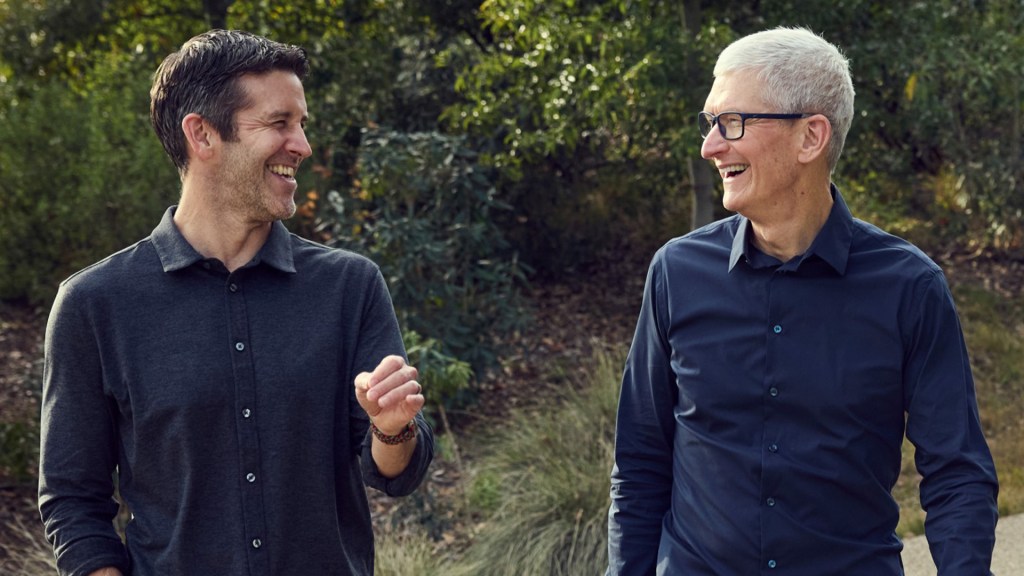
Apple announced Monday that Tim Cook, 65, will transition to executive chairman on September 1, succeeded by John Ternus, 50, the current head of hardware engineering. Ternus has been at Apple 25 years and oversaw the iPhone, iPad, Mac, and AirPods. Cook will remain as executive chair handling government relations and geopolitics. The Apple board approved the transition on April 17 and kept it secret until Monday's announcement. Apple's stock dipped in after-hours trading but recovered within an hour.
Apple is betting that the company's next decade will be won or lost in hardware, specifically AI hardware, and that a hardware engineer running the show is the right call. That bet might be correct, but Ternus now leads a company whose biggest structural weakness, its AI gap versus OpenAI, Google, and Microsoft, is a software and services problem, not a hardware one.
The Hidden Bet
Continuity with Cook's approach will protect Apple's core business
Apple has lost the most-valuable company title to Nvidia. Its AI products are widely considered a generation behind. Forrester analysts are already warning against 'incrementalism.' Cook's deliberate, consensus-driven style delayed decisions on AI for years; Ternus inherits that delay as a strategic deficit.
Ternus being a hardware guy is the right fit for the AI era
The AI era is fundamentally a software and cloud era. Google, Microsoft, and Amazon are winning because they own the models and the inference infrastructure. Apple's AI strategy currently depends on Google Gemini and OpenAI licensing. A hardware-centric CEO may underinvest in the capability that actually matters.
Jony Ive at OpenAI is not a threat to Apple
Ive built Apple's design identity for three decades. He is now helping OpenAI design consumer hardware for AI agents. The company that defined the iPhone interface is now building an interface for AI-first devices. That is not a peripheral competitor. That is a threat to Apple's core revenue category.
The Real Disagreement
The real tension is between product legacy and platform capture. Cook's Apple is the world's most valuable product company but is losing ground as the computing paradigm shifts from devices to AI services. The choice is between doubling down on hardware excellence (Ternus's strength) or making a decisive pivot toward AI model development and services (which would require a very different leader and strategy). Apple cannot fully do both with one leadership team. Ternus's appointment says Apple is choosing hardware. I think that is the right short-term call given Apple's unique supply chain advantages and device loyalty, but it accepts that Apple may cede the AI layer to Google, Microsoft, and OpenAI permanently, becoming the premium hardware that runs other companies' intelligence.
What No One Is Saying
Cook is staying as executive chair specifically to handle China and Trump. Apple's manufacturing empire depends on Chinese factories that Trump's tariff war has made politically toxic. Cook was the architect of that dependency. Ternus gets to make product decisions. Cook gets to manage the geopolitical fallout he helped create. This is not a clean handoff.
Who Pays
Apple employees in AI and Services
Within 18 months of the September transition
A hardware-first CEO may deprioritize the organizational units that are most critical for competing in the AI era. Internal resource allocation decisions in 2026-2027 will determine whether Apple builds its own AI capability or remains dependent on third-party models.
iPhone users
2027-2028 upgrade cycle
If Apple continues to lag on Siri and AI agent capabilities, users face a choice between Apple's privacy-first but weaker AI, or switching to Android to access Google's more capable models. The switching cost is real but shrinks as AI assistants become central to daily tasks.
Apple TV content creators
Greenlight decisions in 2027-2028
Cook's prestige TV strategy cost billions. Ternus's priority is hardware and AI. Content investment could shrink, putting Severance Season 3 and similar projects at risk.
Scenarios
WWDC AI breakout
Ternus delivers a transformative AI product announcement at WWDC26 in June, before officially starting as CEO. He reframes Apple's AI narrative, showing an Siri agent platform that catches up with ChatGPT. Stock recovers and the narrative flips.
Signal Apple previews an on-device large language model in June that runs without cloud dependency, matching GPT-4 class capability
Incremental transition
Ternus launches the foldable iPhone in fall, continues Apple TV, and makes modest AI improvements in partnership with Google. No transformative new category. Apple stays at ~$3 trillion but grows slower than Nvidia and Microsoft.
Signal WWDC26 AI announcements are primarily Siri feature upgrades rather than a new platform architecture
Ive threat materializes
OpenAI ships a consumer device in 2027 designed by Ive that becomes the interface for AI-first interaction. It takes share from iPhone in the high-end segment. Ternus is forced into a reactive product pivot.
Signal OpenAI consumer hardware announcement with Ive credited, before Apple ships an AI-native device
What Would Change This
If Apple announces it is building its own large language model infrastructure rather than licensing from Google and OpenAI, the bottom line changes. That would signal Apple is serious about competing at the model layer, not just the hardware layer. Without that announcement, the AI gap persists regardless of who the CEO is.
Related
Apple Just Ended ChatGPT's Exclusive Status. OpenAI Should Be Worried.
powerTim Cook Is Out. Apple's New CEO Is a Hardware Engineer in the Age of AI.
powerApple's Hardware Engineer Will Now Run the World's Most Valuable Company
decisionAI Writes 80% of Code. Now What Happens to the People Who Used to?