Trump Says Tariffs Will Replace the Income Tax. The Math Doesn't Work. That's Not the Point.
What happened
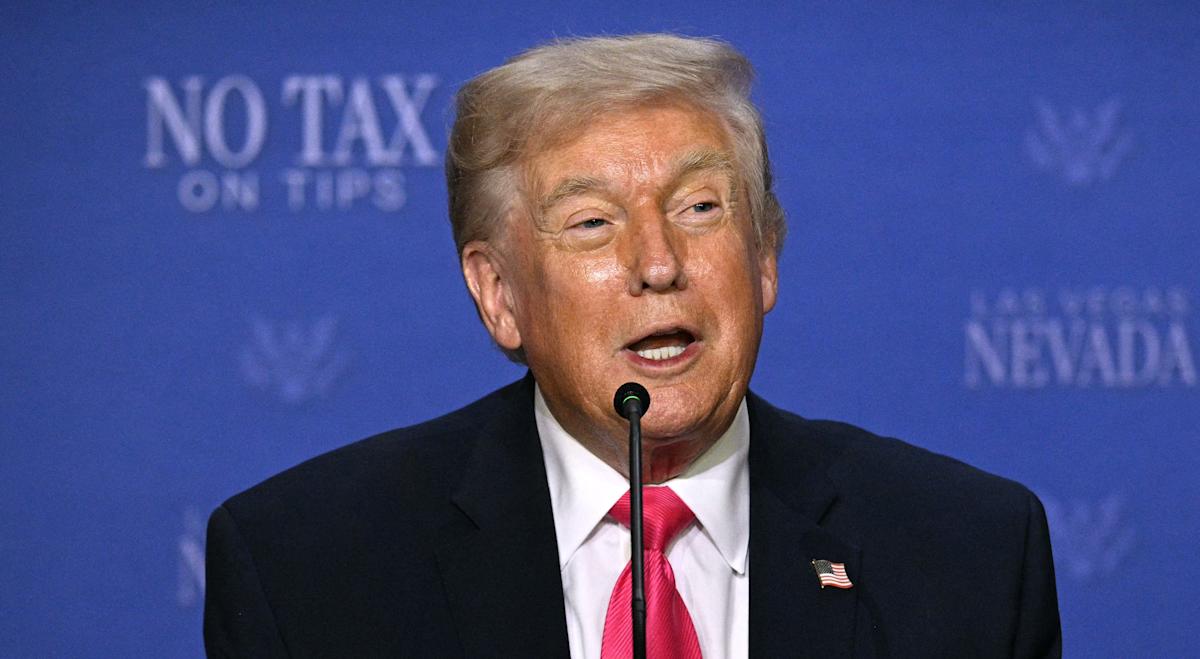
President Trump, speaking to military service members, repeated his proposal to eliminate or substantially reduce US income taxes by replacing them with tariff revenue. He predicted tariff collections would reach 'a trillion dollars or more' in the coming year. Separately, SCOTUS ruled earlier this year in Learning Resources, Inc. v. Trump that IEEPA does not authorize executive tariff imposition, rendering billions in already-collected duties unlawful; the Court of International Trade has ordered refunds. The USTR responded by launching a Section 301 investigation to rebuild much of the tariff regime on a different statutory basis, while Section 232 tariffs on steel and aluminum remain in force.
The income tax elimination proposal is not a policy plan; it is a framing operation designed to make tariff pain feel like a gift, and it is working on the people who support it regardless of whether the numbers add up.
Prediction Markets
Prices as of 2026-04-19 — the analysis was written against these odds
The Hidden Bet
The SCOTUS ruling effectively ends Trump's broad tariff agenda.
The administration's pivot to Section 301 investigations suggests they have a legal path to rebuild most of the same tariff structure under a different authority. Section 232 steel and aluminum tariffs were not struck. The ruling knocked out one tool; the administration is already reaching for another.
Tariff revenue could realistically grow to offset income tax collections if enough manufacturing returns to the US.
The mechanism is self-defeating. Tariffs only generate revenue if imports continue. If manufacturing actually reshores at scale, import volumes fall, and tariff revenue falls with them. You cannot tax the thing you are trying to eliminate and fund government with the proceeds of that taxation.
Congress would need to pass income tax elimination, making the proposal effectively dead.
Correct as a legal matter. But 'Congress would have to do it' has not historically stopped executive branches from using proposals to set political agendas, build constituencies, and shift negotiating terrain. The proposal shapes the debate even if it never passes.
The Real Disagreement
The genuine fork is between two views of what tariffs are for. One view: tariffs are leverage tools to force better trade terms and then get reduced once those terms are achieved. The other view: tariffs are permanent structural revenue and industrial policy, a fundamental reordering of how the federal government is funded and where production happens. These two views require incompatible tariff levels, durations, and negotiating postures. Trump's income tax proposal signals the second view, not the first. If that is the actual policy direction, then every 'pause' or 'exemption' in the tariff regime is a temporary tactical move, not a signal that tariffs are coming down. Lean toward this being more ideological than operational, but the Section 301 investigation suggests there is real intent to rebuild the legal architecture regardless of SCOTUS.
What No One Is Saying
The tariff refund ordered by the Court of International Trade would require repaying billions of dollars in duties the government has already spent. No one in the administration or in media coverage has seriously reckoned with where that money comes from, or what happens to the Section 301 replacement regime if courts strike that down too.
Who Pays
US importers who already paid IEEPA tariffs
Ongoing; no timeline given for refund processing.
They are owed refunds under the CIT order but the government has warned the automated systems to process refunds do not exist at the required scale. They will wait, and may never receive full repayment if the administration appeals.
Lower- and middle-income US consumers
Already underway through higher prices on goods. Would accelerate sharply if income taxes were actually reduced without offsetting progressive measures.
Tariffs function as consumption taxes. They are not paid by foreign countries; they are paid by US importers who pass costs to consumers. Replacing income taxes with tariffs shifts the tax burden from progressive income levies to flat consumption levies, which take a proportionally larger share of lower incomes.
US manufacturing workers whose employers expected tariff protection
Medium-term; depends on Section 301 legal outcomes over the next 12-18 months.
SCOTUS invalidating IEEPA tariffs created legal uncertainty about the durability of the trade protections their industries were promised. If the Section 301 regime is also struck, the promised reshoring never materializes.
Scenarios
Section 301 holds
USTR completes its Section 301 investigation, imposes tariffs on statutory grounds courts find more defensible than IEEPA. The effective tariff rate stays high. Income tax elimination remains a rhetorical claim, not a legislative agenda. The administration points to tariff revenue growth as validation.
Signal Section 301 tariff schedule published and not immediately stayed by a court.
Courts strip Section 301 too
Courts find Section 301 use exceeds delegated authority or that the investigations lack procedural basis. The tariff regime collapses legally. Congress scrambles to either pass explicit tariff authority or let trade policy revert to pre-2025 levels.
Signal A federal court grants a preliminary injunction against the Section 301 tariff schedule within months of publication.
Congressional deal
Congress passes explicit tariff authority as part of a broader tax reconciliation bill. Income taxes are modestly reduced (not eliminated) for lower brackets. Tariffs are set in statute at levels that provide revenue and protection but do not approach income tax replacement math.
Signal Senate Finance Committee opens markup on a bill combining tariff authorization with income tax cuts.
What Would Change This
If the USTR Section 301 investigation produces a tariff schedule that survives initial court challenges and demonstrably raises revenue above $500 billion annually, the structural case for partial income tax replacement becomes at least conceivable. Right now it requires assuming revenue growth that no independent forecast supports.
Related
The Tariffs Are Gone. The $166 Billion Refund Has Arrived. The Trade War Has Not Ended.
powerTariffs Struck Down, Tariffs Coming Back
decisionThe Government Is Refunding $127 Billion in Tariffs. It Plans to Collect Them Again by July.
powerTrump's Tariff Playbook Has One Move Left and It Also Got Struck Down