The Blockade That Is Already Being Traded Away
What happened
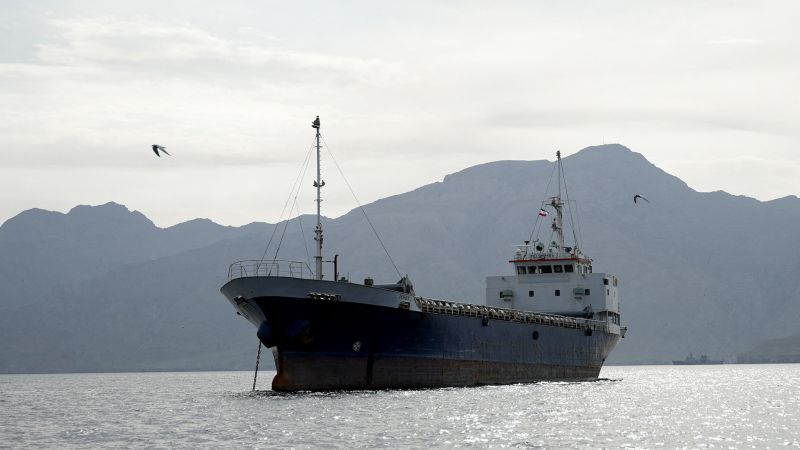
After two rounds of US-Iran talks in Islamabad collapsed on April 12 without agreement, President Trump announced a naval blockade on ships entering or exiting Iranian ports via the Strait of Hormuz. Iran responded by offering a 5-year halt to uranium enrichment in exchange for full sanctions relief and removal of the blockade. The ceasefire from the earlier phase of the US-Israel-Iran war remains technically in place, but the blockade has introduced a new coercive mechanism. Vice President Vance, who led the Islamabad talks, said Iran must make the next move. Pakistan, Egypt, and Turkey are working as mediators to schedule a second round of talks.
The blockade is not a rupture: it is a bid price in a negotiation where both sides have already shown what they will accept, and the gap between them is smaller than the theatrics suggest.
Prediction Markets
Prices as of 2026-04-14 — the analysis was written against these odds
US-Iran nuclear deal by April 30?
Polymarket · as of 2026-04-14
31%
yes
US-Iran nuclear deal by June 30?
Polymarket · as of 2026-04-14
54%
yes
Will the US blockade of the Strait of Hormuz be lifted by May 31?
Polymarket · as of 2026-04-14
84%
yes
US x Iran permanent peace deal by April 30?
Polymarket · as of 2026-04-14
11%
yes
The Hidden Bet
The US demand for permanent nuclear dismantlement is the actual negotiating position
Foreign Policy's reporting from inside the talks indicates the US signaled flexibility on 'permanent' language if Iran accepted a 20-year supervised pause. The stated demand is a ceiling, not a floor.
The blockade gives the US leverage that Iran cannot absorb
Iran has significant oil reserves and has been operating under sanctions for years. China and Russia have been purchasing Iranian oil above market prices. The blockade raises costs but does not create a crisis Iran has not managed before.
A deal before April 30 is unlikely given the current breakdown
Polymarket prices the deal at only 30% by April 30 but 54% by June 30. The market structure suggests traders expect the blockade to compress the timeline rather than end the process.
The Real Disagreement
The genuine tension is between two theories of what ends the standoff. The first: economic pressure through the blockade and sanctions will force Iran to accept permanent limits, because Iran's economy cannot absorb indefinite isolation. The second: Iran has already shown it can survive extended pressure, the blockade accelerates domestic political consolidation around hardliners, and the only route to a durable deal runs through concessions that look like defeat for Washington. The first theory has a better short-term story. The second has the better long-term record. Leaning toward the second, but accepting the blockade as a pressure phase that precedes a climb-down rather than a collapse.
What No One Is Saying
Iran's 5-year offer is actually closer to what a durable deal requires than the US permanent-dismantlement demand. The US position is structured to be rejected so Trump can eventually accept a compromise that looks like a win. The performance of irreconcilable demands is negotiation, not breakdown.
Who Pays
Shipping companies and their insurers
Immediately and accumulating daily
Hormuz handles roughly 20% of global oil traffic. The blockade adds war-risk premiums to every cargo transiting the region, costs that pass to consumers of energy and manufactured goods downstream.
Iranian civilians and small businesses
Visible within 30 days if blockade holds
Import prices spike, domestic currency weakens further, supply chains for medicines and food staples tighten. The Revolutionary Guard and the political elite are insulated; the civilian economy is not.
Pakistan
Medium-term, over the next 3 months
Pakistan took significant diplomatic risk hosting the failed talks. If the talks permanently collapse, Pakistan loses credibility as a mediator and faces pressure from both Washington and Tehran.
Scenarios
Compressed deal
Second-round talks happen in Oman or a neutral site within two weeks. Iran's 5-year offer becomes a 15-year supervised pause, the US drops the permanent-dismantlement language, and the blockade is lifted as part of the announcement.
Signal Pakistan or Oman announces a confirmed date for new direct talks
Blockade holds, economy buckles
Iran cannot get the concessions needed to justify a deal domestically, the blockade stretches past 60 days, and hardliners in Tehran use the pressure to consolidate. Talks collapse and the ceasefire frays.
Signal IAEA reports Iran has resumed enrichment at Natanz or Fordow
China breaks the blockade
China escorts an Iranian oil tanker through Hormuz with PLA Navy vessels, testing US willingness to fire on a Chinese-flagged ship. The US stands down, the blockade becomes symbolic, and Washington's leverage evaporates.
Signal A Chinese naval vessel is reported in the Strait of Hormuz within escort distance of an Iranian tanker
What Would Change This
If Iran refuses any enrichment pause longer than 5 years regardless of economic pressure, the second theory above collapses and the blockade is more likely to produce a deal through sheer economic attrition. Watch the IAEA access reports: if Iran is still cooperating with inspectors during the blockade, the deal track is alive.