The Islamabad Impasse
What happened
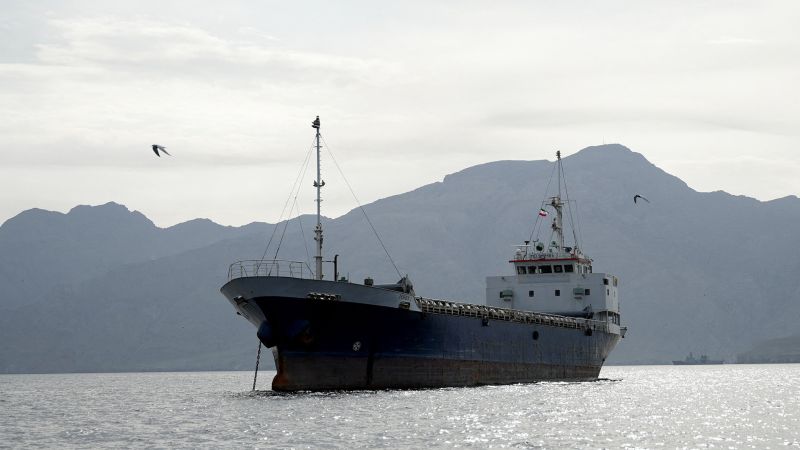
After 21 hours of direct talks in Islamabad, the highest-level US-Iran negotiations since 1979, no agreement was reached. Iran's foreign minister said talks collapsed over US 'maximalist demands' on nuclear commitments and security guarantees; JD Vance said Iran refused to accept a binding no-nuclear-weapons pledge. Pakistan, which brokered the fragile two-week ceasefire struck earlier in April, urged both sides to maintain the pause in hostilities through April 22. Hours after talks ended, Trump announced the US Navy would immediately begin a blockade of the Strait of Hormuz, intercepting ships that had paid tolls to Iran. Israeli strikes on Lebanon continued throughout the weekend, which Iran cited as a ceasefire violation.
The US came to Islamabad to win a nuclear surrender. Iran came to trade a ceasefire for sanctions relief. Those are not the same negotiation, and no amount of Pakistani hospitality was going to paper over that.
Prediction Markets
Prices as of 2026-04-13 — the analysis was written against these odds
US x Iran permanent peace deal by April 22, 2026?
Polymarket · as of 2026-04-13
8%
yes
US-Iran nuclear deal by June 30?
Polymarket · as of 2026-04-13
40%
yes
US-Iran nuclear deal before 2027?
Polymarket · as of 2026-04-13
52%
yes
Trump announces US x Iran ceasefire end by April 21, 2026?
Polymarket · as of 2026-04-13
36%
yes
The Hidden Bet
The ceasefire is a pause toward peace.
Both sides used the two-week window to strengthen their positions. Iran kept Hormuz tolls flowing; the US repositioned naval assets. A ceasefire with no enforcement mechanism and no agreed scope is better understood as a mutual reloading period than a peace process.
The Hormuz blockade gives the US leverage.
A blockade of Hormuz cuts off oil exports from Saudi Arabia, UAE, Kuwait, and Iraq as much as it cuts off Iran. The US itself imports little Hormuz oil. The pain lands on Asian importers, particularly China and India, who may quietly route payments around the blockade rather than comply. The threat is designed to look strong; executing it would test every ally the US has in the region.
Iran's nuclear red line is negotiable if the price is right.
Iran's negotiators may have no authority to make nuclear commitments. The nuclear program is controlled by the IRGC and Supreme Leader Khamenei, not the foreign ministry. Araghchi can say 'we came close'; he cannot commit the program. The gap between the people in the room and the people who make the actual decision may be unbridgeable without a regime-level decision that hasn't happened.
The Real Disagreement
The US position is that Iran's nuclear enrichment must stop as a precondition to any deal. Iran's position is that the nuclear program is non-negotiable sovereignty and sanctions relief must come first. These cannot be sequenced into a deal because each side sees the other's first step as a capitulation. The real fork: does the US accept a deal that leaves Iran's enrichment capacity intact but monitored, or does it continue military pressure hoping for regime collapse? The first path produces a verifiable agreement with an Iran that remains hostile. The second produces a protracted conflict that destabilizes Gulf energy markets indefinitely. The market says 51.5% chance of a nuclear deal before 2027, which implies a roughly coin-flip bet that the US eventually accepts the first path. That probability will tell you more than any press conference.
What No One Is Saying
Pakistan brokered this ceasefire and hosted these talks. Pakistan is also a nuclear state with its own complicated relationships with Iran, Saudi Arabia, and China. The framework Pakistan is promoting, which separates the ceasefire from the nuclear question, is not neutral mediation. It is Pakistan trying to prevent a permanent US military presence in the Gulf that would encircle it from the west.
Who Pays
Asian oil importers: China, India, South Korea, Japan
Immediately if the blockade is enforced; within days if oil markets price in the probability
A Hormuz blockade would cut off roughly 20% of global oil supply. These countries have no short-term substitute. They face either paying surging prices or defying the US blockade, both of which carry severe costs.
Gulf Arab states
Medium-term; these states can use pipelines for partial bypass but not full substitution
Saudi Arabia, UAE, Kuwait, and Iraq all export through Hormuz. A blockade that targets Iran necessarily hits them too. They are watching the US destroy the infrastructure of their own wealth to pressure a neighbor.
Iranian civilians
Ongoing; the ceasefire expiration April 22 is the next cliff
Continued military pressure and economic isolation. The ceasefire gave a brief relief on oil revenues; its collapse resumes the squeeze.
Scenarios
Ceasefire holds, talks resume
Both sides step back from the brink. Pakistan facilitates a second round of talks. The blockade announcement is quietly walked back or narrowly interpreted. The ceasefire extends past April 22 through mutual restraint rather than formal agreement.
Signal Iranian ships continue transiting without US interception; no new Israeli strikes on Lebanon in the next 48 hours
Ceasefire collapses April 22
The 14-day window expires with no extension. Military operations resume. Oil prices spike past $120. The blockade becomes a shooting question, not a diplomatic one. Polymarket gives this scenario about 35.5% probability by April 21.
Signal Trump posts about Iran on Truth Social in terms of military readiness rather than deal-making language
Back-channel deal
The public talks fail but private negotiations through Pakistan or Oman produce a minimalist nuclear transparency agreement that lets both sides claim victory without surrendering core positions. Enrichment continues but under IAEA cameras.
Signal Sanctions relief announcement without a public summit; Iranian FM Araghchi makes a trip to Vienna
What Would Change This
If Iran's Supreme Leader Khamenei publicly endorses a specific nuclear deal framework, or if the US removes the nuclear demand as a precondition, the bottom line changes. Right now neither principal has signaled flexibility. A change in Iranian domestic political pressure, or a US market shock from oil prices, could force one.