Pakistan's Both Sides
What happened
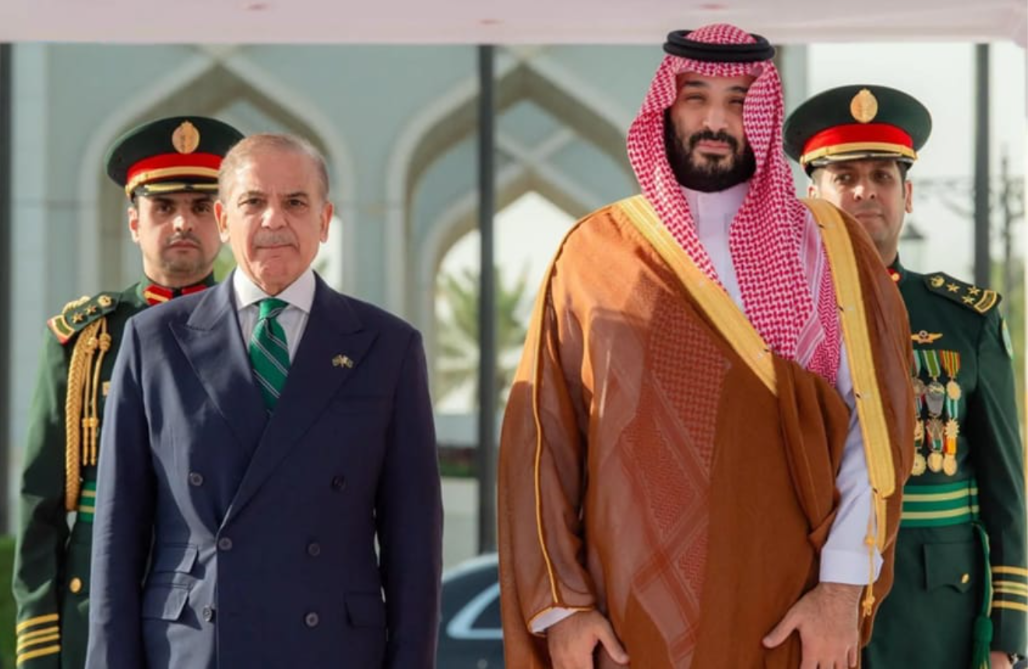
On April 11, Pakistan sent fighter jets and support aircraft to Saudi Arabia's King Abdulaziz Air Base under a mutual defense pact, the same day that Islamabad was hosting 21 hours of direct US-Iran peace talks: the first such talks since 1979. The talks collapsed without a deal. Saudi Arabia has also assured Pakistan of full financial support to manage the economic pressures of the ongoing conflict. India, by contrast, has stayed visibly out of the diplomatic process, despite being a major oil importer affected by the Strait of Hormuz disruption. Pakistan's Foreign Minister Ishaq Dar is now urging both the US and Iran to honor their ceasefire commitments, a statement that reveals Islamabad's position: invested enough to host, not powerful enough to compel.
Pakistan is not mediating the Iran war; it is selling access to its geography and relationships to multiple competing parties simultaneously, and hoping that being useful to everyone prevents it from being used by any one of them.
Prediction Markets
Prices as of 2026-04-12 — the analysis was written against these odds
The Hidden Bet
Hosting the US-Iran talks and deploying jets to Saudi Arabia are separate policies that do not create a contradiction.
Iran views Saudi Arabia as an adversary and the Pakistani jets as a deployment that strengthens Saudi defensive capacity against Iranian missiles and drones. If Iran reads the fighter deployment as evidence that Pakistan is not a neutral venue, the talks lose their credibility before they start. Islamabad is betting that Iran will compartmentalize the two moves. That bet may have already failed.
Pakistan's financial dependence on Saudi Arabia gives it leverage in Riyadh that translates into diplomatic influence.
Saudi Arabia assuring 'financial support' is not the same as Pakistan having leverage over Saudi policy. Islamabad cannot tell Riyadh to de-escalate its proxy activities in Yemen or Iraq because the financial relationship runs in one direction only: Saudi money for Pakistani compliance. Pakistan can ask; Saudi Arabia does not have to listen.
Being in the room is the first step toward running the game.
Pakistan was the venue for the most significant diplomatic talks in the Middle East in a generation. The talks failed anyway and no Pakistani official was the deciding factor in any specific outcome. Venue status and diplomatic influence are not the same thing, and conflating them sets Pakistan up for a humiliation when the next round of talks is held somewhere else.
The Real Disagreement
The real question is whether Pakistan's simultaneous alignment with Saudi Arabia and credibility as a neutral Iran-US venue is sustainable, or whether it is a contradiction that will eventually force a choice. India chose neutrality and preserved its credibility with both sides, at the cost of influence with neither. Pakistan chose visibility and risked credibility with Iran. Neither choice is obviously correct. I lean toward the Indian posture being more durable: Pakistan's reliance on Saudi financial support means its neutrality is structurally compromised, and Iran almost certainly knows this. The result is a Pakistan that looks like a mediator but functions as a Saudi-aligned actor with extra diplomatic optics.
What No One Is Saying
Pakistan is mediating a ceasefire for a war in which one side has deployed to defend the country that subsidizes Pakistan's own economy. Every Pakistani diplomat in the room knows that if they push Iran too hard toward a deal Saudi Arabia dislikes, the financial support disappears. That constraint is never mentioned in any official statement.
Who Pays
Pakistan's diplomatic credibility with Iran
Near-term, as Iran processes the fighter jet deployment
If Iran concludes that Islamabad is functionally Saudi-aligned, Pakistan loses its value as a neutral venue and future diplomatic roles go to Qatar or Oman instead.
Pakistani civilians
Ongoing, immediate economic pressure
Oil above $100/barrel affects Pakistan's import bill as severely as any country in the region. Every month the Iran conflict continues is a direct drain on Pakistan's foreign exchange reserves, which are already stressed.
India
Post-conflict regional alignment, 12-24 months
India's deliberate neutrality preserves its credibility with Iran, its second-largest oil supplier, but leaves New Delhi outside the rooms where the post-conflict regional order is being negotiated. Pakistan has bought a seat at the table that India chose not to purchase.
Scenarios
Pakistan as legitimate broker
A second round of talks, again hosted in Islamabad, produces a framework agreement. Pakistan's willingness to absorb the contradictions of the dual alignment pays off. The Saudi jets are quietly reframed as a confidence-building measure for Saudi Arabia's willingness to attend.
Signal Iran agreeing to a second Islamabad round rather than insisting on a different venue.
Pakistan squeezed out
Iran insists future talks be held in Oman or Qatar, citing the Saudi jet deployment as evidence of Pakistani bias. Islamabad's window closes. Pakistan retains the Saudi financial relationship but loses the diplomatic prestige it was trying to build.
Signal Next round of talks announced for Muscat or Doha.
Regional escalation
Iran strikes Saudi targets more aggressively. The Pakistani jets at King Abdulaziz Air Base engage in defensive operations. Pakistan is now a party to the conflict, not a mediator, and the ceasefire framework collapses entirely.
Signal Polymarket pricing Iranian strikes on Saudi Arabia at 100% already. Watch for any reported intercept operations involving Pakistani aircraft.
What Would Change This
A direct statement from Iranian officials treating Pakistan as a credible neutral venue despite the Saudi jet deployment would falsify the core contradiction. It would mean Iran is willing to separate military from diplomatic relationships in ways that Pakistani officials are betting on. Short of that, the structural alignment is too visible to ignore.