The War That Came Home at the Pump
What happened
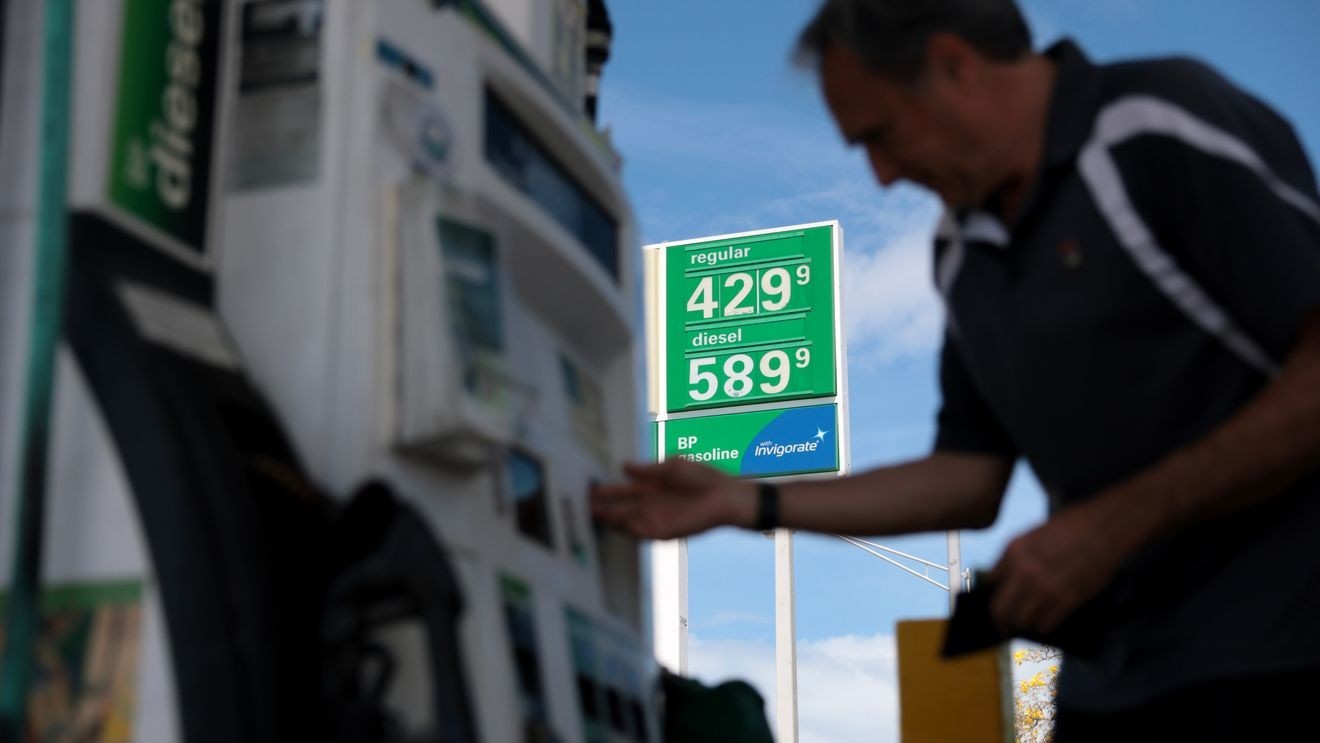
The University of Michigan's preliminary consumer sentiment survey for April 2026 dropped 11% from March, registering the lowest reading in the survey's history. Survey director Joanne Hsu specifically cited the Iran war as the primary driver through elevated fuel costs and inflation expectations. Gas prices across the US have surged since the Iran conflict began in late March. Reuters reported on April 11 that motorists in Boston, Denver, and Miami are cutting back on driving, and that Trump's approval rating has fallen sharply as a result. Polymarket now prices a 59.5% chance that Trump's approval falls below 39% at some point in April.
Trump's economic approval is being destroyed by a cost that flows directly from his own foreign policy: the Iran war raised oil prices, oil prices raised gas prices, and gas prices are the single most visible economic signal in ordinary American life. The administration cannot separate the war from the economic pain because they are the same decision.
Prediction Markets
Prices as of 2026-04-11 — the analysis was written against these odds
The Hidden Bet
The ceasefire with Iran will bring prices back down
Reuters reports that analysts expect elevated fuel prices to persist even if the ceasefire holds. The Strait of Hormuz partial blockade and Iran's ongoing leverage over shipping (covered in the separate Hormuz brief) mean supply-side constraints may outlast the formal conflict.
Consumer sentiment is a lagging indicator and will recover
When sentiment falls because of fuel prices specifically, it correlates more tightly with actual spending cuts than when it falls from abstract financial anxiety. Reuters found people already cutting travel. Actual behavior change is harder to reverse than survey responses.
The tariff impact is still in the future
The tariff debate focuses on imported goods prices, which have a 60-90 day lag from tariff imposition to retail shelves. If the Iran war fuel cost is already compressing sentiment to record lows, adding a tariff-driven goods inflation on top of it this summer would compound an already deteriorating picture.
The Real Disagreement
The real fork is whether this is a temporary cost that voters will absorb or a political breaking point that changes the coalition. One view says voters elected Trump understanding he was aggressive on foreign policy and will tolerate the cost. The other says the voters who flipped to Trump in 2024 were specifically the cost-of-living voters who were punishing Biden for inflation, and they will punish Trump for the same reason when the cause is a war he chose. The evidence from approval ratings suggests the second view is correct. Trump is losing ground with exactly the suburban and working-class voters who flipped on the inflation issue, and the mechanism is identical: an energy price spike that the administration either caused or is failing to contain.
What No One Is Saying
A president who started a war and is now watching his approval fall because the war raised gas prices has two choices: end the war or blame the pain on someone else. Trump has spent three weeks doing the latter. The ceasefire framework that JD Vance negotiated in Islamabad is partly a political escape from a domestic cost problem, not only a foreign policy achievement.
Who Pays
Low-income US drivers
Ongoing since the Iran conflict began, worsening through at least summer 2026
Gas price increases take a disproportionate share of income for workers who commute by car and cannot work remotely. The Reuters story found people in Miami and Boston already eliminating discretionary trips. This is not an inconvenience for them; it is a budget cut.
Republicans in competitive House seats
Midterm primary season, spring 2026
Consumer sentiment at record lows six months before midterm primaries means Republican incumbents in cost-of-living-sensitive districts will face pressure to distance themselves from the administration's Iran policy.
Federal Reserve
Next FOMC meeting and through 2026
Fuel-driven inflation complicates the Fed's rate path. Cutting rates into energy inflation risks embedding higher price expectations. Holding rates into a consumer spending slowdown risks pushing a soft landing into a recession. The Iran war removed the Fed's clean exit.
Scenarios
Ceasefire dividend
Iran ceasefire holds, Hormuz transit normalizes, oil prices drop $15-20/barrel by June. Gas prices fall, consumer sentiment recovers 5-7 points, and Trump regains ground with cost-of-living voters before midterms.
Signal Brent crude falls below $85/barrel within 30 days of a verified ceasefire.
Permanent shock
Even with a ceasefire, elevated insurance costs and route diversions keep oil prices above pre-war levels. Tariff-driven goods inflation adds on top. Consumer sentiment stays at historic lows through fall 2026, producing a midterm environment comparable to 2022.
Signal University of Michigan sentiment in May 2026 fails to recover by more than 3 points from the April low.
Recession call
Consumer spending actually contracts in Q2. The Fed is caught between cutting into energy inflation or holding into a recession. GDP prints negative for two consecutive quarters and the political environment becomes unmanageable for the administration.
Signal Retail sales data for April 2026 shows a month-over-month decline, followed by a downward revision to Q1 GDP.
What Would Change This
If gas prices fell back to pre-war levels by May and consumer sentiment recovered above 60 on the Michigan index, the economic damage theory would need to be revised. The current trajectory points in the opposite direction.
Related
Consumer Confidence Just Hit Its Lowest Point Since Records Began
decisionUS Jobless Claims Hit a 57-Year Low. Economists Say the Real Pain Is Still Coming.
decisionThe OECD Says Tariffs Pushed US Inflation to 4.2 Percent. The Market Does Not Believe a Recession Is Coming.
decision178,000 Jobs and a Recession Incoming