NATO Survived the Cold War. Whether It Survives Trump Depends on Who Blinks First.
What happened
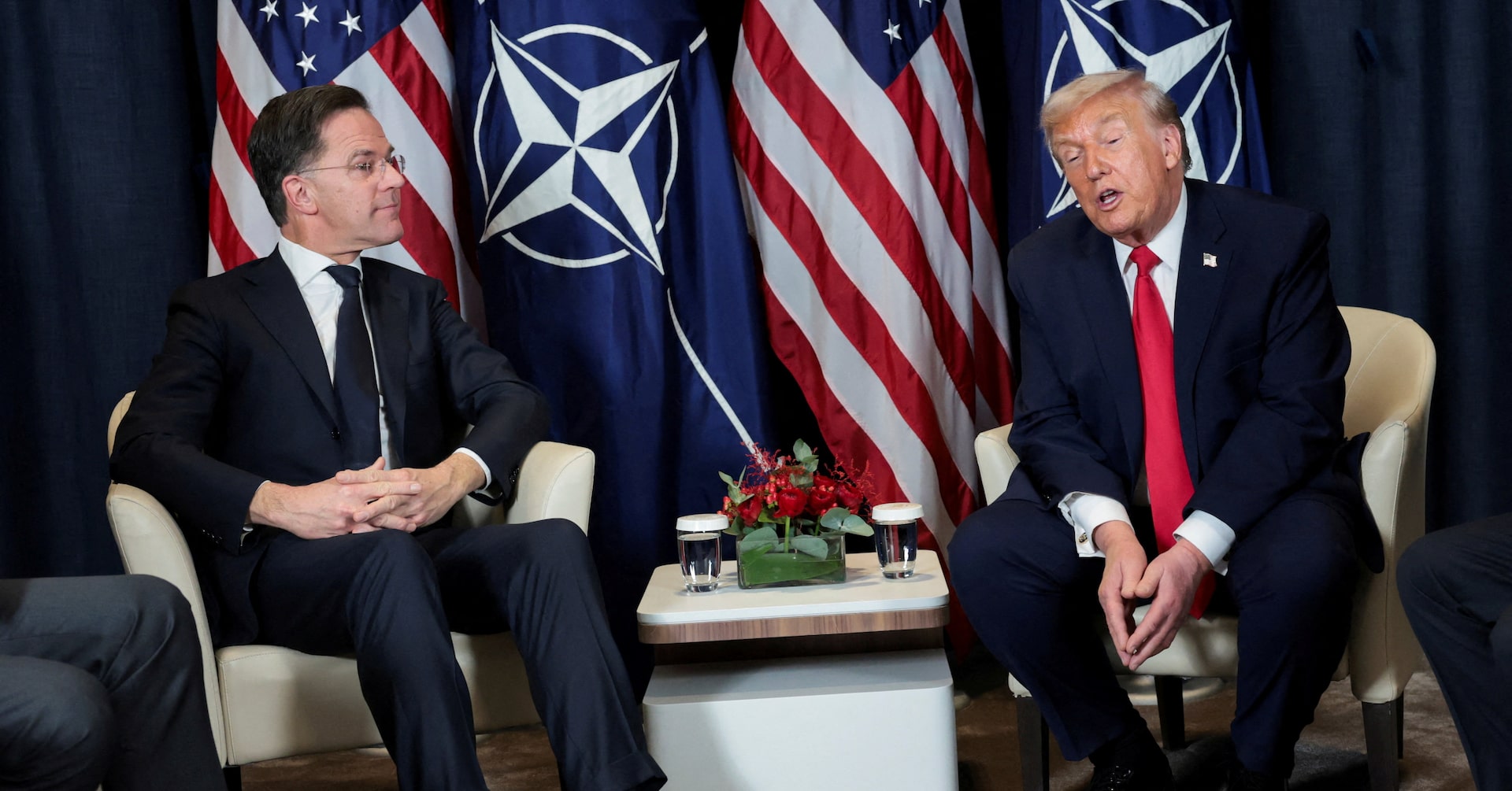
U.S. President Trump met with NATO Secretary General Mark Rutte on April 8, hours after the Iran ceasefire announcement, and publicly declared that NATO had 'failed' the test of the Iran war. Several European NATO members, including France and Spain, refused to allow U.S. military planes to use their airspace or bases during Operation Epic Fury, and rejected Trump's requests to send warships to help reopen the Strait of Hormuz. Trump has repeatedly called NATO a 'paper tiger' in recent weeks and asked a Reuters reporter whether he should withdraw, saying 'Wouldn't you if you were me?' A 2023 law prevents a president from withdrawing from NATO without a 67-vote Senate supermajority, and Rutte attempted to manage Trump's frustration by partly validating it, saying 'some' allies had failed while praising the majority as helpful.
Trump is not threatening to leave NATO because he calculated the strategic cost-benefit: he is using the threat as leverage to restructure a relationship he believes has been extractive, and the question is whether Europe can offer him something concrete enough before he decides the leverage is worth burning.
Prediction Markets
Prices as of 2026-04-09 — the analysis was written against these odds
The Hidden Bet
The 2023 law requiring Senate supermajority approval makes NATO withdrawal effectively impossible.
The law is a domestic statute, not a treaty obligation. If Trump were to simply cease cooperating with NATO military planning, intelligence sharing, and Article 5 commitments without formally withdrawing, the alliance would hollow out in practice while remaining intact on paper. Formal exit is hard; functional exit is not.
This is about the Iran war specifically.
The Reuters article notes that Trump's frustrations with NATO predated Iran and include Ukraine, Greenland, tariffs, and defense spending shortfalls. Iran is the most recent grievance, not its cause. The fracture has structural roots that a ceasefire won't fix.
Rutte's 'Trump whisperer' approach will manage this down.
Rutte has been managing Trump's NATO frustrations since the Davos meeting in January. If the approach worked, Trump would not still be calling NATO a 'paper tiger' in April. Rutte can delay rupture but not reverse the underlying dynamic, because the underlying dynamic is that Trump genuinely believes European security is not a U.S. responsibility.
The Real Disagreement
The actual tension is between two defensible positions on what NATO is for: the original Atlantic alliance was formed to defend Western Europe from Soviet military threat, not to provide global expeditionary cover for U.S. Middle East operations. Europeans refusing to join the Iran war were acting consistently with NATO's charter, which is a defensive alliance for North Atlantic security. Trump's demand that they join Operation Epic Fury and open the Strait was asking for something outside the alliance's founding purpose. The fork: either NATO expands its mandate to cover any U.S. security interest globally, or it remains what it was chartered to be and Trump has to accept that it won't follow him to Iran. The first option requires renegotiating the alliance's fundamental terms. The second option means Trump has to find a different framework for Middle East coalitions. Neither side is wrong about what NATO currently says. They are in a genuine disagreement about what it should be.
What No One Is Saying
France and Spain blocking U.S. military access during the Iran campaign were doing what their populations demanded. Neither government could have survived domestically if it had openly supported strikes on Iran. Trump is calling this a failure of allied commitment; it was actually a success of domestic democratic accountability in two of the world's largest democracies. No one wants to say this clearly because it implies the alliance and democratic sovereignty are in tension.
Who Pays
Ukraine
Immediate and ongoing through the 2026-2027 reconstruction and security negotiations.
Any deterioration in NATO cohesion diverts political attention and weapons supply decisions toward Atlantic intra-alliance management. Senior U.S. officials have already warned that the Iran war has threatened to divert U.S. weapons from Ukraine. A weakened NATO is structurally worse for Ukrainian security guarantees.
European energy consumers
Until the strait is fully reopened and insured; likely months, not weeks.
The practical resolution to the Hormuz crisis requires a coordinated naval escort operation. If NATO doesn't provide the framework, European countries must either form a separate coalition (expensive, slow) or depend on the U.S. bilaterally (giving Trump leverage over energy policy). Germany and the Netherlands import meaningful volumes through the Gulf.
Small NATO members in Eastern Europe
Long-term structural risk, beginning to be priced into defense investment decisions now.
Countries like Estonia, Latvia, and Lithuania joined NATO specifically for the Article 5 guarantee. If the U.S. signals that Article 5 is conditional on allied behavior in U.S.-defined operations, their security guarantees become uncertain. They cannot deter Russia with European resources alone.
Scenarios
Functional degradation without formal exit
Trump reduces intelligence sharing, withdraws from joint planning processes, and demands bilateral deals with individual NATO members for base access, effectively decomposing the alliance into a hub-and-spoke U.S. bilateral network without formally invoking withdrawal.
Signal Reports of U.S. refusal to share intelligence in NATO-format multilateral meetings, or demands for bilateral basing agreements that bypass NATO command structures.
Transactional reconciliation
European allies commit to a specific Strait of Hormuz naval escort mission and increase defense spending pledges to 2.5% of GDP. Trump accepts this as vindication and moderates his withdrawal rhetoric. The alliance continues but with an implicit understanding that it now covers U.S. Middle East operations.
Signal A formal European commitment to Hormuz escort operations at the April NATO foreign ministers meeting.
Senate constraint holds
Trump escalates withdrawal rhetoric to the point of a formal notification attempt. The Senate invokes the 2023 law and refuses to authorize withdrawal. Trump backs down, framing it as Senate obstruction, and redirects the grievance to burden-sharing demands.
Signal Trump submits formal notice of intent to withdraw or initiates legal challenge to the 2023 law's constitutionality.
What Would Change This
If European allies formed an independent naval coalition to escort tankers through the Strait of Hormuz without U.S. leadership, that would directly rebut Trump's 'paper tiger' framing by demonstrating that European military capacity exists and is deployable. A credible European action in the Strait would remove Trump's primary grievance and shift the dynamic from dependency management to genuine partnership. That is what would change the bottom line.