SCOTUS Will Almost Certainly Strike Down the Birthright Order. The Reasoning May Be Worse Than the Order.
What happened
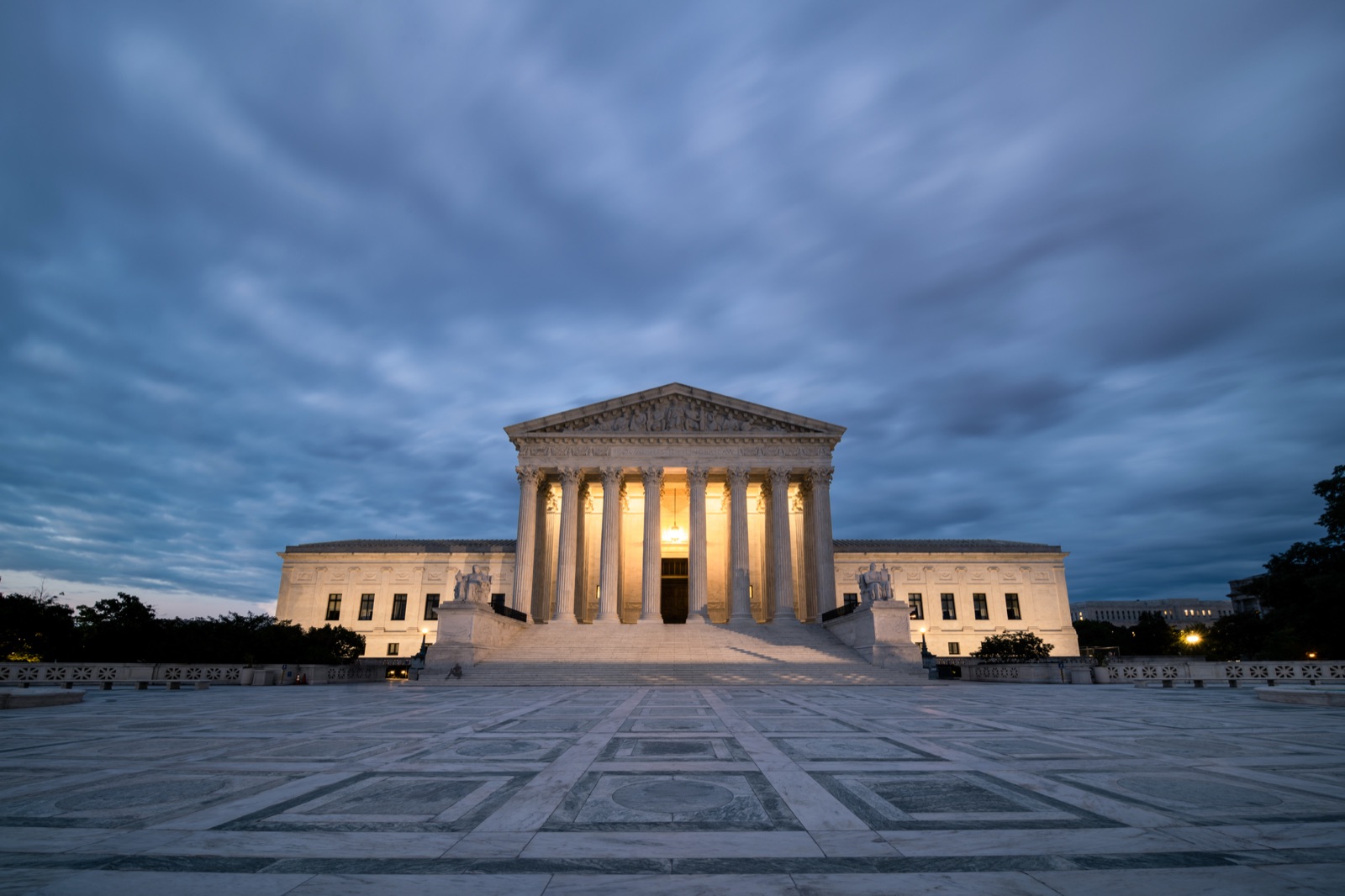
The Supreme Court heard two hours of oral argument on April 1 in Trump v. Barbara, reviewing lower court rulings that struck down Trump's executive order ending automatic birthright citizenship. The order denies citizenship to children born in the US to parents who are undocumented or present on temporary visas. The administration asked the Court to limit any ruling to prospective effect only: future births, not current citizens. Justice Sotomayor pushed back sharply, noting that if the logic of the executive order is accepted, the same reasoning could theoretically apply to people already holding citizenship. Prediction markets give the order a 4.9% chance of surviving.
The birthright order will fail 9-0 or close to it. The question the Court is actually wrestling with is whether to write a narrow opinion that kills the order without foreclosing a future Congress from legislating narrowly, and the answer to that question has longer-term consequences than the order itself.
Prediction Markets
Prices as of 2026-04-09 — the analysis was written against these odds
The Hidden Bet
A ruling against the order settles the question
The administration's position was always a constitutional argument designed to lose at the Court while succeeding in the political arena. A 9-0 or 8-1 ruling against the order does not prevent Congress from pursuing a statutory route to the same goal, and it does not resolve the deeper interpretive fight over 'subject to the jurisdiction thereof.' The battle moves to the next venue.
The retroactivity concern is a hypothetical
Sotomayor's question was not academic. If the Court accepts that the executive branch can redefine the scope of the 14th Amendment's citizenship clause by executive order, the same logic is available to future administrations. The order applies to future births, but the theory it rests on does not have a built-in time limit.
The 95% probability that the order fails means the story is over
The 5% tail is not about the order surviving. It is about the reasoning in the opinion that strikes it down. A narrow technical ruling (the EO is an improper exercise of executive power) leaves the constitutional question open for a future Congress. A broad ruling (the 14th Amendment unambiguously grants citizenship to everyone born here regardless of parental status) forecloses that path. The difference between those two opinions is the actual stakes.
The Real Disagreement
The real fork is between two theories of why birthright citizenship is protected. One theory says it is protected because the 14th Amendment's original meaning clearly covers children of all people born here, full stop. The other says it is protected right now because no statute has changed it, and a statute could. The first theory is more protective but requires the Court to do originalism in a way that constrains future Congresses. The second theory is less protective but is honest about what the Constitution actually delegates to the political process. The lean is toward the first theory being correct on the history, but the Court is unlikely to write the broad opinion, because it would require the conservative majority to accept an expansive reading of the 14th Amendment that constrains their own future agenda on other citizenship questions.
What No One Is Saying
The order was never going to win. The Trump administration knew it was not going to win. Filing it was a test of how far the legal challenge would go, which officials would issue emergency stays, and how the Court's conservative majority would write the limiting opinion. The real output of this litigation is not the result. It is the map of what future efforts can and cannot do.
Who Pays
Children born during the period the order was nominally in effect
Ongoing as cases work through administrative channels
The order was enjoined before taking effect, but the administrative limbo created uncertainty about documentation and registration for children born to undocumented parents during the litigation period. Some of those cases will require affirmative legal remediation regardless of how the Court rules.
Immigrant families on temporary visas
Already happened; permanent behavioral shift in planning
Even if the order fails, the litigation demonstrated that a hostile administration can introduce months of uncertainty about citizenship status at birth. Families on H-1B, student, and tourist visas adjusted birth timing and travel patterns in response to the order. That behavioral effect does not disappear with the legal ruling.
The conservative legal movement's longer-term agenda
Decade-scale; depends on the opinion's scope
A broad 14th Amendment ruling against the administration would make it significantly harder for a future Congress to legislate any restriction on birthright citizenship, even through statute. If the Court avoids writing that broad ruling, it preserves optionality. The stakes for the opinion's reasoning are higher than the outcome.
Scenarios
Narrow technical kill
The Court rules 9-0 that the EO is an improper exercise of executive power without addressing whether Congress could achieve the same result by statute. The 14th Amendment question is left open. The ruling is celebrated as a win for immigrants but preserves a legislative path.
Signal The majority opinion explicitly declines to rule on the statutory question and invites Congress to legislate if it wants to revisit birthright citizenship
Broad constitutional ruling
The Court rules that the 14th Amendment's original meaning clearly covers all children born on US soil regardless of parental status, foreclosing both executive and statutory routes. The citizenship question is settled for a generation.
Signal The majority opinion cites original public meaning of 'subject to the jurisdiction thereof' in a way that explicitly covers temporary visa holders and undocumented immigrants
Fractured decision
The order is struck down but no single opinion commands a majority on the constitutional reasoning. Multiple concurrences with conflicting rationales leave the underlying question maximally unsettled, inviting future litigation on every adjacent citizenship question.
Signal No opinion in the case commands five votes on the reasoning, only on the outcome
What Would Change This
If the administration's brief included a statutory proposal for Congress to enact alongside the EO challenge, signaling that the real goal is legislation not executive action, the strategic reading of this case would shift. Right now the litigation looks like a precedent-setting exercise disguised as a policy fight.
Related
SCOTUS Will Strike Down Trump's Birthright Citizenship Order. The Real Question Is What It Lets Happen First.
powerBirthright Citizenship: SCOTUS Will Almost Certainly Rule Against Trump, But the Ruling Will Do More Than That
powerThe Supreme Court Looks Poised to Rule Against Trump. His Own Party Is Already Moving Past It.
powerThe Supreme Court Is About to Rule on Birthright Citizenship. The Outcome May Turn on a Single Word from 1868.