SCOTUS Will Strike Down Trump's Birthright Citizenship Order. The Real Question Is What It Lets Happen First.
What happened
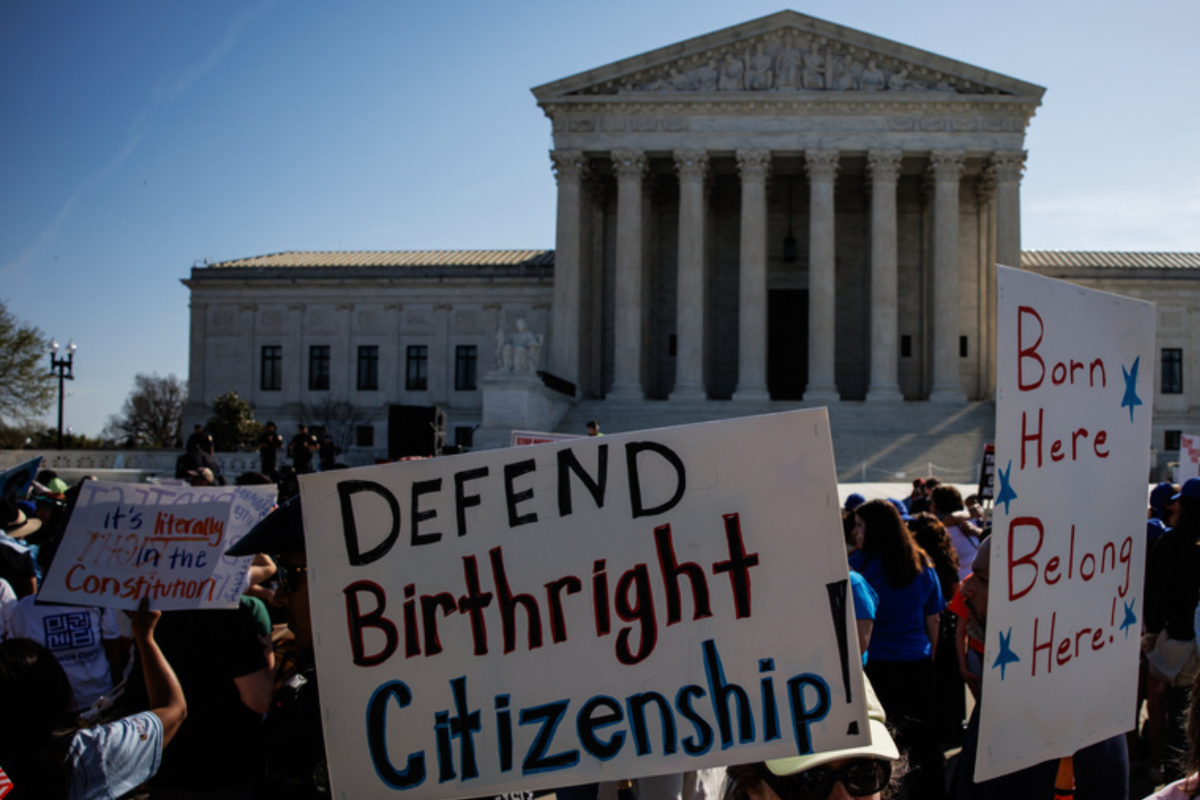
President Trump signed an executive order on January 20, 2025 denying birthright citizenship to children born in the U.S. to undocumented parents or parents on temporary visas. Courts immediately blocked it nationwide. In April 2026, the Supreme Court heard oral arguments and simultaneously issued a ruling in Louisiana v. Callais limiting the ability of lower courts to issue nationwide injunctions, which opened the door for some states to allow the birthright EO to take partial effect. The Court is expected to rule on the EO itself before the July recess. More than 250,000 babies born annually in the U.S. would be affected if the EO survives. An AP-NORC poll found 44% of Republicans and two-thirds of all adults oppose eliminating birthright citizenship.
The EO is almost certainly dead on a 6-3 or 5-4 ruling. The damage was done earlier: the injunction ruling that the Court used as a vehicle to strip nationwide injunction power was more consequential than the birthright ruling will be.
Prediction Markets
Prices as of 2026-05-06 — the analysis was written against these odds
The Hidden Bet
A ruling striking down the birthright EO resolves the question
Trump has already laid the groundwork to attack Gorsuch and Barrett publicly for their tariff ruling and has signaled he views them as disloyal. A birthright ruling against him will intensify pressure on the Court's institutional legitimacy. The question of whether the executive branch fully complies with adverse rulings is now live in a way it was not before the tariff fight.
The 14th Amendment's text settles this
The administration argues that the 14th Amendment's 'subject to the jurisdiction thereof' clause was never intended to cover children of people who entered illegally or on temporary visas. The historical record is contested; most scholars reject the administration's reading, but it is not frivolous. Thomas and Alito have signaled sympathy for it. The ruling could be 5-4 with Thomas and Alito dissenting in terms that encourage future challenges.
The birthright citizenship fight is primarily about citizenship
The real structural prize in this litigation was the nationwide injunction question, which SCOTUS already resolved in the administration's favor. The birthright EO itself may have been litigation bait: force the Court to rule on universal injunctions while birthright was the nominal issue. If so, the administration already won the game it was actually playing.
The Real Disagreement
The genuine tension is between two versions of constitutional interpretation where stakes are concrete. The textualist case against birthright citizenship is historically weak but structurally available to the current Court. If adopted, it changes citizenship for roughly 250,000 children per year, eliminates an incentive for asylum-seeking families to have children in the U.S., and hands the executive branch power to redefine who is American through administrative action. The other side gives 250,000 children per year full citizenship regardless of their parents' status. The choice is not close on the merits, but the political mechanics that gave us this Court make the outcome less certain than 87% market odds suggest.
What No One Is Saying
The injunction ruling SCOTUS already issued in this case has more practical impact on executive power than the birthright ruling will. By limiting nationwide injunctions to plaintiffs who are party to the suit, the Court made it structurally easier for the administration to implement any future policy in the 25+ states that won't sue. The birthright EO is the headline; the injunction ruling is the tool the administration will use for everything else.
Who Pays
Children of undocumented parents born in the U.S. starting January 2025
Immediate for children born after January 20, 2025 if EO is enforced
If the EO had not been blocked, these children would already have been born without citizenship. They remain in legal limbo until the Court rules definitively, and in states where partial enforcement is now possible, their status is uncertain.
Children of parents on work visas and student visas
Ongoing if EO survives or is revived
The EO also denies birthright citizenship to children born to parents on legal temporary visas. This category includes children of H-1B workers, many of whom are from India and China. The policy would affect children of people who entered the country legally.
Scenarios
6-3 against, limited Thomas dissent
SCOTUS strikes the EO in June with six justices in the majority, including Gorsuch and Barrett. Thomas and Alito dissent in terms that question the original understanding of the 14th Amendment. The EO is dead; the dissent becomes the roadmap for a future challenge.
Signal Oral argument transcripts showing Gorsuch and Barrett skeptical of the administration's textual argument
5-4 with a narrowing opinion
SCOTUS strikes the specific EO on procedural or due process grounds without resolving the underlying 14th Amendment question. The administration reads this as an invitation to draft a narrower order. Litigation cycle restarts.
Signal Questions at oral argument focused on the EO's drafting rather than the constitutional question itself
Partial enforcement window matters
Before the ruling, the administration uses the injunction limitation to enforce the EO in states that don't have standing to seek injunctions. Hundreds of children are born without citizenship documentation between now and June. The ruling is retroactive in theory but practically complex.
Signal Reports of hospitals in Republican-led states refusing to issue citizenship documentation for newborns born to undocumented parents
What Would Change This
If the Court rules 5-4 without resolving the underlying constitutional question, the market's 87% confidence is correct about the immediate outcome but misses the longer-term risk. A ruling on the merits with a Thomas-Alito dissent accepting the administration's argument would change the calculus for any future Court composition.
Related
Birthright Citizenship: SCOTUS Will Almost Certainly Rule Against Trump, But the Ruling Will Do More Than That
powerThe Supreme Court Is About to Rule That the 14th Amendment Means What It Says
ethicsSCOTUS vs. the 14th Amendment
decisionSCOTUS Is About to Strike Down the Birthright Citizenship Order. That Is Not the Hard Part.