The Supreme Court Looks Poised to Rule Against Trump. His Own Party Is Already Moving Past It.
What happened
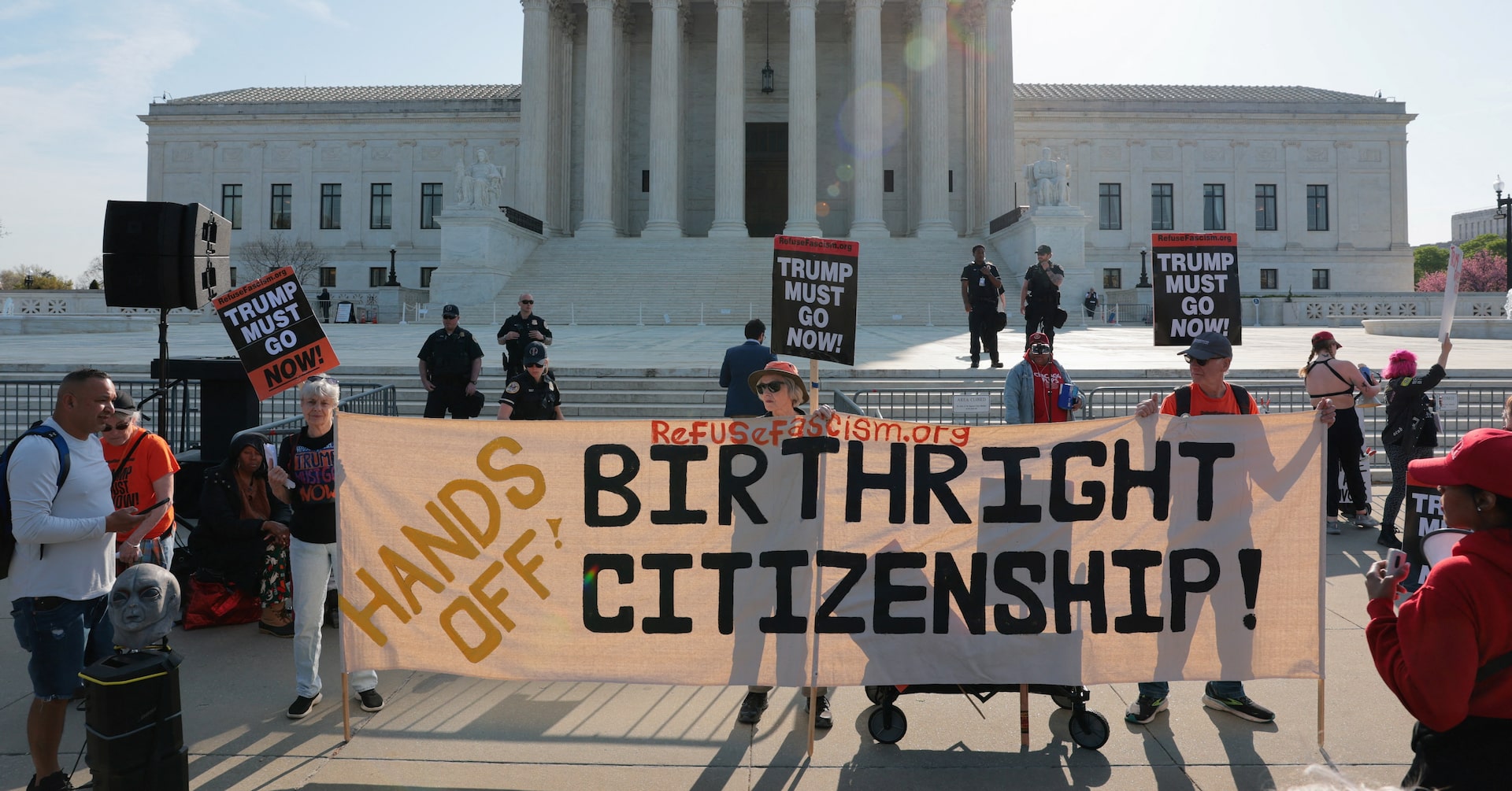
The Supreme Court heard oral arguments on April 1 in Trump's challenge to birthright citizenship, which stems from his January 2025 executive order. Chief Justice John Roberts, along with conservative justices Amy Coney Barrett and Neil Gorsuch, signaled skepticism during arguments. The court is expected to rule by end of June. A Reuters/Ipsos poll conducted April 15-20 found 64% of Americans oppose ending birthright citizenship, with Republicans split 62-36. Separately, the Senate Judiciary subcommittee scheduled a hearing for April 29 on the SCAM Act, legislation that would expand the government's power to strip naturalized citizens of their status, with 50 House Republican cosponsors.
The Supreme Court will almost certainly rule against Trump on birthright citizenship, but the ruling changes less than it seems: Republicans have already built a parallel legislative track targeting naturalized citizens that does not require the court's approval.
Prediction Markets
Prices as of 2026-04-26 — the analysis was written against these odds
The Hidden Bet
A SCOTUS ruling against Trump ends the birthright citizenship fight
The SCAM Act takes a different approach: rather than attacking birth on US soil, it strips citizenship from naturalized Americans retroactively if they later commit certain offenses. A court ruling on birthright citizenship says nothing about whether naturalized citizenship can be revoked, and that battle is only beginning.
The 6-3 conservative majority will uphold birthright citizenship
Roberts, Barrett, and Gorsuch expressed skepticism during oral argument. But skepticism about the legal argument is not the same as ruling on the merits. The court could issue a narrow ruling that decides the lower court procedural question without reaching the constitutional question, leaving birthright citizenship in legal limbo and allowing the executive order to remain in some form.
Republican voters are unified on birthright citizenship
The Reuters poll shows Republicans split 62-36. A third of Republicans support keeping birthright citizenship. That internal division helps explain why Roberts, a George W. Bush appointee, may be looking for a way to rule against Trump without writing a landmark constitutional opinion that commits the conservative movement to a position that splits its own base.
The Real Disagreement
The actual fork is not about the 14th Amendment. It is about whether American citizenship is a status that can be degraded over time or whether it is a permanent grant. Birthright citizenship is the acquisition side: who gets it at birth. The SCAM Act is the revocation side: who can lose it afterward. The administration is losing the constitutional argument on acquisition while winning the legislative argument on revocation. By the time the Supreme Court rules, Congress may have already created a parallel citizenship-stripping mechanism that changes the practical meaning of citizenship even if the 14th Amendment textually survives.
What No One Is Saying
The SCAM Act's retroactive revocation mechanism means that a naturalized citizen who committed an offense covered by the bill could be stripped of citizenship 10 years after naturalization, with citizenship voided from the original grant date. That person would become immediately subject to removal without criminal conviction. The bill's 50 House cosponsors include members who have publicly said they support 'the rule of law.' What they mean is that the rule of law applies differently to naturalized citizens than to the native-born.
Who Pays
5.1 million people born in the US to undocumented parents since 2006
Immediate legal uncertainty; final resolution by end of June with SCOTUS ruling
If the court upholds Trump's EO in any form or allows enforcement to proceed while appeals continue, these individuals face uncertainty about their citizenship status for the first time in their lives
Naturalized citizens who committed minor offenses
If enacted; the bill has 50 House cosponsors but has not yet passed
The SCAM Act's $10,000 fraud threshold is low enough to capture immigration-related offenses, document irregularities, and minor government benefit fraud; any of these within 10 years of naturalization could trigger civil denaturalization proceedings
State governments administering birth records
Implementation over 12-24 months following any ruling that changes the standard
If birthright citizenship is restricted in any form, states must develop systems to verify citizenship at birth rather than simply recording it; this creates a new layer of administrative burden and legal liability for state vital statistics offices
Scenarios
Court strikes down EO on constitutional grounds
Roberts writes a majority opinion affirming the 14th Amendment's universal application to all persons born on US soil. Trump administration appeals for a stay. Legislative efforts intensify. The SCAM Act moves faster through Congress as the administration's fallback.
Signal Roberts's majority opinion directly addresses the allegiance argument from administration lawyers rather than disposing on procedural grounds
Court issues a narrow procedural ruling
Justices decide only whether lower courts had authority to issue nationwide injunctions, leaving the constitutional question unanswered. Birthright citizenship remains formally protected but the EO's legality stays unsettled. Congress and the administration claim the constitutional debate continues.
Signal The court's majority opinion focuses entirely on the scope of district court injunctive power without reaching the merits of the citizenship question
SCAM Act passes while SCOTUS ruling is pending
Congress enacts denaturalization legislation before the court rules. The administration argues that even a ruling upholding birthright citizenship does not affect revocation of naturalized citizenship. Two classes of American citizen emerge: those whose citizenship cannot be revoked and those whose can.
Signal Senate Judiciary Committee advances the SCAM Act to a floor vote before the end of June
What Would Change This
If the court rules in a way that creates a new legal test for birthright citizenship based on parental allegiance, the outcome is completely different: millions of people born in the US would face citizenship reviews, and the SCAM Act would become redundant by comparison. The existing oral argument suggests this is unlikely, but the administration's Solicitor General is pushing the allegiance argument precisely because a small shift in the majority's framing could open that door.
Related
SCOTUS Will Strike Down Trump's Birthright Citizenship Order. The Real Question Is What It Lets Happen First.
powerBirthright Citizenship: SCOTUS Will Almost Certainly Rule Against Trump, But the Ruling Will Do More Than That
powerThe Supreme Court Is About to Rule on Birthright Citizenship. The Outcome May Turn on a Single Word from 1868.
powerThe Supreme Court Is About to Rule That the 14th Amendment Means What It Says