SCOTUS Heard the Birthright Citizenship Case. The Justices Are Not Buying It.
What happened
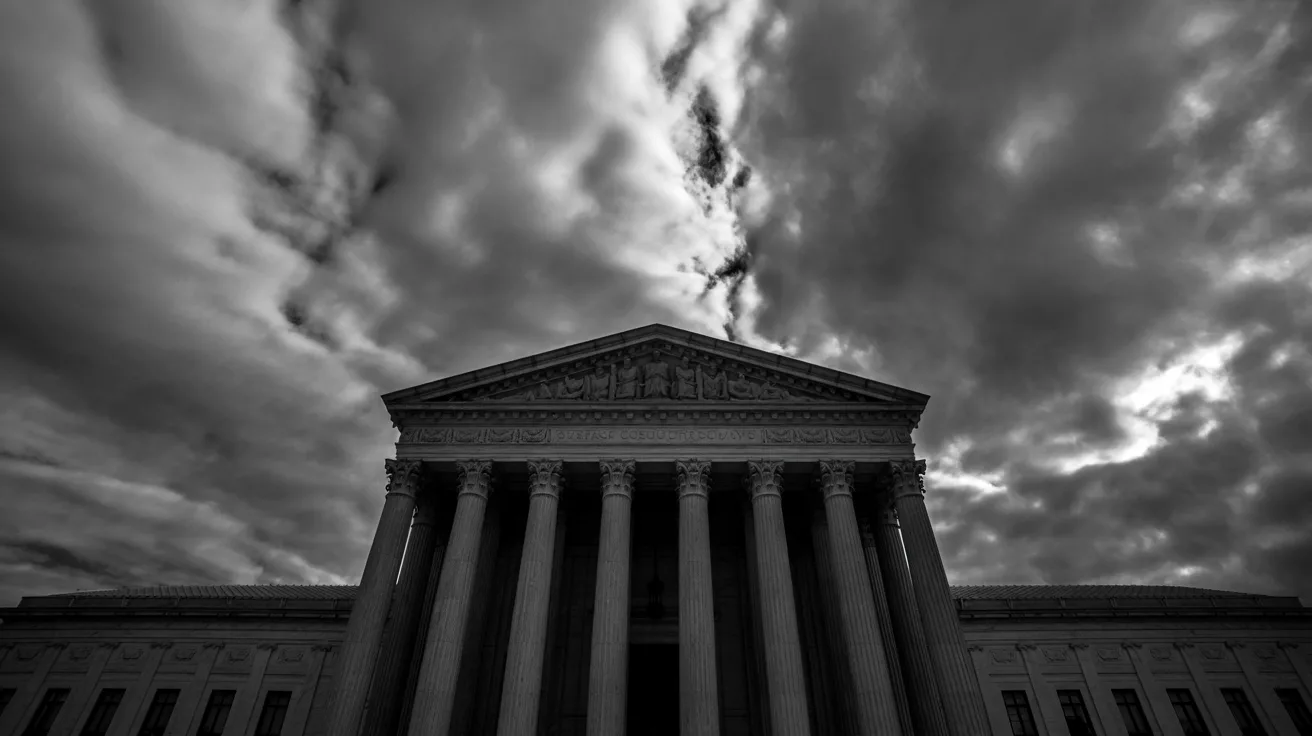
On April 1, 2026, the Supreme Court heard oral arguments in Trump v. Barbara, a constitutional challenge to Executive Order 14160, which Trump signed in January 2025 to deny birthright citizenship to children born in the US if their parents lack citizenship or lawful permanent residency. The ACLU brought a class-action suit in July 2025. During arguments, Chief Justice Roberts told the solicitor general 'it's the same Constitution' when he invoked changed circumstances. Justice Kagan told him 'the text of the clause does not support you.' Justice Gorsuch focused on whether the amendment centered on the child or the parents. Justice Barrett raised the practical impossibility of assessing parental intent at birth. A previous SCOTUS ruling in June 2025 had curtailed nationwide injunctions but did not address the merits. Legal scholars reviewing the arguments said the solicitor general had no good answer.
The market pricing this at 94% for SCOTUS to strike down the EO is right, but the ruling's downstream effect matters more than the ruling itself: the court will explain what citizenship means and that explanation will define the outer limit of executive power over the 14th Amendment for a generation.
Prediction Markets
Prices as of 2026-04-19 — the analysis was written against these odds
The Hidden Bet
The administration expects to lose, so this is just a political gesture.
The solicitor general's job is to win cases, not perform them. Filing briefs with 'no good answer' means either the legal team believed the theory was stronger than it was, or the goal was specifically to get a clear ruling that forecloses future challenges to the doctrine, which is itself strategically useful.
A 9-0 or near-unanimous ruling against Trump would strengthen the court's legitimacy.
A sweeping ruling on birthright citizenship would immediately become a campaign target. Republicans who applauded the SCOTUS shadow docket in 2025 would reverse position if the same court unanimously slaps down a Trump immigration order. The court's legitimacy depends partly on it never being too far from one coalition.
This case is about birthright citizenship.
The deeper case is about whether an executive order can reinterpret a constitutional amendment without a constitutional amendment. The birthright question is the vehicle. What the court actually decides is how far executive unilateralism extends, which matters for every other EO in the docket.
The Real Disagreement
The genuine fork is between two readings of 'subject to the jurisdiction thereof' in the 14th Amendment. The administration's reading is that unauthorized immigrants are not fully subject to US jurisdiction and therefore their children are not automatic citizens. The established reading, going back to United States v. Wong Kim Ark in 1898, is that anyone born on US soil and not the child of foreign diplomats is a citizen. The choice is not really legal. It is a decision about whether 128 years of settled constitutional interpretation can be rewritten by executive order based on a novel theory that no justice at argument seemed to credit. I lean toward the established reading because the text and history both support it, and because the alternative is that every constitutional guarantee is subject to executive reinterpretation whenever the executive claims new circumstances.
What No One Is Saying
If the court strikes down the EO 9-0, the administration will immediately announce it is seeking a constitutional amendment. That announcement is the real play: it turns a legal defeat into a political mobilization tool ahead of midterms, framing the entire issue as 'the courts are blocking the will of the people.' The legal loss was always the likely outcome. The political use of the loss is the strategy.
Who Pays
Children born to undocumented parents in states where the EO was temporarily enforced
Immediate, with ongoing bureaucratic consequences
In states where injunctions were lifted or limited, some births were already recorded without automatic citizenship documentation; those families face an administrative and legal nightmare regardless of the ultimate ruling
Federal immigration agencies
Medium-term, within 12 months of ruling
Any ruling requiring reprocessing of citizenship claims or clarifying what 'subject to jurisdiction' means operationally creates significant administrative burden; CBP, USCIS, and State Department must implement whatever the court decides
Scenarios
Broad Ruling Against EO
The court strikes down EO 14160 with a majority opinion reaffirming Wong Kim Ark and the constitutional text. The administration announces it will pursue a constitutional amendment. The ruling becomes a midterm campaign issue.
Signal The majority opinion cites Wong Kim Ark prominently; Trump posts on Truth Social calling the decision 'an attack on the American people'
Narrow Procedural Ruling
The court avoids the merits again, resolving the injunction question without fully addressing constitutional substance. The case returns to lower courts. The legal fight extends another 1-2 years.
Signal The opinion is short; multiple justices write concurrences but not a majority opinion; the holding is limited to the standing or injunction question
Surprise Narrow Win for Administration
A thin majority finds some constitutional basis for limiting birthright citizenship in very narrow circumstances, while not endorsing the full EO. This is the 6% scenario the market is pricing.
Signal Alito authors a majority; Thomas concurs; Roberts joins; Kagan, Sotomayor, and Jackson dissent sharply
What Would Change This
The bottom line changes if a majority opinion somehow distinguishes Wong Kim Ark in a principled way that holds up to scrutiny, rather than simply overruling it. That would require a legal argument that did not appear anywhere in the oral argument transcript, which is why the market is at 94% for the EO being struck down.
Related
SCOTUS Will Strike Down Trump's Birthright Citizenship Order. The Real Question Is What It Lets Happen First.
powerBirthright Citizenship: SCOTUS Will Almost Certainly Rule Against Trump, But the Ruling Will Do More Than That
powerThe Supreme Court Looks Poised to Rule Against Trump. His Own Party Is Already Moving Past It.
powerThe Supreme Court Is About to Rule on Birthright Citizenship. The Outcome May Turn on a Single Word from 1868.