Trump Names His Own Justices in Public, Warns the Birthright Ruling Will Follow
What happened
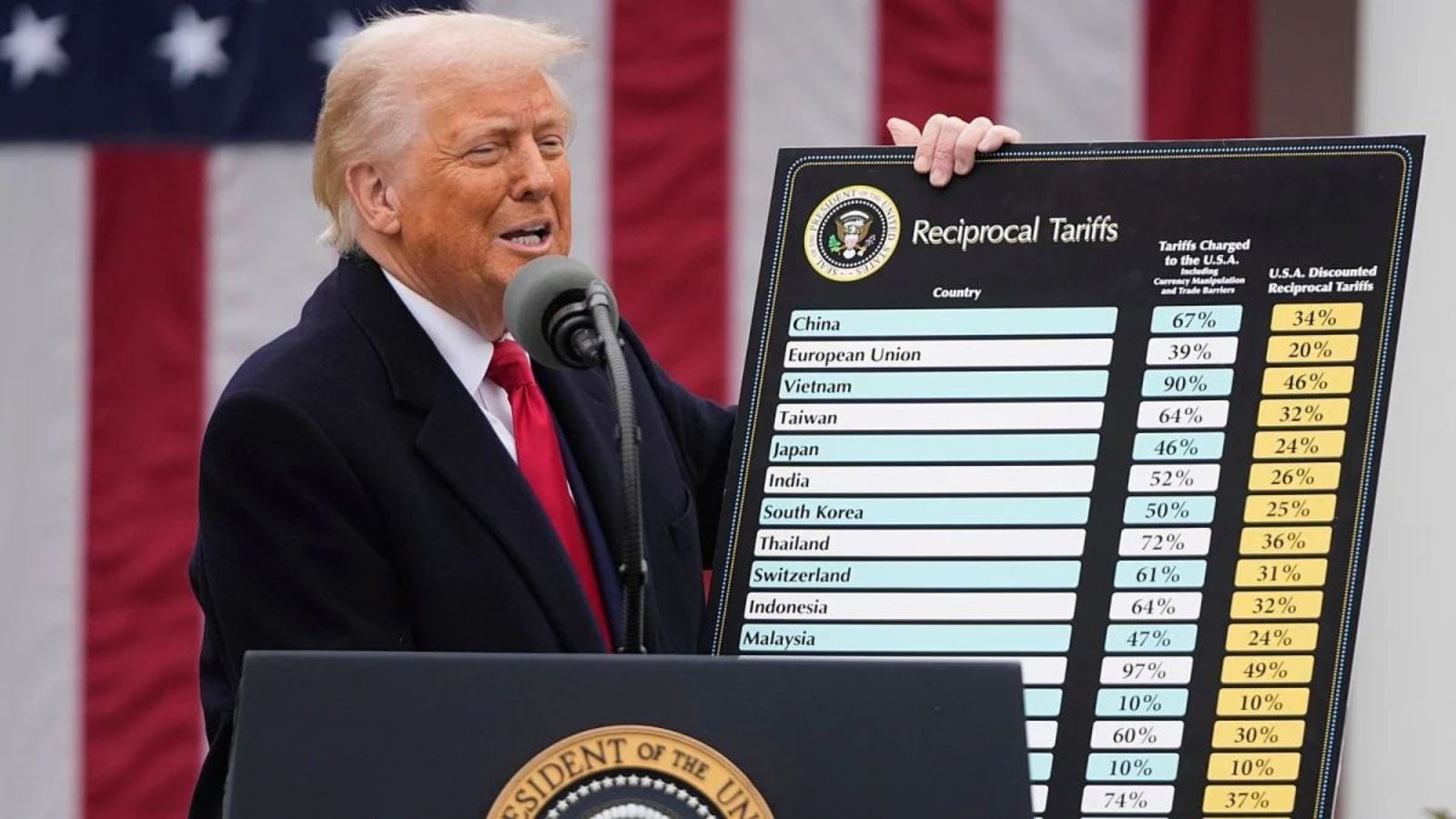
Following a 6-3 Supreme Court ruling that struck down his use of emergency powers to impose tariffs, President Trump publicly named two of his own appointees, Neil Gorsuch and Amy Coney Barrett, as having 'voted against the country.' He added that he expected both to rule against his administration again in the pending birthright citizenship case, expected before July, and said that 'a negative ruling on Birthright Citizenship is not economically sustainable.' The tariff ruling follows an earlier SCOTUS decision invalidating his IEEPA-based tariffs; both Gorsuch and Barrett joined the 6-3 majority.
Trump is not venting. He is publicly establishing that justices who rule against him are acting disloyally, laying groundwork to delegitimize the birthright ruling before it lands.
Prediction Markets
Prices as of 2026-05-12 — the analysis was written against these odds
The Hidden Bet
Trump's criticism is about his frustration with specific rulings
The pattern is strategic, not emotional. By naming justices before the birthright ruling, Trump creates a frame in which any adverse decision can be immediately dismissed as partisan betrayal by his own appointees, weakening the ruling's public authority before it is even issued.
The Supreme Court is insulated from this kind of pressure
The court has no enforcement mechanism of its own. It relies on the executive branch to implement its decisions. A president who has publicly declared rulings 'illegal' and 'economically unsustainable' has already signaled a willingness to contest implementation, regardless of what the court says.
The birthright citizenship case will turn purely on constitutional text
Polymarket has this at 91% probability that SCOTUS strikes down the EO. If the court is reading the 14th Amendment as most legal scholars do, the outcome is not close. The question is not what the court will decide but what happens after.
The Real Disagreement
The real fork: is judicial independence a norm or a rule? If it is a norm, it depends on both sides choosing to honor it. Trump is choosing not to. The court can issue its ruling and hope the norm holds on the implementation side. Or it can try to preempt defiance with unusually direct language in the opinion itself. Neither option is clean. I lean toward the norm being more fragile than the institution, which means the decisive test will not be the ruling but whether the administration complies with it.
What No One Is Saying
Trump publicly predicted the court would rule against him on birthright citizenship, which means he already has an answer ready: the court is politically compromised. This is not pessimism. It is pre-authorization. If the court rules against him, he has already told the public why he does not need to comply.
Who Pays
Children born in the US to undocumented parents
Immediately upon any court order allowing partial enforcement
If the EO is upheld or partially implemented pending further litigation, their citizenship status becomes uncertain at birth, affecting access to benefits, education, and future status
Federal agencies processing citizenship claims
Within weeks of the ruling, as states and agencies seek clarification
Conflicting court orders across circuits create an unworkable administrative environment where the same birth certificate is valid in one jurisdiction and contested in another
The judiciary as an institution
Slow-burn, over the remainder of Trump's term
If the executive routinely pre-labels adverse rulings as illegitimate before they are issued, public trust in the court as a neutral arbiter erodes regardless of the quality of its opinions
Scenarios
Court rules, compliance is partial
SCOTUS strikes down the birthright EO 6-3 or 7-2. The administration complies with the letter of the ruling but continues to contest implementation in lower courts. Status uncertainty persists for affected families for years.
Signal DOJ files new regulations within 30 days of the ruling that attempt to achieve the same outcome through administrative action
Court rules, Trump escalates
Trump publicly declares the ruling illegitimate, citing his pre-ruling statements, and directs agencies to continue enforcement. A constitutional crisis forces Congress to respond, splitting Republicans.
Signal Trump posts on Truth Social within 24 hours of the ruling calling it 'illegal' and directing agencies to 'disregard'
Court upholds the EO
A surprise ruling that the 14th Amendment does not guarantee birthright citizenship to children of undocumented parents reshapes US immigration law. Polymarket prices this at only 9%.
Signal Majority opinion authored by Thomas or Alito, joined by Barrett and Gorsuch reversing their tariff posture
What Would Change This
If Chief Justice Roberts writes the majority opinion in the birthright case and explicitly addresses the question of executive compliance, it would signal the court is aware of the defiance risk and trying to preempt it with institutional language.
Related
Trump Tells His Own Justices to Be 'Loyal.' The Court Hears It.
powerSCOTUS Will Strike Down Trump's Birthright Citizenship Order. The Real Question Is What It Lets Happen First.
powerTrump's Tariff Playbook Has One Move Left and It Also Got Struck Down
powerThe Courts Have Now Killed Two Different Tariff Regimes. Trump Keeps Building New Ones.