China Confirms What India Already Knew. The Problem Is Why They Said It Now.
What happened
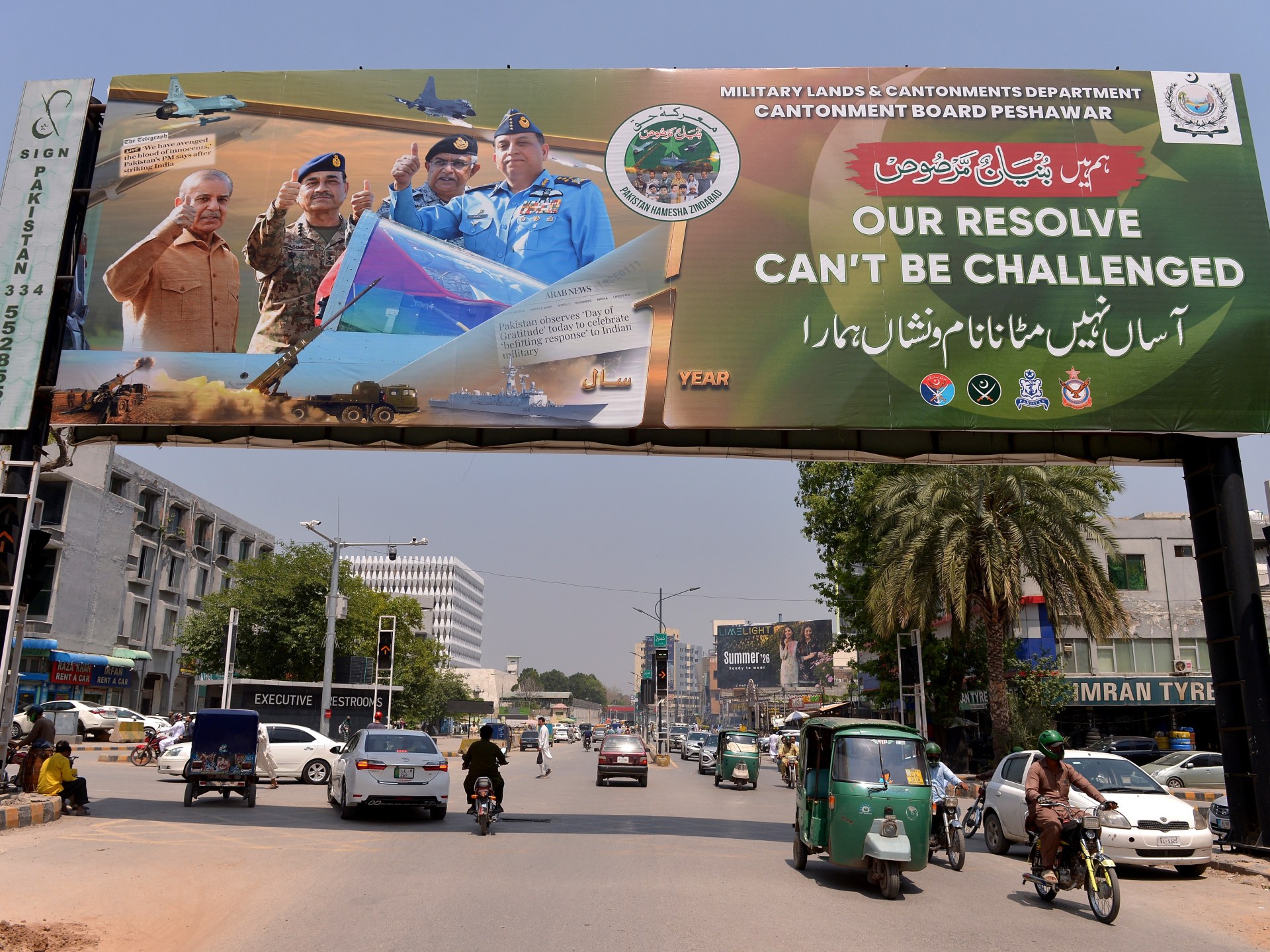
On the first anniversary of Operation Sindoor, the May 2025 India-Pakistan conflict, Chinese state broadcaster CCTV aired interviews with engineers from the Aviation Industry Corporation of China (AVIC) who described providing on-site technical support to Pakistan's J-10CE fighter jets during the fighting. Engineers described working under air-raid sirens at temperatures approaching 50 degrees Celsius to ensure Pakistani aircraft performed at 'full combat potential.' India's Ministry of External Affairs responded by saying China should 'reflect on whether supporting attempts to protect terrorist infrastructure affects their reputation.' Pakistan's National Assembly simultaneously passed a unanimous resolution praising its armed forces, and army chief Asim Munir threatened 'painful' retaliation against any future Indian 'misadventure.'
China did not accidentally confirm its military involvement. Beijing chose the anniversary, chose state television, and chose named engineers. This is a deterrence message to India about what backing Pakistan looks like in practice, delivered during Trump's Beijing summit week when India is watching carefully.
The Hidden Bet
China's admission is primarily about credibility with Pakistan
The CCTV timing, a week before Trump arrives in Beijing, suggests it is also aimed at the United States. The message is: Chinese weapon systems work in real combat, including against US-supplied systems like the Rafale jets India operates. The J-10CE performed alongside US-pedigree opponents. China is advertising its arms export value proposition to every potential buyer watching.
The conflict is over and both sides have moved on
Pakistan has rearmed at speed: new Fatah-3 supersonic missiles, an Army Rocket Force Command, expanded PAF fighter fleet, Shahed-style drone factories, and a growing satellite constellation -- all in twelve months. India has simultaneously accelerated its own modernization. The arms race that the 88-hour conflict interrupted is now running faster than before the war started.
India's diplomatic restraint on China reflects strategic patience
India has limited options. Confronting China directly over the Pakistan support would require either military escalation -- unworkable given the two-front exposure -- or economic retaliation, which India cannot sustain without severing supply chains it depends on. The 'reputation' framing is the maximum-pressure response available to a country that cannot afford the next step.
The Real Disagreement
The actual fork is whether the India-Pakistan conflict established a stable deterrent equilibrium or an unstable arms race equilibrium. Under the stable version, both sides demonstrated enough capability to make the next conflict unacceptably costly, reducing the probability of escalation. Under the unstable version, both sides learned specific gaps they now need to close, and the new weapons systems each acquired make the next conflict more likely, not less. China's behavior suggests it believes the unstable version: it is selling more weapons to Pakistan while studying India's defenses. The stable equilibrium story is the one that government spokespeople in both countries prefer, which is reason enough to doubt it.
What No One Is Saying
Asim Munir used the anniversary to invoke the two-nation theory -- the founding religious partition logic of Pakistan's existence -- in the context of a military conflict with India. Pakistan's army chief, in a country with 70 ongoing political trials against the opposition and a constitutionally constrained civilian government, just reminded his domestic audience that the army's legitimacy rests on existential confrontation with India. He is not reassuring India. He is reassuring himself.
Who Pays
South Asian civilian populations
Slow-burn; the economic displacement is already visible in budget allocations
Both India and Pakistan are diverting defense budgets at accelerating rates into missiles, drones, and fighter jets at the expense of public investment; Pakistan's fiscal position was already stressed before the rearming campaign began
India's strategic autonomy posture
Already happening; India-US defense cooperation accelerated measurably in the past 12 months
India has traditionally maintained non-alignment as a hedge between the US and China. China's confirmed support for Pakistan during a conflict India framed as counter-terrorism collapses the middle ground. India must now factor Chinese military operators into any future Pakistan scenario, changing the strategic calculus and pushing India further toward US defense integration
US arms exporters and the F-16 program
Ongoing; relevant to any new arms sale discussions in the region
Pakistan flies US-supplied F-16s alongside Chinese J-10CEs. China's on-site engineering support for one fleet but not the other creates a two-tier dependency: China can ensure J-10CE readiness in real combat, the US cannot provide equivalent real-time support for F-16s without a political decision to do so. This is a competitive advantage China is now explicitly advertising
Scenarios
Managed tension
Both sides continue the arms race at current pace without direct confrontation. India deepens US defense ties. Pakistan deepens China ties. The Line of Control stays quiet. The nuclear threshold remains relevant as the actual deterrent.
Signal No major cross-border incidents in the next 12 months; Asim Munir does not survive in office, reducing the incentive to invoke two-nation rhetoric for domestic legitimacy
Second incident
A terrorist attack in India, whether connected to Pakistani state actors or not, creates domestic political pressure on Modi to respond. This time both sides have more capable weapons and China's involvement is acknowledged. The conflict is harder to contain.
Signal A major attack in Kashmir or a major Indian city in the next 18 months attributed to Pakistan-based groups
China uses the data
China's study of both Op Sindoor and the Iran war informs its Taiwan planning in ways that change the US deterrence calculus. Not an India-Pakistan scenario, but the India-Pakistan war becomes strategically significant as a live-fire laboratory that altered Chinese military doctrine.
Signal Changes in Chinese air combat doctrine, missile saturation strategies, or air defense investments that mirror lessons from both conflicts
What Would Change This
If China admitted the AVIC engineer deployment was unauthorized or disavowed the CCTV report, it would suggest the leak was internal and unintended. That would change the bottom line from 'deliberate deterrence message' to 'embarrassing domestic propaganda that escaped review.' Beijing has not issued any such clarification.
Related
One Year After Operation Sindoor, Both India and Pakistan Are Preparing for the Next War
conflictOne Year After Operation Sindoor: Both Sides Won, Neither Side Is Safer
conflictOne Year After Operation Sindoor, Pakistan's Army Chief Is Having Lunch at the White House
conflictOne Year After India Struck Pakistan, Both Countries Are More Dangerous Than Before