The Strike That Could Crack the Memory Market
What happened
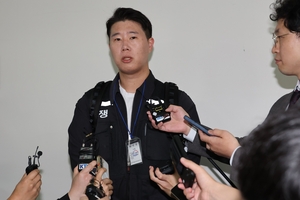
Samsung Electronics and its largest union entered a second day of government-mediated talks Tuesday with no deal in sight. The union is demanding Samsung allocate 15% of operating profit to performance bonuses and remove the existing payout cap. Management has not moved. A strike is set for May 21 if talks collapse, which would mark Samsung's second major work stoppage in three years. Micron stock jumped nearly 6% on Monday as markets began pricing in a supply disruption.
Samsung management is betting the union will blink. They might be right. But if they're wrong, they are handing Micron and SK Hynix a memory market gift they could hold for years.
The Hidden Bet
A Samsung strike would be short and contained
Samsung's 2023 strike lasted weeks and produced minimal output disruption because the company could shift work to non-union operations. But a 2026 strike hits at a moment of tighter overall memory supply and higher AI server demand: there is less slack in the system to absorb it.
The Korean government's emergency arbitration threat is a credible deterrent
The government floated arbitration on day one. Both sides rejected it. Arbitration cannot be imposed without consent under Korean labor law, and invoking it forcibly would set a precedent that would poison every future negotiation. The threat is probably empty.
This is primarily a wage dispute
The bonus cap the union wants removed is not just about money: it is about whether rank-and-file workers share in the AI-driven semiconductor boom at all. Samsung's operating profit hit record territory in late 2025. The workers know the numbers. This is as much about recognition as compensation.
The Real Disagreement
The core tension is between Samsung's need to preserve financial flexibility during a capex-intensive AI infrastructure buildout and workers' legitimate claim that they earned a proportionate share of record profits. You cannot fully satisfy both at once. Samsung can fund the 15% payout now, but it competes directly with the $40 billion fab investment cycle the company is committed to through 2028. Management's position is that the investment cycle is more important than near-term labor peace; the union's position is that workers who delivered the profits should not be the last to benefit from them. I lean toward the union's argument on fairness, but Samsung's case on timing is not dishonest: delaying a strike settlement until Q3, when a new wage framework could be structured around forward-looking profit projections, would be less economically distorting than a backward-looking payout. The problem is that may be the last offer management makes before the walkout.
What No One Is Saying
Every AI chip narrative in 2026 centers on Nvidia, TSMC, and the US-China export control war. The actual bottleneck in the AI inference buildout is memory bandwidth, and the dominant memory supplier is Samsung. A sustained Samsung strike does not just squeeze Micron's stock price: it creates a systemic constraint on AI server deployments at exactly the moment hyperscalers are racing to scale. No one in Washington, Beijing, or Taipei is thinking about this. They should be.
Who Pays
AI hyperscalers (Microsoft, Google, Amazon, Meta)
Immediate if the strike begins May 21; effects hit quarterly earnings guidance within 45 days
Higher HBM and DDR5 memory prices translate directly into server COGS. A 3-week Samsung disruption in a tight supply environment could push memory contract prices up 15-25%, hitting margin guidance for Q3 server deployments.
South Korean export economy
Medium-term; visible in trade data within one reporting cycle
Semiconductors account for roughly 20% of South Korea's total exports. A prolonged Samsung work stoppage weakens the won, raises questions about Korea's labor stability for foreign direct investment, and gives Japan and Taiwan a messaging opportunity with customers considering supply chain diversification.
Samsung rank-and-file workers outside the union
Slow-burn; plays out over the next 2-3 labor cycles
If Samsung absorbs a multi-week strike and ultimately offers only marginal concessions, it signals that collective action costs workers more than it gains them. The outcome sets a precedent for every future negotiating cycle at every Korean chaebol.
Scenarios
Last-Hour Deal
Management offers a performance payout in the 8-10% range plus a cap adjustment review panel. Union accepts, framing it as a partial win. Strike is averted. Memory markets settle.
Signal Union head stops speaking to press before sessions and government mediators extend talks past May 18
Strike, Then Quick Settlement
Workers walk out May 21. After 5-7 days, memory spot prices spike enough that Samsung's board authorizes a revised offer. Strike ends inside two weeks with a deal close to the union's original demand.
Signal Micron and SK Hynix spot pricing moves more than 10% within 72 hours of the walkout
Extended Walkout
Strike runs 3-plus weeks. Samsung shifts limited production to non-union facilities and weathers it. Union accepts a deal below its stated floor. Memory prices remain elevated for a quarter. Samsung has proven it can break a long strike.
Signal Government imposes mandatory cooling-off period after week one without a settlement offer on the table
What Would Change This
If Samsung's management agreed to a cap removal with a 10% performance floor before May 18, that would suggest the board assessed the reputational and supply-chain risk as worse than the financial hit. That would make the 'investment flexibility' argument a negotiating position, not a genuine constraint.
Related
Samsung's Workers Want 15% of the AI Boom. The Company Says No. An 18-Day Strike Starts May 21.
conflict41,000 Samsung Workers Are About to Strike Over a Bonus Gap That SK Hynix Created
conflictSamsung Faces Its First Strike in 88 Years. Google, Apple, and Qualcomm Are Worried.
conflictSamsung Workers Want 15% of the AI Boom. Management Says the Company Can't Afford It.