Samsung Faces Its First Strike in 88 Years. Google, Apple, and Qualcomm Are Worried.
What happened
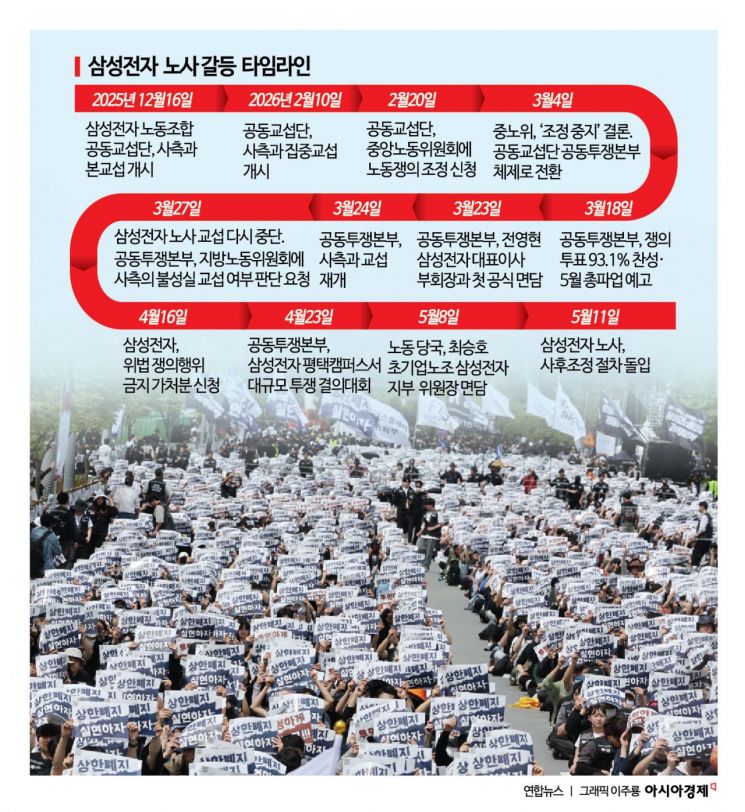
Samsung Electronics faces its first general strike since the company's founding 88 years ago. The largest employee union has set May 21 as the start date for an 18-day walkout if labor and management cannot agree on a performance bonus structure. The union's core demand is that 15% of operating profit be distributed as performance pay and that caps on bonuses be removed. Management has not moved. Last-ditch mediation talks began May 11 and 12. The American Chamber of Commerce in Korea, whose members include Google, Apple, and Qualcomm, issued an official statement warning the strike could damage Korean investment credibility and trigger supply chain diversification. Samsung is the world's largest memory chip producer and a dominant supplier to global AI hardware.
Samsung's workers are asking for a share of profits that exist because of AI demand they helped enable. Management is refusing. The company that supplies memory for almost every AI chip in the world is ten days from a production stoppage.
The Hidden Bet
A short strike would have limited impact on memory supply
Samsung's fabs run continuous processes. Even a partial walkout at Pyeongtaek, the world's largest chip campus, disrupts yield and quality control in ways that take weeks to recover from. The 1,754-supplier dependency means even indirect disruptions spread. An 18-day strike is not short.
Last-ditch mediation talks will succeed
The union reiterated its 15% demand on the same day talks were announced. Internal union conflict, with some factions demanding more aggressive action, creates a dynamic where union leadership may be unable to accept a compromise even if it wants to. The internal split gives management less room to negotiate with, not more.
The strike is primarily a labor dispute internal to Korea
AMCHAM's official statement transforms the dispute's frame. When the chamber that represents Google and Apple says Korea's investment credibility is at stake, it is applying pressure to both sides via geopolitical reputation costs. Samsung's management is now negotiating not just with its union but with the implicit threat that multinationals will accelerate diversification to SK Hynix, Micron, or TSMC subsidiaries.
The Real Disagreement
The genuine tension is between two claims to the value Samsung's workers created. The union's position is that AI demand for HBM memory and advanced DRAM generated record-level operating profits, and workers deserve a share commensurate with that contribution. Management's position is that performance bonuses must be capped to maintain financial flexibility for the enormous capital expenditure required to stay at the frontier of chip design. Both are defensible. Samsung cannot simultaneously be the world's most critical AI memory supplier and a company that cannot afford to pay workers who built that position. But it also cannot fund the next generation of fabs, which costs tens of billions of dollars, while distributing 15% of operating profit in cash. The constraint is real. The question is who absorbs it.
What No One Is Saying
Samsung's chip competitiveness relative to SK Hynix has declined over the past three years, particularly in HBM memory used in Nvidia and AMD AI accelerators. The performance bonus dispute is partly a proxy fight over that decline. Workers are demanding a share of profits generated before the competitive slippage became apparent. Management is reluctant to entrench a profit-sharing formula that assumes continued dominance Samsung can no longer guarantee.
Who Pays
AI hardware buyers, including hyperscalers
If the strike proceeds May 21 and lasts more than a week, effects visible in Q3 2026
A Samsung production stoppage tightens already constrained HBM and advanced DRAM supply at exactly the moment when AI infrastructure buildout is accelerating. Memory price spikes flow through to AI server costs within one to two quarters.
Samsung's 1,754 direct suppliers
Immediately upon strike commencement
Suppliers running just-in-time inventory models cannot absorb a multi-week fab shutdown. Smaller component makers face cash flow crises immediately. Some may not recover their Samsung contracts even after the strike ends.
Korea's semiconductor investment position
Medium-term, 12 to 24 months for investment decisions to shift
AmCham's survey already shows Korea has slipped to third among Asian regional HQ destinations. A high-profile strike at its flagship company, with explicit AMCHAM pressure, gives multinationals a public justification for accelerating geographic diversification of supply chains.
Scenarios
Last-Minute Deal
Mediation on May 11-12 produces a framework that partially meets union demands, perhaps a lower profit share percentage or a one-time bonus rather than a structural change. Union leadership accepts. The May 21 strike is averted. Memory supply is unaffected.
Signal Joint statement from Samsung and union leaders before May 18 announcing resumed wage talks with a specific schedule.
Strike Begins, Ends Quickly
The May 21 walkout proceeds but internal union divisions produce a return-to-work vote within the first week. Production disruption is contained. Memory prices spike briefly and then normalize. AMCHAM issues a follow-up statement praising resolution.
Signal A dissident union faction calls a separate return-to-work vote within the first five days of the strike.
Extended Shutdown
Mediation fails. Strike proceeds for the full 18 days or longer. Pyeongtaek fab output drops 20-30%. HBM prices spike. SK Hynix and Micron gain market share. AMCHAM's supply chain diversification warnings accelerate. Korean government intervenes.
Signal No joint statement by May 18 and no emergency government mediation announcement.
What Would Change This
If Samsung management offers a profit-sharing formula tied to exceeding a specific operating profit threshold rather than a flat percentage, it would address the capital expenditure concern while giving workers a credible upside claim. Neither side has proposed this structure publicly.
Related
Samsung's Workers Want 15% of the AI Boom. The Company Says No. An 18-Day Strike Starts May 21.
conflictSamsung Workers Want 15% of the AI Boom. Management Says the Company Can't Afford It.
conflictSamsung's Semiconductor Boom Is Tearing Its Union Apart
powerThe Strike That Could Crack the Memory Market