Cerebras Is Pricing Its IPO at $150 a Share. The Market Thinks It Will Open Worth $50 Billion.
What happened
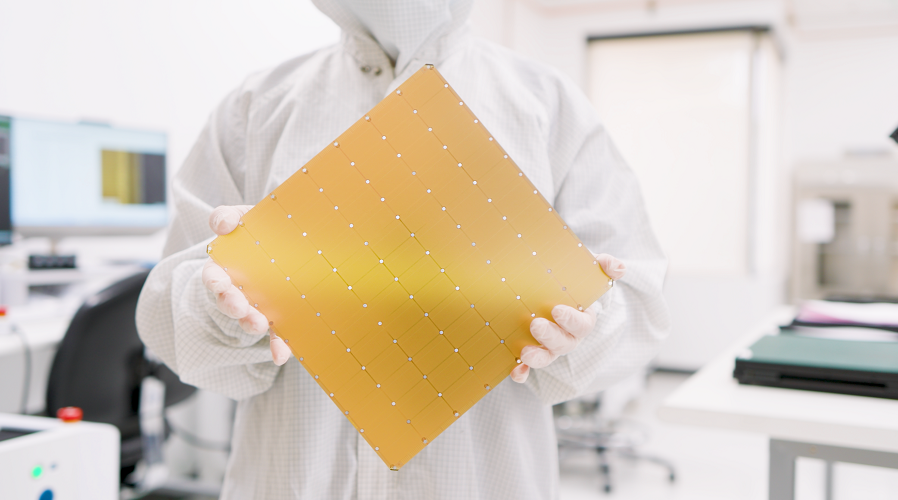
Cerebras Systems is set to price its IPO on May 13 and list on Nasdaq on May 14 under the ticker CBRS. The company raised its price range from $115-125 to $150-160 per share after receiving more than 20x oversubscription on 28-30 million shares. At the top of the new range it would raise approximately $4.8 billion. Cerebras makes a single wafer-scale AI chip, the WSE-3, which it markets as dramatically faster than Nvidia GPUs for AI inference workloads. OpenAI signed a $10 billion cooperation agreement in January; AWS signed a supply deal in March. Cerebras's 2024 IPO attempt was abandoned due to national security concerns over revenue concentration from UAE-based G42. Revenue grew 76% in 2025 to $290 million; the company turned profitable with $87.9 million net income.
Investors are paying $50 billion for a single verifiable claim: that inference, not training, is where AI economics is headed, and that Cerebras wins that market against Nvidia. If that claim is right, the valuation is defensible. If Nvidia updates its architecture to close the gap, the entire thesis evaporates.
Prediction Markets
Prices as of 2026-05-11 — the analysis was written against these odds
The Hidden Bet
Inference workloads have permanently diverged from training, creating a structural opening for non-Nvidia chips.
Nvidia is not standing still. Its Blackwell B200 already improves inference performance relative to H100, and future architectures will narrow the SRAM advantage Cerebras claims. The window for hardware differentiation may be 18-24 months, not a durable moat.
OpenAI's $10 billion commitment is firm forward revenue.
OpenAI holds warrants to purchase 33 million Cerebras shares. Its financial interest in a high IPO price means the cooperation agreement and the investment are not independent signals. OpenAI benefits if Cerebras's stock goes up, regardless of how much inference work it actually routes to Cerebras chips.
The CFIUS review resolved the G42 national security concern.
CFIUS cleared the G42 partnership but the underlying issue was dependency on a UAE company with Chinese government ties. G42 is still a Cerebras customer. If U.S.-China tensions escalate further, Congress or Treasury could revisit the clearance or impose new restrictions on Cerebras's business with G42.
The Real Disagreement
The question the market has not settled is whether Cerebras's advantage is architectural or merely a current-generation artifact. Cerebras argues that a single large chip with unified memory is fundamentally better for inference because latency between chips is eliminated. Nvidia argues that its interconnect technology and software ecosystem will match any hardware-level advantage Cerebras claims. One side is right and the other is not. Investors are collectively betting on Cerebras at 89.5% probability of a $50B+ opening market cap. If Nvidia ships an architecture that closes the latency gap before Cerebras achieves sufficient customer lock-in, the Cerebras case collapses. The IPO itself creates urgency: Cerebras needs to get customers locked into its hardware before Nvidia can respond.
What No One Is Saying
Cerebras's path from zero to profitable in one year coincided with OpenAI becoming a customer and a shareholder simultaneously. OpenAI holds warrants for 33 million shares valued at a fraction of the IPO price. That structure means OpenAI had strong incentive to direct inference workloads to Cerebras specifically to make the IPO story hold together. The 76% revenue growth is real. Whether it reflects Cerebras beating competitors on merit or reflects an investor-customer arrangement designed to produce a compelling prospectus is a question the S-1 does not answer.
Who Pays
Retail investors who buy at IPO pop
Immediate through 90-day lockup expiration.
Cerebras's previous IPOs in the sector, including companies with similarly hyped narratives, have had strong first-day pops followed by multi-month declines. Renaissance Capital notes many recent IPOs have 'strong pops on day one, and weak trading from there.' Buying the IPO day pop concentrates the downside on non-institutional investors.
SK Hynix and Samsung Electronics
Medium-term: meaningful at scale over 2-3 years.
Cerebras's SRAM-based architecture, if it succeeds at scale, reduces demand for high-bandwidth memory (HBM), where SK Hynix and Samsung hold dominant positions. SiliconAngle analysts specifically flagged this impact in IPO preview coverage.
Scenarios
Inference era locks in
The shift from AI training to AI deployment is as large as bulls claim. Cerebras secures 5-10% of the inference chip market as a durable Nvidia alternative. Valuation at $50B+ is defensible by 2028 revenues. The IPO is remembered as a prescient bet.
Signal Watch whether Cerebras signs any major cloud provider deal beyond AWS in the first 90 days post-IPO, and whether OpenAI actually routes significant production traffic to Cerebras chips.
Nvidia closes the gap
Nvidia ships an inference-optimized Blackwell variant with comparable SRAM-per-compute ratios by late 2026. Cerebras's benchmark advantage narrows. New customers choose Nvidia for ecosystem continuity. Cerebras trades at $20-25B within a year.
Signal Watch for any Nvidia product announcement explicitly targeting single-chip inference latency, and any customer who pilots Cerebras and then renews on Nvidia instead.
National security reinvestigation
Congressional pressure or an escalating U.S.-UAE-China situation triggers a new look at the G42 relationship. The company cannot serve its most significant early customer. Revenue growth stalls. The story unravels faster than the market priced.
Signal Any Congressional inquiry targeting G42 specifically, or new Treasury designations on UAE AI entities.
What Would Change This
If Cerebras publishes independent third-party benchmarks showing the inference speed advantage holds across a wide range of model architectures, and if those results are reproducible at customer sites without Cerebras engineers present, the architectural moat claim becomes credible. The current evidence relies heavily on Cerebras's own benchmarks and a customer list with financial entanglements.