SCOTUS Gutted the Voting Rights Act. Then It Rushed the Ruling Into Effect.
What happened
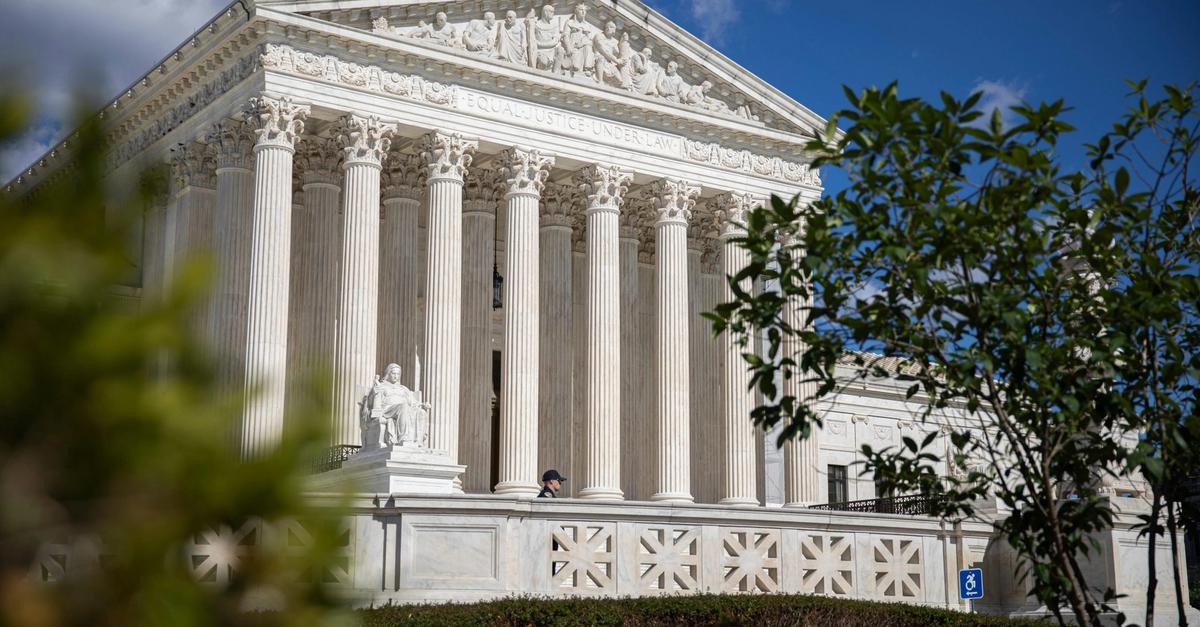
Last week, the Supreme Court's conservative majority struck down Louisiana's congressional map in Louisiana v. Callais, ruling it was an unconstitutional racial gerrymander. The ruling also effectively allowed states to use partisan-advantage arguments as a defense against Section 2 Voting Rights Act claims, significantly weakening the 60-year-old law. On May 4, the Court took the unusual step of issuing the judgment immediately rather than waiting the standard 32 days, allowing Louisiana to redraw the map in time for the 2026 midterm elections. Louisiana Governor Jeff Landry had already suspended the state's ongoing House primaries. Justice Ketanji Brown Jackson, the lone dissenter, wrote that the expedited ruling amounted to Court approval of Louisiana's 'rush to pause the ongoing election.' Justice Alito, joined by Thomas and Gorsuch, responded that Jackson's charges were 'baseless and insulting.'
The Court did not just weaken the Voting Rights Act. It ensured that Louisiana Republicans can immediately draw a new map maximizing their House seats before the 2026 midterms, eliminating the cooling-off period that normally prevents the losing party from acting on a new ruling.
The Hidden Bet
The ruling was primarily about the constitutional limits of racial gerrymandering, not about partisan electoral advantage.
The practical effect of the ruling, which both Alito's concurrence and Ballotpedia's analysis note, is that Louisiana Republicans can now draw a map expected to flip one or two House seats currently held by Democrats representing majority-Black districts. The constitutional framing is the legal vehicle; the House seat arithmetic is the actual stakes.
Expediting the judgment was a neutral procedural choice since Louisiana did not oppose it.
Louisiana did not oppose it because Louisiana benefits from it. The party that stands to gain from immediate redistricting agreed that the 32-day cooling period should be waived. Jackson's point is that the Court's acceptance of this request was not neutral; it was a choice to hand Louisiana Republicans a shorter window to work with.
The Callais ruling primarily affects Louisiana.
Ballotpedia explicitly flags that the partisan-advantage defense against Section 2 VRA claims could catalyze redistricting challenges in other states. Any state that was forced under the VRA to draw a majority-minority district can now argue that its underlying partisan interest justifies a different map.
The Real Disagreement
The actual fork is between two views of what the Voting Rights Act was for. One view: Section 2 was designed to protect minority voters from dilution, but it does not require states to draw majority-minority districts at the expense of partisan outcomes; forcing them to do so is itself a form of racial classification. The other view: Section 2 exists precisely because states with histories of discrimination against Black voters cannot be trusted to balance partisan and racial interests fairly, and allowing a partisan-advantage defense guts the law's enforcement mechanism. Alito's majority and Jackson's dissent are not talking past each other. They hold genuinely incompatible views of whether race or partisanship is doing the work in a map that happens to dilute minority votes. You cannot resolve that without choosing which value you weight more heavily when they collide.
What No One Is Saying
The Jackson-Alito written exchange is publicly embarrassing for the Court as an institution in a way that is unprecedented in recent memory. Two sitting justices called each other's reasoning 'baseless and insulting' in published opinions. That level of institutional rupture is a signal, not just a headline: the conservative majority no longer feels it needs to engage the dissent's arguments in good faith, and the liberal wing no longer believes it can.
Who Pays
Black voters in Louisiana's current majority-minority districts
Within weeks, as Louisiana redraws the map before the 2026 primary
Their congressional representation is likely to be diluted when Louisiana draws a new map that favors Republicans, eliminating or weakening the two majority-Black districts the previous map preserved.
The two Black Democratic House members from Louisiana
2026 election cycle
They are the incumbents most directly threatened by a new map drawn to flip their seats to Republican.
Section 2 VRA enforcement nationwide
2026 and 2030 redistricting cycles
The partisan-advantage defense provides a template for other states to challenge DOJ and NAACP redistricting lawsuits by arguing that their maps reflect partisan rather than racial calculations.
Scenarios
Louisiana redraws, Democrats lose seats
Louisiana's legislature draws a new map before the 2026 primary, eliminating or diluting one or both majority-Black districts. Republicans pick up one to two House seats. The new map stands through the midterms.
Signal Louisiana's legislature convenes a special session within 30 days and passes a new map.
Delayed map triggers further litigation
Civil rights groups challenge Louisiana's new map immediately, winning a temporary injunction that throws the state's 2026 primaries into chaos. SCOTUS is asked again to intervene on emergency timelines.
Signal A federal district court issues an injunction against Louisiana's new map within 2 weeks of its adoption.
Other states follow
Alabama, Georgia, or Texas invokes the Callais partisan-advantage defense to redraw maps that were drawn under VRA pressure. DOJ challenges them. The Callais framework gets stress-tested in multiple circuits before the 2026 elections.
Signal A state attorney general publicly cites Callais as justification for a redistricting review within 30 days of the ruling.
What Would Change This
If Louisiana's new map is drawn in a way that preserves meaningful minority representation, rather than maximizing the Republican seat gain the ruling permits, the bottom line about immediate electoral harm would need revision. Given Landry's track record and the political incentives in play, there is no reason to expect that.