SCOTUS Guts the VRA and Makes It Take Effect Immediately
What happened
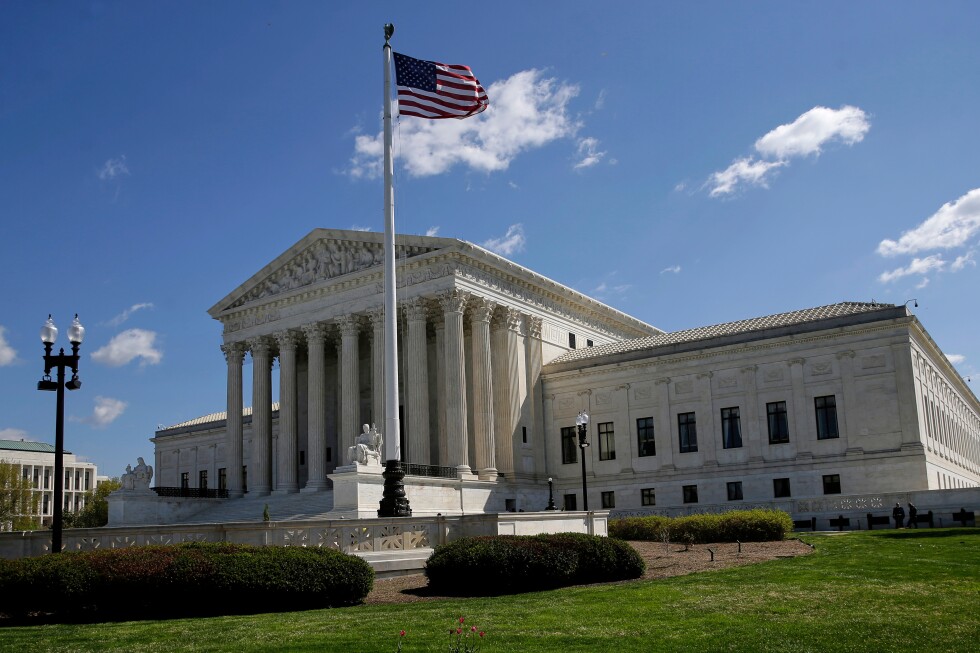
The Supreme Court ruled 6-3 on April 29 that Louisiana's majority-Black 6th Congressional District, drawn to comply with Section 2 of the Voting Rights Act, was an unconstitutional racial gerrymander. Justice Samuel Alito wrote the majority, finding that states can almost never consider race when drawing maps to satisfy the VRA. On Monday, the court took the extraordinary additional step of making the ruling take effect immediately at Louisiana's request, waiving the standard 32-day waiting period. Justice Ketanji Brown Jackson publicly attacked the decision in writing; Alito responded in an unusually personal exchange. Louisiana's governor has already suspended House races to allow new maps to be drawn, and Republican-controlled states nationwide are moving to redraw their own maps.
The court did not just weaken the Voting Rights Act. It handed Republicans a redistricting weapon and then rushed it into effect in time for the 2026 midterms, making clear that the timing is not incidental.
The Hidden Bet
Section 2 of the Voting Rights Act still exists as meaningful protection
The ruling says states can almost never consider race when drawing maps. Section 2 was specifically written to require that states consider race to avoid diluting minority voting power. A provision you can almost never invoke is not a protection; it is a placeholder.
The emergency order to make the ruling immediately effective is a routine procedural matter
The standard 32-day waiting period exists to allow rehearing petitions and prevent rushed compliance. Waiving it specifically at Louisiana Republicans' request, with midterm elections approaching, is not neutral. It is the court choosing the election calendar as the operative constraint rather than its own procedural rules.
This will primarily affect Louisiana's specific 6th district
The ruling's principle extends to all states with majority-minority districts drawn under VRA Section 2 compliance. States like Alabama, Georgia, Texas, and North Carolina have similar maps. The downstream effect on the 2026 House map could affect a dozen or more seats.
The Real Disagreement
The genuine tension is between two readings of equal protection that are both coherent. One says any government action that sorts citizens by race is presumptively unconstitutional, regardless of whether the intent is remedial or discriminatory. The other says race-neutral maps drawn in a country with a documented history of racial voter suppression will predictably produce racially discriminatory outcomes, and that the Equal Protection Clause was specifically intended to prevent that. Alito chose the first reading. Jackson chose the second. The lean here is that Jackson's reading is historically better grounded: the 14th Amendment was enacted in 1868 to address specifically racial discrimination against Black Americans, not to produce a colorblind standard that ignores the structural effects of prior discrimination. But the conservative majority has the votes.
What No One Is Saying
Trump has been publicly saying that his policy changes are designed to help Republicans win the 2026 midterms. The court's emergency order, rushed to take effect before Louisiana can draw new maps in time for November, produces exactly that outcome. The justices who signed the emergency order are the same justices who were appointed by Republican presidents. The alignment between the court's timing decision and the stated political objective of the sitting president is not a coincidence anyone will say out loud.
Who Pays
Black and Latino voters in redistricted states
Directly affecting the November 2026 elections
Minority-majority districts will be dissolved and their populations absorbed into majority-white districts, diluting minority voting power and reducing the likelihood of electing minority-preferred candidates to Congress.
Current Black and Latino congressional representatives
Before November 2026
Representatives like Cleo Fields, whose Louisiana 6th district was specifically struck down, will face redrawn maps that may make their seats unwinnable. Nationally, a wave of VRA-compliant maps drawn in Republican states could cost Democrats several seats.
Federal courts
Ongoing institutional damage
The Jackson-Alito public exchange is an unusually open display of the court's internal fracturing. The legitimacy of the institution depends on the appearance of principled rather than political decision-making. That appearance is becoming harder to sustain.
Scenarios
Rapid redistricting shifts the House
Republican-controlled states move quickly to redraw maps following the ruling. Multiple majority-minority districts are dissolved. Democrats lose 3-6 House seats in November 2026 not because of changed voter preferences but because of changed maps.
Signal State legislatures in Alabama, Georgia, Texas, and North Carolina introduce redistricting bills within 60 days referencing the Louisiana ruling
Litigation slows the rollout
Federal district courts in multiple states issue injunctions blocking new maps pending appeals. The redistricting wave takes longer than Republicans plan, and most 2026 elections proceed under existing maps while the litigation plays out.
Signal Federal judges in three or more states block new maps within 30 days of their introduction
Backlash fuels minority voter mobilization
The ruling becomes the most visible voting rights event since Dobbs. Minority voter registration and turnout in affected states increases sharply, partially offsetting the map changes through raw mobilization.
Signal Voter registration rates in affected districts increase measurably in June-September 2026 compared to comparable pre-election periods in prior cycles
What Would Change This
If the court agreed to hear an appeal that led to Section 2 being substantively restored, or if Congress passed new voting rights legislation that created an alternative framework, the bottom line about redistricting as a pre-election weapon would not hold.
Related
SCOTUS Just Handed Republicans a Redistricting Weapon Before the Midterms
powerSCOTUS Gutted the Voting Rights Act. Then It Rushed the Ruling Into Effect.
powerSCOTUS Guts the Voting Rights Act. Again.
powerThe SCOTUS Ruling Unlocked Maximum Gerrymandering. Republicans Are Running the Clock.