The SCOTUS Ruling Unlocked Maximum Gerrymandering. Republicans Are Running the Clock.
What happened
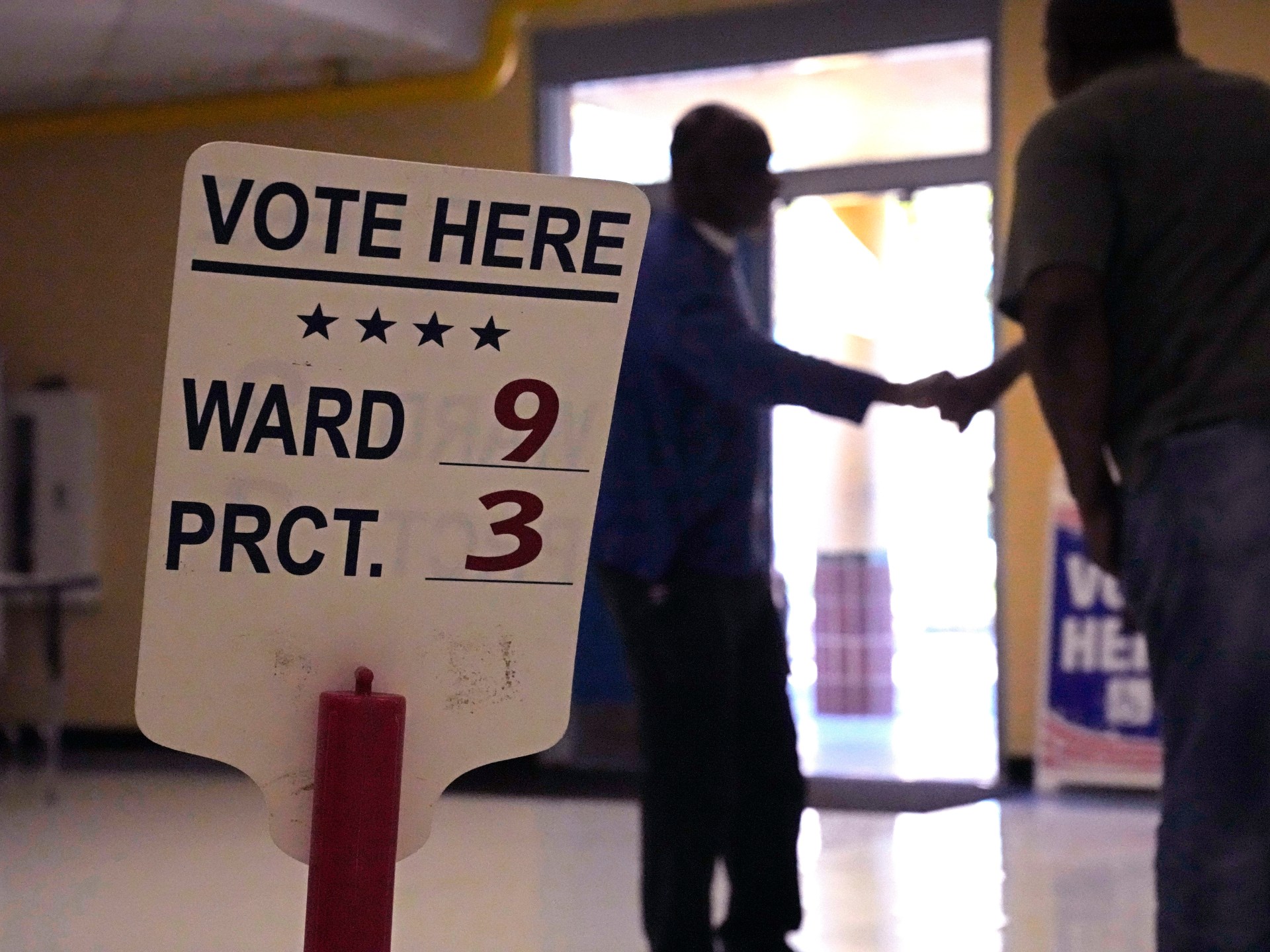
The Supreme Court's 6-3 ruling in Louisiana v. Callais, issued Wednesday, struck down Louisiana's second majority-Black congressional district as an unconstitutional racial gerrymander. Justice Alito's majority opinion held that the Constitution 'almost never' permits race-based discrimination in redistricting, effectively making majority-minority districts both legally required under the old Voting Rights Act interpretation and unconstitutional under the Equal Protection Clause. Louisiana Gov. Jeff Landry immediately suspended the state's May 16 congressional primaries to allow map redrawing. Florida passed a new map adding four Republican seats the same afternoon. Alabama filed emergency motions to use its earlier Republican-drawn map. Trump publicly called on Tennessee and other states to redraw maps. Mississippi announced a special session for May 20. Political analysts estimate Republicans could gain 7-9 House seats across multiple states.
This is not a legal ruling with political implications. It is a political outcome with legal cover. The Supreme Court's six conservative justices handed Republicans a mid-decade map-redrawing opportunity six months before the midterms, and the party is moving in hours, not weeks.
Prediction Markets
Prices as of 2026-05-01 — the analysis was written against these odds
The Hidden Bet
The Callais ruling will survive legal challenges and hold before the November 2026 elections
New maps drawn on a rushed timeline face immediate legal challenges at the district level. Even if the Supreme Court's ruling is correct on its merits, implementing it requires state legislatures to pass new maps, governors to sign them, courts to review the new maps for other violations, and election officials to update ballots and voter rolls. Louisiana's absentee voting had already started. The rush creates procedural vulnerability: a judge in a lower court could find the implementation process itself invalid even if the underlying ruling stands.
Eliminating majority-minority districts harms Black voter representation
The counterargument, which conservatives make sincerely, is that packing Black voters into majority-minority districts is itself a form of racial sorting that reduces their political influence in surrounding districts. If Black voters are 30% of a state's population and concentrated in two districts, they have no influence in the other five. Dispersed, they might have swing-state power in three or four. The empirical question of which approach produces better outcomes for Black political interests is genuinely contested, though the empirical record suggests majority-minority districts have produced most of the Black representation in Congress.
Republicans will gain all 7-9 projected seats
The 9-seat projection assumes all challenged states succeed, all new maps survive legal review, and Democrats do not benefit from the backlash. Polymarket puts Democratic control of the House after the midterms at 83.5% probability, suggesting markets believe Democrats will retake the majority despite the redistricting moves. Gerrymandering can lock in structural advantages but cannot overcome a genuine political wave, and the current environment includes elevated Democratic enthusiasm over the economy and executive overreach.
The Real Disagreement
The real fork is between two views of what voting rights law was protecting. One view: Section 2 of the VRA forced states to create majority-minority districts to counteract generations of suppression and structural exclusion; removing that protection undoes fifty years of representational progress. The other view: the Equal Protection Clause prohibits government from sorting people by race for any reason, and race-based districts are a form of discrimination regardless of remedial intent; color-blind law is the only constitutional option. Both sides acknowledge the tension and neither can fully resolve it within existing constitutional doctrine. I lean toward the first view, not because race-neutral redistricting is wrong in principle, but because the ruling's practical effect in 2026 is not to create a race-neutral system. It is to allow Republicans to racially gerrymander in the opposite direction, packing communities of color into fewer districts while spreading majority-white Republican voters across more. The principle is invoked selectively.
What No One Is Saying
The states moving fastest are not doing so because they believe in the constitutional principle. They are doing so because Trump called them and Republicans in Congress need the seats. The legal rationale of 'we are now required to be race-neutral' is cover for 'we have a window to draw favorable maps before courts or Congress can respond.' The map-drawers know this, the party leaders know this, and the Supreme Court majority had to know the ruling would produce exactly this result. The question is whether 'we knew it would be used this way and ruled for it anyway' is a defense or an indictment.
Who Pays
Black and Latino voters in Louisiana, Florida, Alabama, Mississippi, Tennessee
Immediate: November 2026 elections
Losing majority-minority districts means losing the concentrated electoral power that produced Black representation in Congress from these states. In Louisiana specifically, Cleo Fields' district, which exists as a result of court-ordered remediation, is targeted for elimination.
Democratic House candidates in affected states
November 2026
Each successfully redrawn Republican map eliminates a competitive or Democratic-leaning district and adds a safe Republican one. Florida's new map alone targets four seats.
Future Congresses trying to restore voting protections
Multi-decade
The constitutional basis for majority-minority districts is now gone. Congress cannot restore it with legislation under normal procedures because the Supreme Court has now grounded the prohibition in the Equal Protection Clause, not just the VRA. Restoring the prior regime would require a constitutional amendment or a future Court reversal.
Scenarios
Republican maps hold, party gains 5-7 seats
New maps survive expedited legal challenges. Republicans enter November with redrawn maps in Louisiana, Florida, and potentially Mississippi and Tennessee. Democrats retake the House anyway because of wave conditions, but by a narrower margin than the national environment would predict.
Signal No federal district court issues an injunction against the new maps before September 2026 filing deadlines.
Courts slow the cascade
Federal judges in Louisiana and Florida find procedural violations in the rushed map-drawing process and issue injunctions requiring use of current maps for 2026. The redistricting gains are pushed to 2028.
Signal A three-judge district court panel issues a temporary restraining order within 30 days of a new map's passage.
Democratic wave overwhelms gerrymandered maps
Even with new Republican maps, Democrats retake the House by 15+ seats because of voter backlash on the economy, reproductive rights, and executive overreach. Republicans file for even more aggressive post-2030 redistricting.
Signal Democratic fundraising in affected districts doubles within 60 days of the redistricting news.
What Would Change This
The bottom line changes if the redrawn maps are struck down on non-racial grounds, such as partisan gerrymandering standards, or if the Supreme Court provides more definitive guidance limiting how aggressively states can act before 2028. Neither is likely before November 2026.