China Turned Airspace Into a Weapon. Taiwan Found a Workaround. The Tactic Survives.
What happened
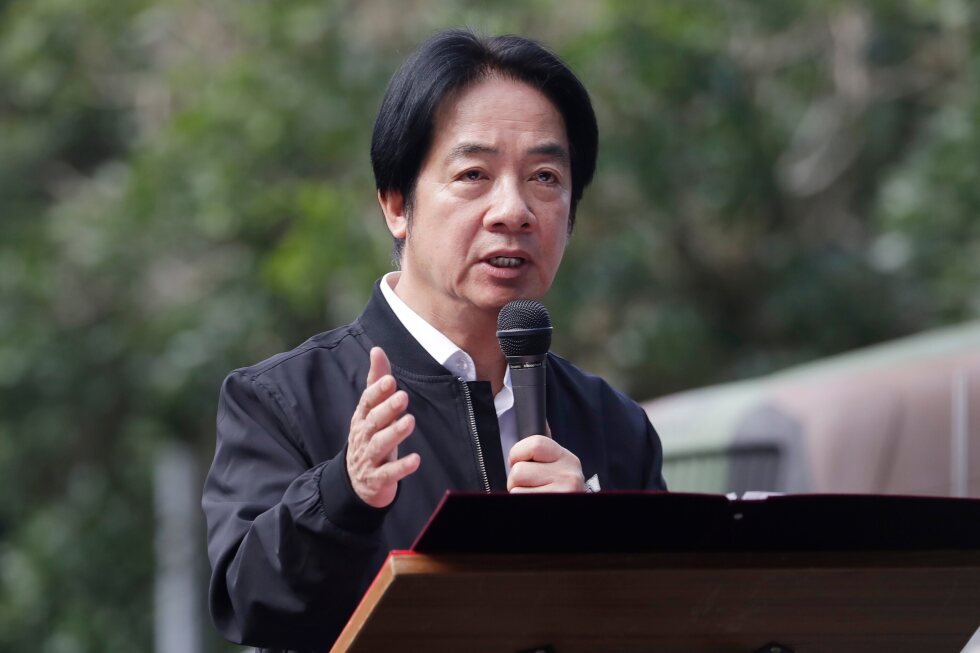
Taiwan President Lai Ching-te arrived in the Kingdom of Eswatini on May 2 after his government's earlier attempt in April was canceled when multiple African countries, reportedly under Chinese pressure, revoked overflight permissions for his aircraft. Taiwan's diplomatic and national security teams arranged an alternative route; Lai traveled aboard an Eswatini royal government charter jet, bypassing the airspace denial. Eswatini is Taiwan's only remaining diplomatic ally on the African continent. China's Taiwan Affairs Office mocked the trip, calling Lai a 'troublemaker rat.' Taiwan's foreign ministry called China's tactic a violation of International Civil Aviation Organization principles and said it backfired by exposing Beijing's willingness to undermine aviation safety norms.
China did not stop the visit; it demonstrated that it can delay and complicate any visit Taiwan's president makes abroad, and it set a precedent that other countries can use without formally severing ties with Taiwan.
Prediction Markets
Prices as of 2026-05-03 — the analysis was written against these odds
The Hidden Bet
The airspace tactic failed because Taiwan found a workaround
The tactic partially succeeded: it forced Taiwan's president to travel on borrowed transport, denied him any transit stops, and signaled to other countries that hosting him carries escalatory costs. The workaround this time required a royal jet from the destination country itself, a favor that cannot be replicated everywhere.
ICAO principles constrain China from using airspace as a diplomatic tool
China did not deny airspace to Lai's aircraft directly. It pressured third-party states to do so. ICAO has no enforcement mechanism against sovereign states that withdraw overflight permissions for stated security reasons, however pretextual.
Taiwan's diplomatic network can adapt faster than China's pressure campaign
Taiwan has 13 formal diplomatic allies left. As each one becomes a target of Chinese pressure every time Taiwan's president visits, the political cost for those allies rises. Eswatini accommodated Lai because King Mswati has strong personal ties; other allies may calculate differently next time.
The Real Disagreement
The core tension is whether Taiwan should treat its diplomatic isolation as a crisis requiring urgent international pushback, or as a manageable cost of an informal international presence that still functions. The crisis camp argues that each successful Chinese coercion tactic becomes a template: airspace denial will spread to port access, undersea cable routing, satellite ground station agreements, and other infrastructure. The manageable-cost camp argues Taiwan's substantive relationships with major democracies do not depend on formal overflight rights, and that Lai's successful arrival actually undermined the coercion narrative. The crisis camp is more likely right because the tactic only needs to work sometimes to be worth repeating.
What No One Is Saying
Several of the countries that revoked Taiwan's overflight permits are also recipients of Chinese Belt and Road infrastructure investments. The connection between debt-financed infrastructure and compliance with Chinese diplomatic demands is documented elsewhere but was largely absent from coverage of the Eswatini episode. The story was framed as Taiwan vs. China; the countries that quietly withdrew the permits are not being named or examined.
Who Pays
Taiwan's remaining 13 formal diplomatic allies
Ongoing. Every future state visit is now a negotiation with China in the background.
Each visit by Taiwan's president now carries a price: China pressures them to deny transit or complicate the trip, and refusing that pressure risks Chinese economic retaliation. Eswatini absorbed the cost this time; smaller, poorer allies may not be able to next time.
ICAO's credibility as a neutral technical body
Medium-term, as the norm erosion compounds over multiple incidents.
If overflight permits are routinely weaponized for diplomatic purposes and ICAO does not respond, the organization's ability to maintain aviation safety as a non-political domain is compromised. This creates precedents for other states to deny airspace to rivals' political leaders.
Taiwan's private sector and diaspora
Slow-burn. The erosion is measured in years, not months.
Presidential travel difficulties are a visible indicator of Taiwan's compressed international space. If Taiwan's leader cannot travel freely, the informal signal to investors, trading partners, and international institutions is that Taiwan's status is becoming more precarious.
Scenarios
Tactic spreads
China applies the airspace denial model to other infrastructure: port calls by Taiwan coast guard vessels, undersea cable landings, satellite uplink agreements. Taiwan's president effectively cannot travel to any country with significant Chinese economic exposure without Chinese interference.
Signal A second country applies airspace or port denial to Taiwan within the next six months, even without a presidential visit as the trigger.
ICAO responds
A coalition of democracies raises the airspace issue formally at ICAO, framing it as a civil aviation safety norm violation. The political cost of the tactic rises for China because it now requires a formal defense rather than quiet bilateral pressure.
Signal The US, EU, or Japan files a formal ICAO complaint or raises it at the ICAO Council.
Ally attrition accelerates
One of Taiwan's 13 formal allies switches recognition to Beijing, citing the escalating cost of hosting Taiwan's president and resisting Chinese pressure. Eswatini is the most exposed given economic dependence and geographic isolation.
Signal Eswatini or another African ally announces diplomatic talks with Beijing.
What Would Change This
If China chose not to repeat the airspace tactic on Lai's next overseas visit, it would suggest Beijing calculated the international backlash was costlier than the pressure it applied. That would mean the CNA commentary was right: the tactic backfired. No sign of that yet.